The Last Stitch Before the Road
Story
The Last Stitch Before the Road
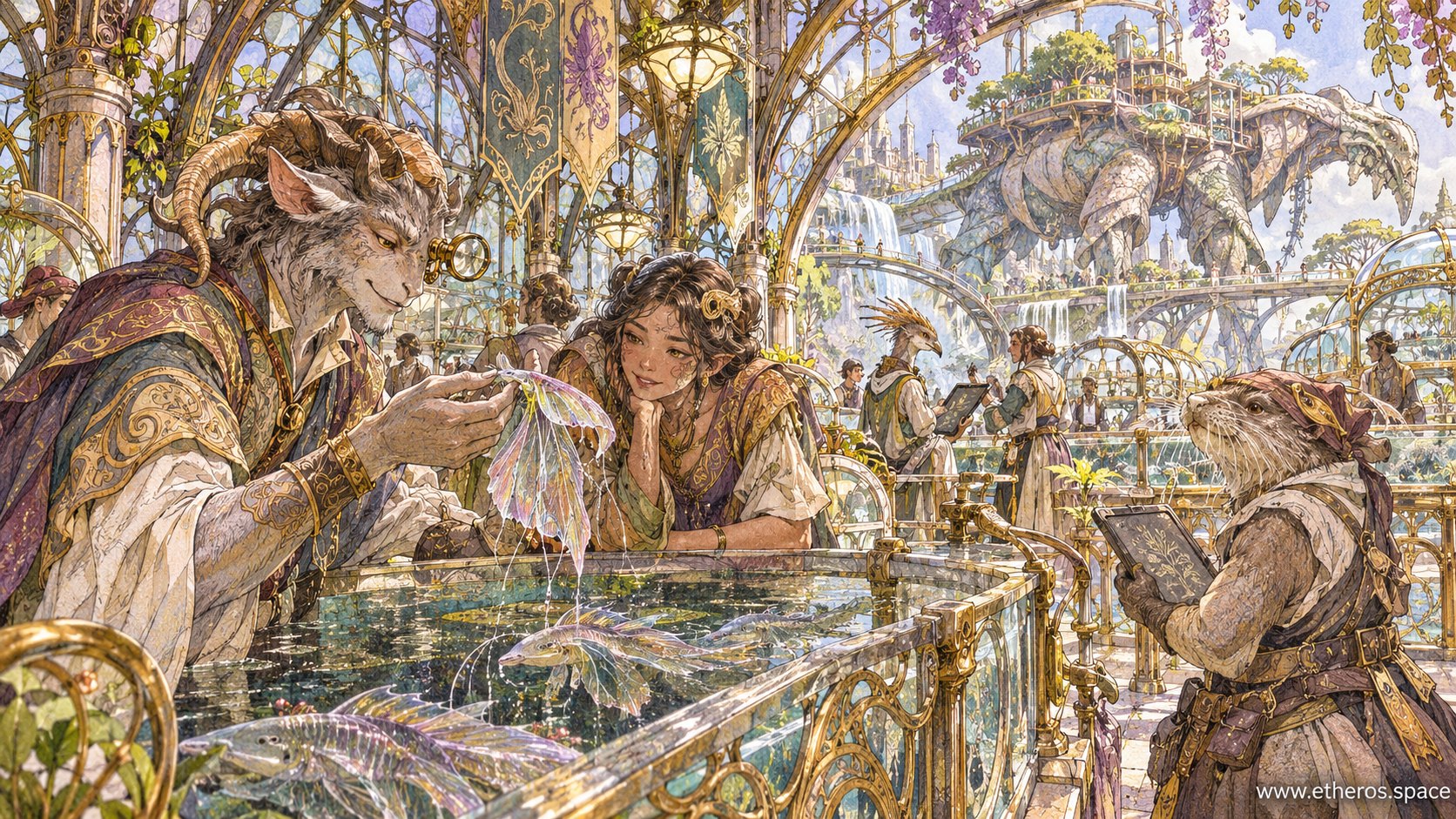
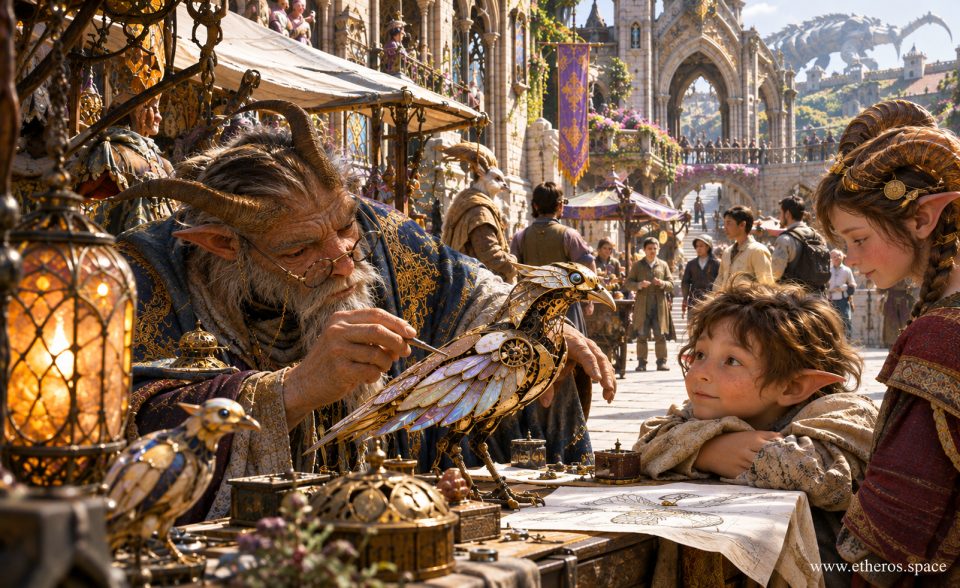
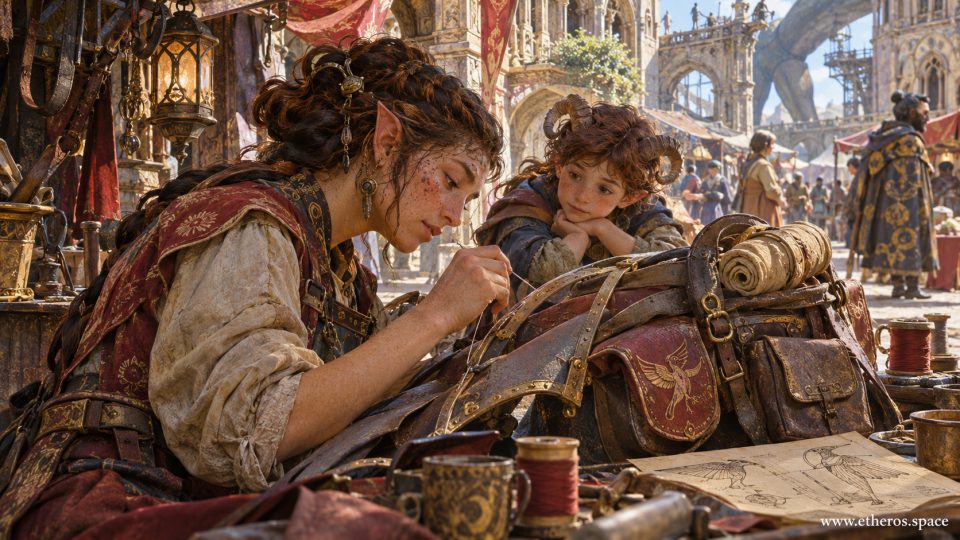
The first thing that the child noticed was the sound of thread being drawn through leather. It was so small a sound that the market almost swallowed it: a scrape, the soft release of tension, then the tiny click of a needle against a bronze fitting. Beyond the stall, merchants called through sunlit archways, passersby crossed beneath hanging banners, and the greater machinery of the city continued its work without asking anyone's permission.
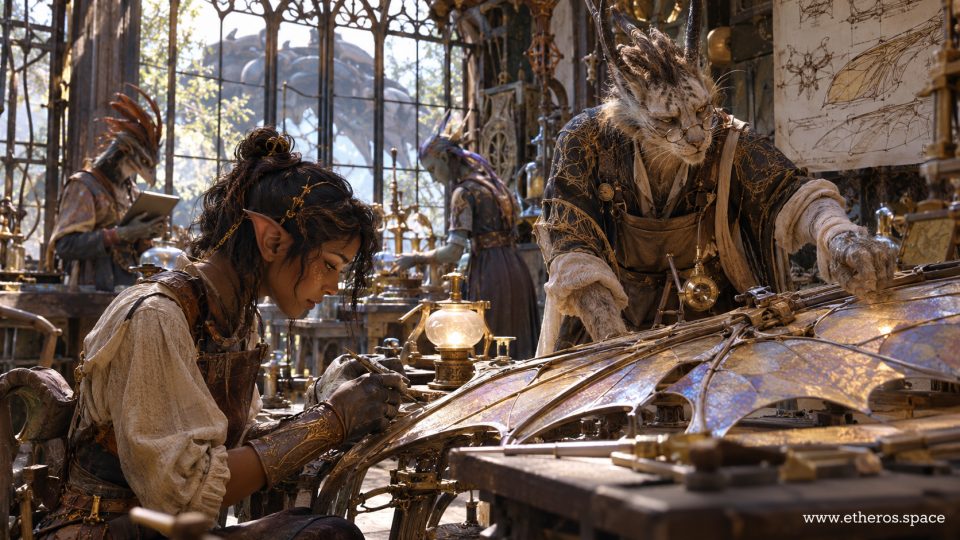
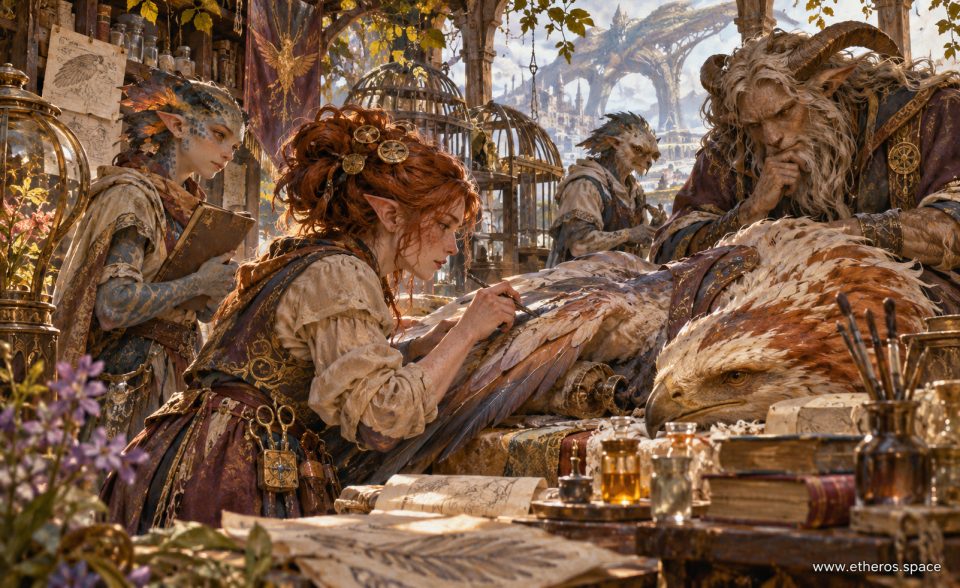
Mara Tessel did not look up. The stitched seam in front of her had already failed once, not under the weight of a heroic journey, but under the repeated ordinary jolt of a courier climbing on and off a carrier's back. The harness was elaborate: crimson leather, hinged brass straps, a folded sleeping blanket, separate pouches for medicine and route tablets, and a gilt badge shaped like a winged animal. Its ornament was beautiful; its load paths had to be trustworthy.
The child across the bench was called Pell. The small curled horns above Pell's untidy hair were still soft at the tips, a family characteristic that was said to harden with each winter. Pell sat with a chin on folded arms, watching every pass of the needle with the concentration normally reserved for the flight of festival kites. The long-eared child had arrived at the stall before breakfast and refused to leave after being told the harness would be ready before the afternoon bell.
'You're making the same stitch again,' Pell said.
'Not the same,' Mara replied. 'This time the thread goes under the load strap. When the animal turns, the force moves through the metal rib and into the saddle bridge. It must not pull against the cloth.'
She showed Pell the line of old needle marks, pale against the red leather. The failed arrangement had looked neater from the outside. It had also rubbed a dark bruise into the flank of the patient's carrier-beast. Mara had taken the work back without charge. She did not call it generosity. The failure had been hers.
Pell's mother, Nesa, drove the mountain road each week with medicine packed between blankets and insulated ceramic vials. Her carrier was a low, broad-backed, six-limbed veldrunner whose living shoulder tendons could fold beneath a harness without chafing, provided the straps allowed their ordinary range. A little more ornament could never compensate for a bad fit. In this neighborhood even the makers of beautiful things were expected to answer to the bodies that carried them.
A shaft of sunlight found the gold in Mara's hair, then crossed the brass buckle and made it look briefly aflame. Across the lane a porter's cloak brushed the edge of a bright awning. The high stone ribs of the city formed their complicated pattern above the roofs. Farther away a great curved structure passed behind the architecture, partly hidden and impossible to classify from the stall: it might have been a living conduit, a supporting arm, or a piece of the old transit works. Neither craftswoman nor child spared it a glance. There were nearer things to finish.
Mara drew the thread tight and pressed her thumb against the seam. The metal fitting shifted a fraction, settling into the intended articulation rather than pulling the fabric with it. She placed a finger under the strap to demonstrate the clearance. Pell copied the gesture with such solemn care that Mara almost smiled.
'How will you know it works?' Pell asked.
'We test it against weight, movement, and time. Then Nesa tells us whether it behaves on a real body. A workshop can propose a solution. The road gets the final word.'
The child's gaze moved across the bundles, buckles, straps and folds. There was a leather panel dyed deep wine-red and marked with a small gilded flying creature. It had belonged to Pell's grandfather, who used the badge before the courier routes were carried by the younger generation. Pell had asked that it remain. Mara had agreed, so long as it did not cross a stress seam. The old badge would be carried forward, not used as an excuse to make the harness unsafe.
At last the needle passed through its final hole. Mara tucked the waxed thread under the leather lip and trimmed the free end. She did not make a ceremony of it. The stall contained a hundred other tasks, and the busy street would not quiet itself for a single repaired strap. But Pell sat up straight, suddenly unable to pretend indifference.
'Can it go home now?'
'After the fit trial,' Mara answered. She pushed the harness gently across the workbench, keeping the hardware from striking the wood. 'Tomorrow, if it holds, it can carry your mother past the red cliffs again.'
Pell considered that, then reached toward the old golden badge without quite touching it. The child had been afraid of the journey ever since the earlier failure. The repaired object did not erase the fear. It made room for confidence based on care, measurement, and somebody willing to undo a mistake.
Outside, the city continued on its own great scales: people hurrying, lanterns unlit in the afternoon, stones bearing load, unseen machines moving whatever had to be moved. At this table the change was almost too small to notice. A stitch had been moved. The load had found a safer path. A child had watched an adult admit that beauty was not the highest obligation. Somewhere beyond the market, the road was waiting for the harness to return.