The Measure for the Far Stair — An Afternoon at Bellflower Arcade
Story
The Measure for the Far Stair — An Afternoon at Bellflower Arcade
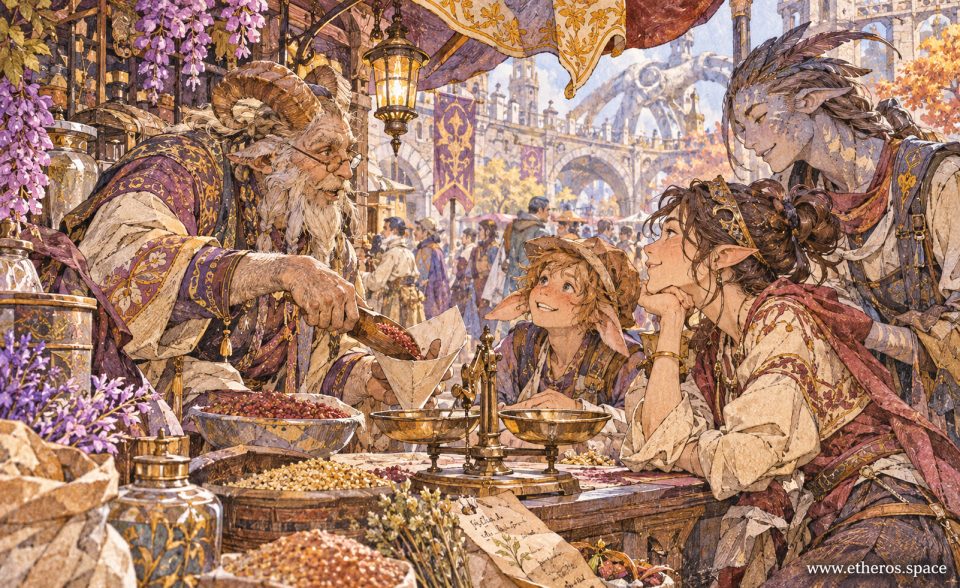
By the time the market clocks struck the fifth bell, Haro Veln had sold most of the day's sunpepper. The last red berries lay in a shallow metal bowl beneath his lantern, each one wrinkled from weeks of drying in the upland heat. He had nearly closed the tin when a small figure appeared between the hanging herbs and the customers.
The boy, Orrin, had come from the far stair. He wore a patched travel cap, his pointed ears escaping beneath its rim, and carried the instructions for a meal in his head because the written list had become wet and unreadable before he left home. Not far behind him stood Bria, his aunt, and their tall, feather-crested neighbor Selen. They had accompanied him across the city, but Orrin insisted on making the purchase himself.
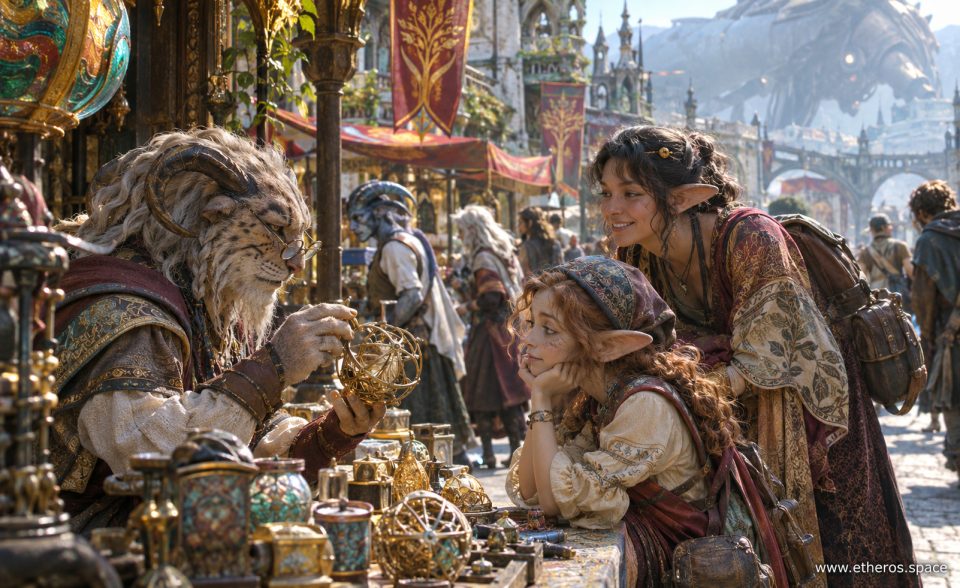
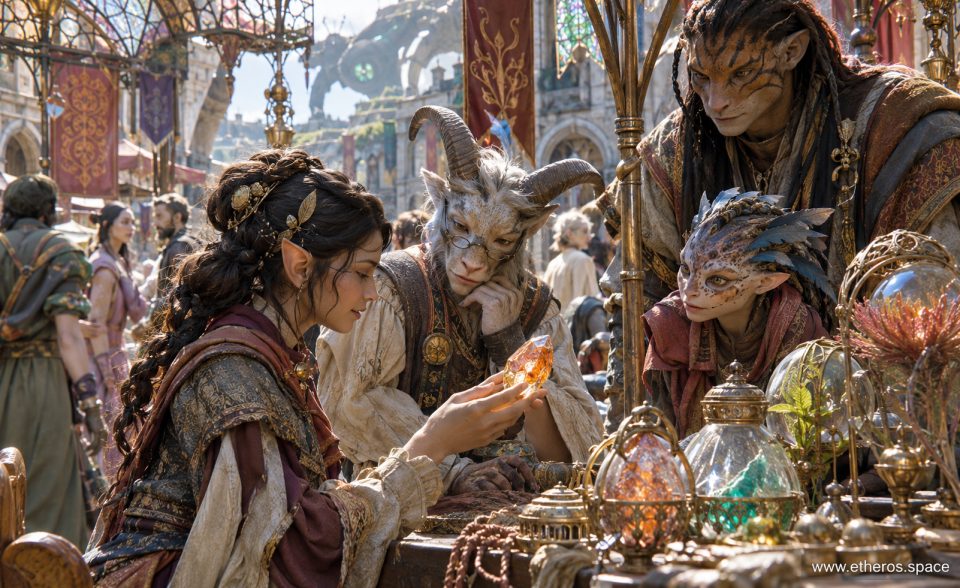
Haro noticed the way the child watched the spice instead of the jeweled vessels or the ornamental brass scales. He opened a folded paper cone and took up his shallow scoop.
"How much?" he asked.
"Enough for a pot that feeds six," Orrin replied. "But not enough to make it bitter."
Bria rested her chin on her hand. All morning she had heard that answer rehearsed in their narrow kitchen, along with the recipe for chickpeas, root greens and toasted grain. Tonight the family's elderly neighbor would return after eleven days caring for workers on a damaged mountain road. Nothing awaited her except a cold room, unpaid errands and the knowledge that her own household had not yet been put in order. The people on the far stair had decided to cook before she got home.
The request should have been simple. Yet sunpepper could turn a whole cooking pot harsh if it was measured carelessly. Haro's grandson had once emptied a generous handful into a wedding broth. The guests ate bread for three days and still remembered it as the feast of the burning tongues.
Haro tipped a few of the brilliant red pieces from the scoop into the cone. Their dry little taps sounded beneath the market noise. He drew the scoop back, considered the amount, and returned two berries to the bowl. The brass balance sat ready on the table, its shallow pans catching light from the arcade. The paper cone, however, gave him a better way to keep the small purchase together without scattering the berries across the crowded counter.
"Six bowls?" he asked again.
"Seven, if someone arrives late," said Orrin.
Selen glanced at Bria. They had both pretended not to notice the child setting aside his own portion in every calculation. The far-stair households had developed a quiet custom of making room for unexpected guests. Such customs were inefficient, the town's provisioning officers sometimes complained. Those officers had never reached a kitchen with an empty stomach after the night shift.
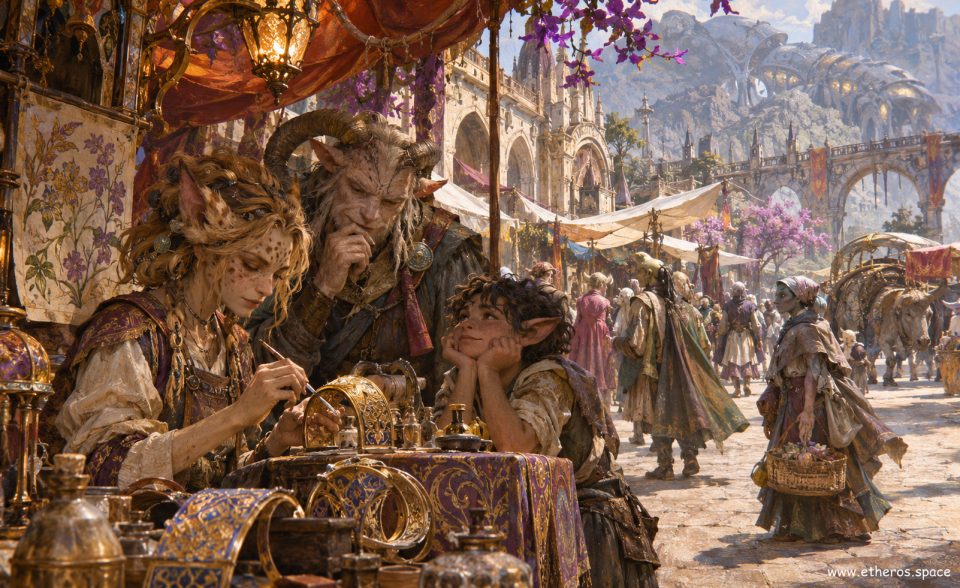
Behind the stall, people crossed beneath stone arches dressed with purple banners. Couriers threaded between families, porters eased heavy bundles around two arguing traders, and blossoms shifted against the hanging lanterns. No one arranged themselves for a portrait. They were too occupied with the ordinary negotiations of a crowded afternoon.
Haro looked over his spectacles at the child's expectant face. He had seen Orrin before, buying a single sweet fruit for a feverish younger brother. That had been years ago in the market's reckoning, although the old merchant could still remember the exact copper coin and the ridiculous seriousness with which the boy had presented it.
"You have to warm the berries in the grain oil first," Haro said. "Only long enough to let the scent rise. Then take the pan away from the heat. If you throw them into a boiling pot, you lose the fragrance and keep only the sharpness."
Orrin repeated the instructions word for word, stubbornly refusing Bria's offer to write them down. Haro turned the paper cone once more and closed the fold with a neat twist. The small parcel had almost no visible weight, yet the child received it as carefully as a mason would receive a marked cornerstone.
Bria asked the price. Haro stated the proper market measure, neither inflating it for a rare ingredient nor pretending that his entire trade could survive on gifts. Selen put the agreed coins on the counter while Orrin checked their number. The purchase had a fair price; the recipe had been given freely.
Then Haro reached for a pinch of pale seeds from a nearby bowl.
"These aren't part of the bargain," he said. "Toast them separately. Scatter them over the food when the bowls are served. You'll need the crunch."
Bria began to protest, but he shook his head. The seeds came from a broken packet he could not sell at full measure. They were sound, dry and still useful. A city was not better nourished because its merchants refused to notice the difference between unsaleable and wasted.
Orrin thanked him. He was already turning away when he stopped and asked why the old man still measured everything so carefully when he knew the recipes by heart.
Haro tapped the brass scale gently. "Because knowing a thing is not the same as weighing what it costs another person."
The child considered this. Then the three travelers disappeared into the bustle under the arches, carrying their small cone through a city full of larger transactions. By evening the spice would pass from paper into warm oil, from a kitchen into seven bowls, and from those bowls into the familiar silence people shared when they had been tired and hungry for too long.
Haro placed the scoop beside its bowl and turned back to the next customer. The market kept moving. No bell announced the meal waiting at the far stair, and no grand machine was summoned to make it possible. The necessary work had been done by a child who remembered a recipe, two companions who made the journey with him, and an old seller who knew how little could be enough.