The Water Debt at Sablewharf
20261103T103048742506Z_100percent.png
Story
The Water Debt at Sablewharf
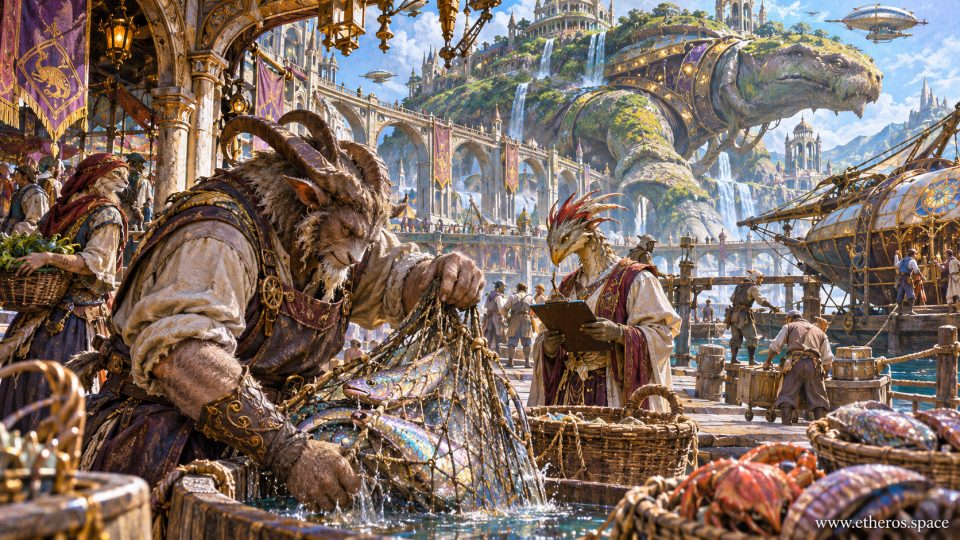
The horned fisher's left arm was already numb by the time the first silverblue riverfish came through the net. He could feel its struggling weight through the wet knots, a pulse that had traveled from the deep channel into the ropes and finally into his own tired joints. Below the piers of Sablewharf, the fishing water glittered with spilled sunlight. Above them, a city was moving.
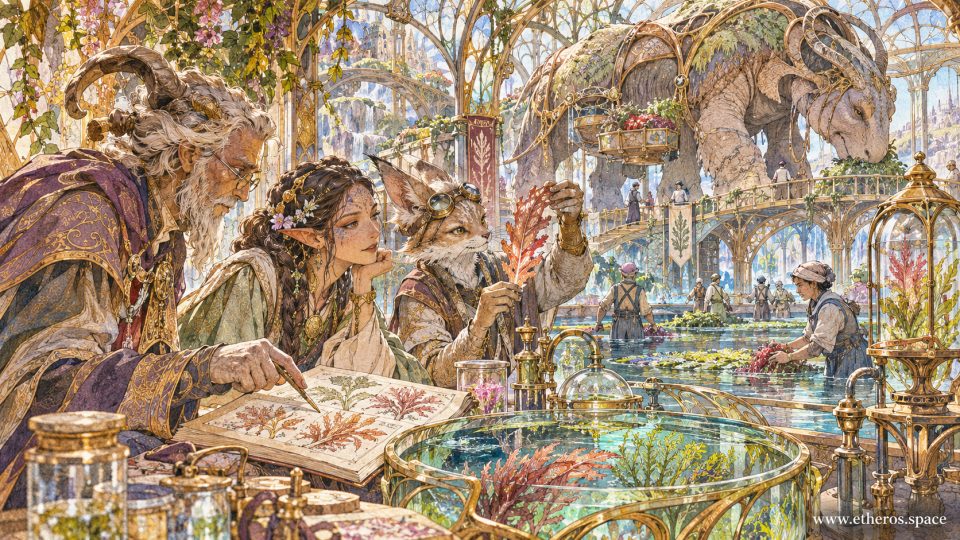
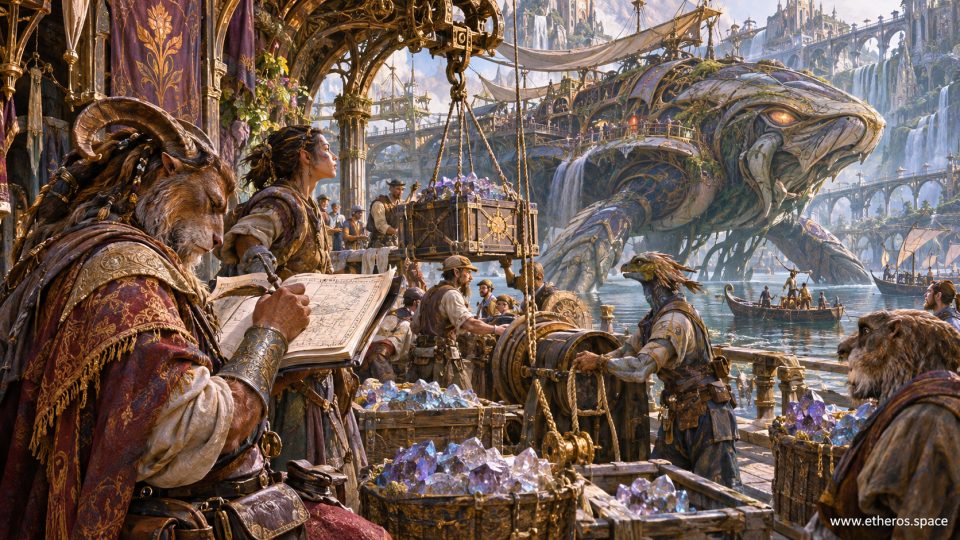
Berran Ul, who had worked this berth for thirty-four flood seasons, paused long enough to glance toward the enormous creature passing beyond the stone bridges. Its shoulders were mantled in moss and terraces, its armored ribs stitched with bronze, its back occupied by hanging gardens and narrow roads. The beast was called Tharos-of-the-Tide, although no one alive had seen it born. Water fell from several of its cultivated ledges into the catchment channels. The water was not a miracle. It was warmed, filtered and carried by living membranes, and the great animal needed rest and minerals just as the town did.
On the dock, Berran dragged another span of net toward the sorting trough. His right hand held a heavy loop; his left guarded the catch from an exposed nail in the timber. He had not come here to make a picture of a legendary city. He had come to bring home dinner and pay a small debt.
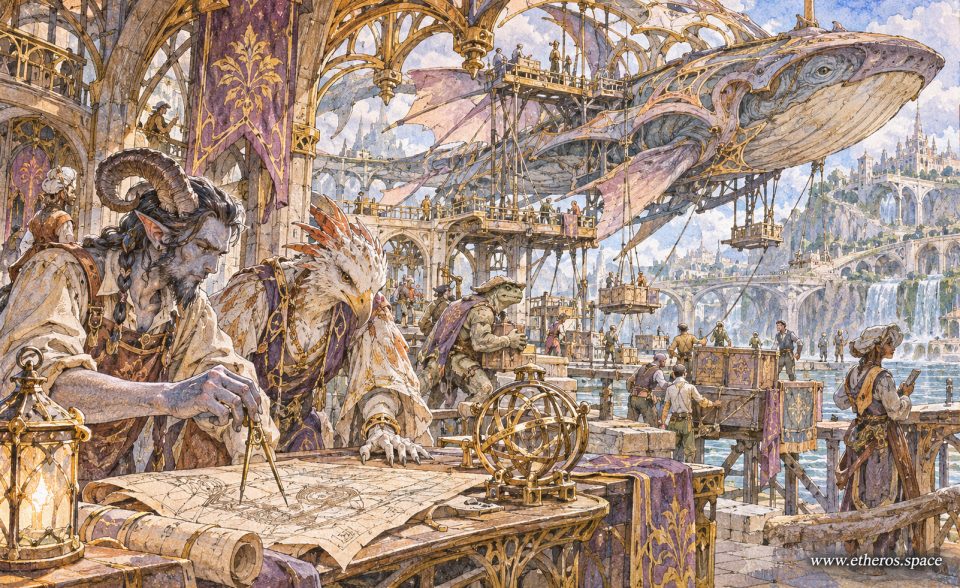
Across the stall, Sira Venn, an avian tally-keeper in a russet crest and burgundy work-cloak, marked the day's fish against the transport slate. A bead of water kept falling from the same rope and darkening the corner of the page. Sira could have moved the ledger. Instead, they held it at an angle and kept counting.
"Thirty-one in the first lift," they called. "I can record thirty-one."
"Thirty-two," Berran answered. "One is still in the wet fold."
Sira looked up from the slate. They had counted a hundred catches this season without the old fisher ever challenging a number. That was why they put down their pencil.
The little fish hidden in the net was scarcely larger than Berran's palm. Its scales caught the color of the glass roof above the eastern cargo dock. It was a young glassfin, marked by a narrow silver line along the gill. The mature fish could be sold; a young glassfin belonged to the channel nursery until its second turn of the tide.
Berran remembered a winter when the river had been poorly oxygenated and the nurseries had emptied. His daughter had been small then, ill with a fever that needed the blue-liver oil found only in adult glassfins. They had searched six markets and returned with nothing. She had recovered by another route, but he had never forgotten the trip home, nor the shape of his own empty basket.
He cupped the young fish in his broad hands and lowered it into an untouched bucket. Sira scratched out the extra tally before the graphite set into the damp fibers. Thirty-one market fish; one nursery return. It meant a little less credit for the pier workers. It also meant that something very small could still make the long passage upriver.
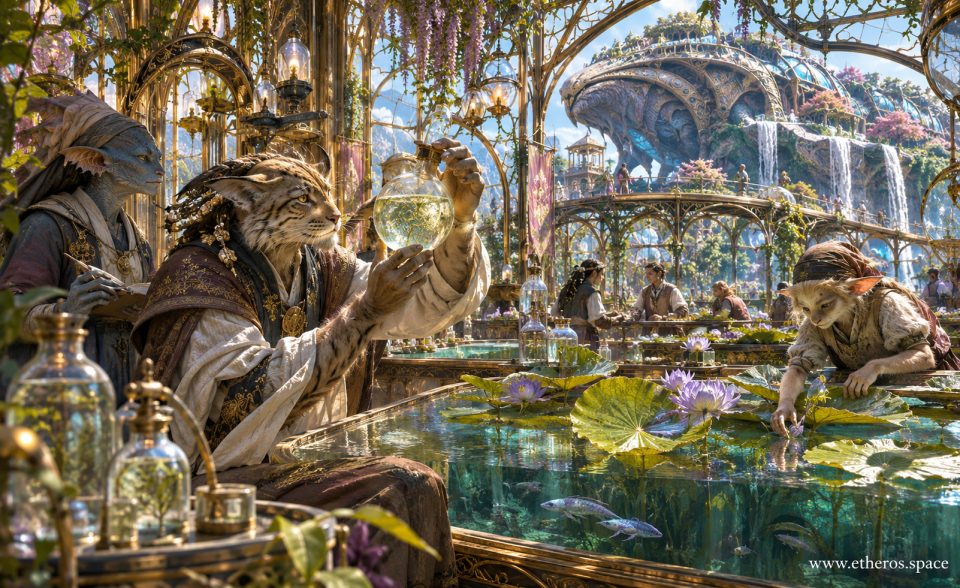
Behind them a narrow ferry rolled against the quay and men with linen sleeves eased a cargo chest down the gangplank. A fox-faced produce trader drew her basket away from the slick boards. Over the river, the first terrace waterfalls of Tharos fed the public cisterns. The city's upper galleries shone through humid air, while two distant airships passed between the towers. The whole harbor was a chain of transfers: fish from channel to hands, goods from ferry to barrow, filtered water from the creature's living reservoirs to the stone conduits, decisions from a scratched ledger to someone else's supper.
Berran's youngest son, who now repaired the river gates, had said that a city could be judged by what it let flow back. Berran had laughed then. The phrase sounded like a worker who had begun speaking in his supervisor's vocabulary. But now the old fisher opened the bucket at the dockside and watched the little silver body vanish between the pilings.
Sira made one final note: nursery return, berth seven, witnessed by the fisher. Then they tore a narrow receipt from the end of the slate and handed it over, though Berran protested he had no need of proof.
"Not proof for you," Sira said, squinting toward the bright channel. "Proof for the next shift. They'll keep the return gate open if they know the little ones are coming through."
By midday the tide had risen enough to erase the small wet mark where Berran had released the fish. The sales would still pay for a few meals, not the whole debt. Yet the gate crew upstream would know to wait, the nursery's oxygen pumps would run another hour, and one silverblue body had a chance to become part of the river's next season. Under the walking gardens, as another load of freight crossed the planks, Berran finished washing the nets. The harbor took back the water he poured out, and gave him only the sound of it moving.