The Load Beneath the Living Bridges
Story
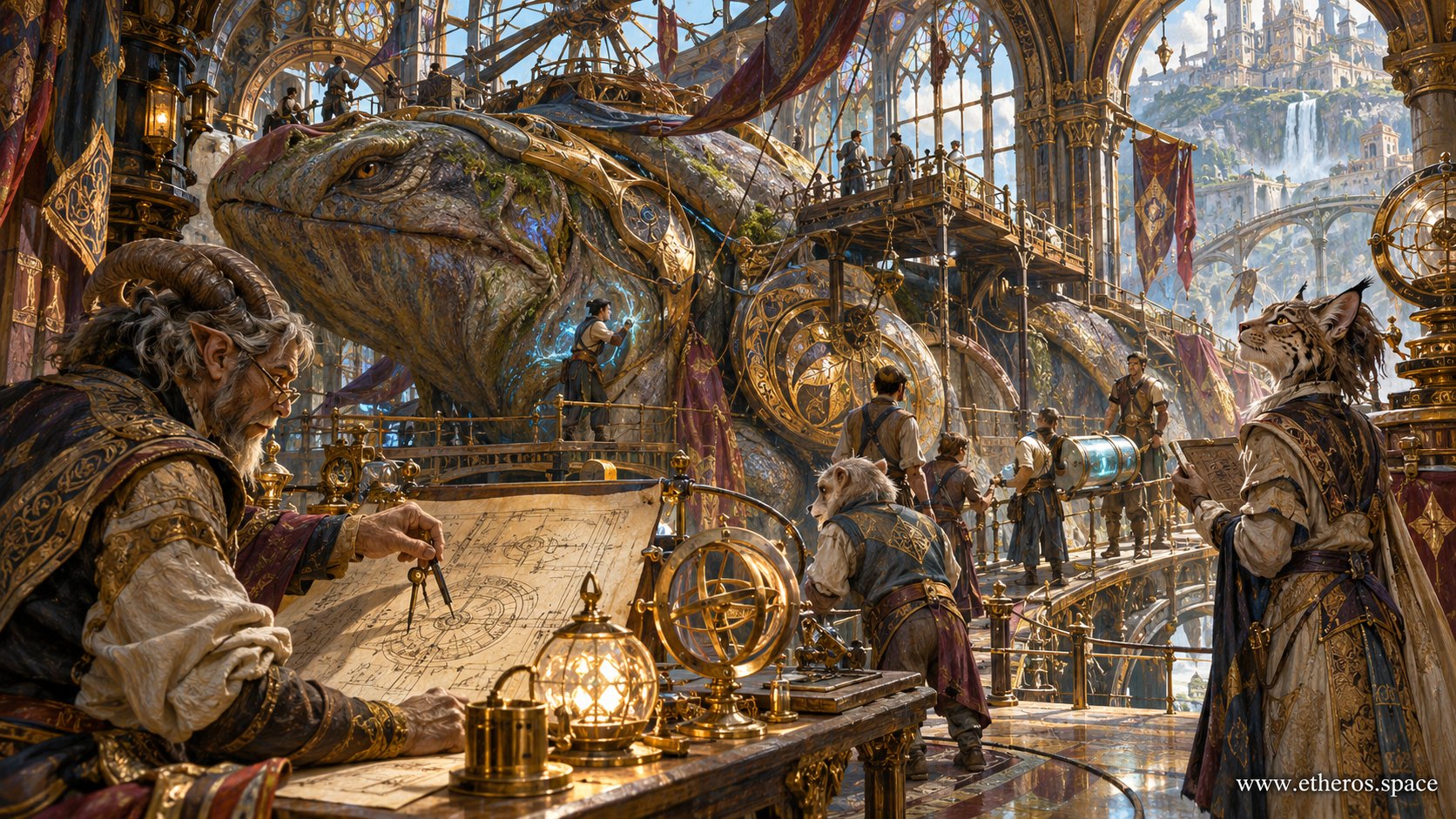
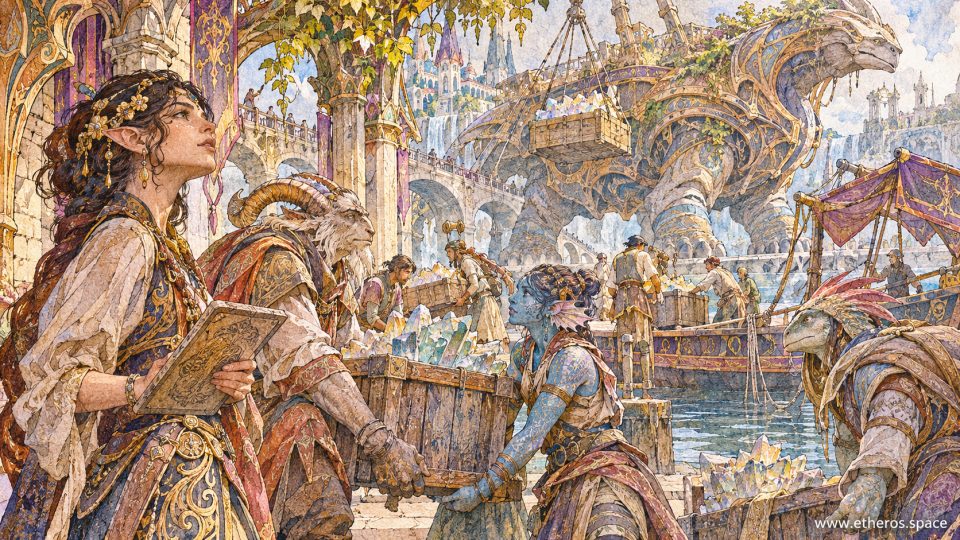
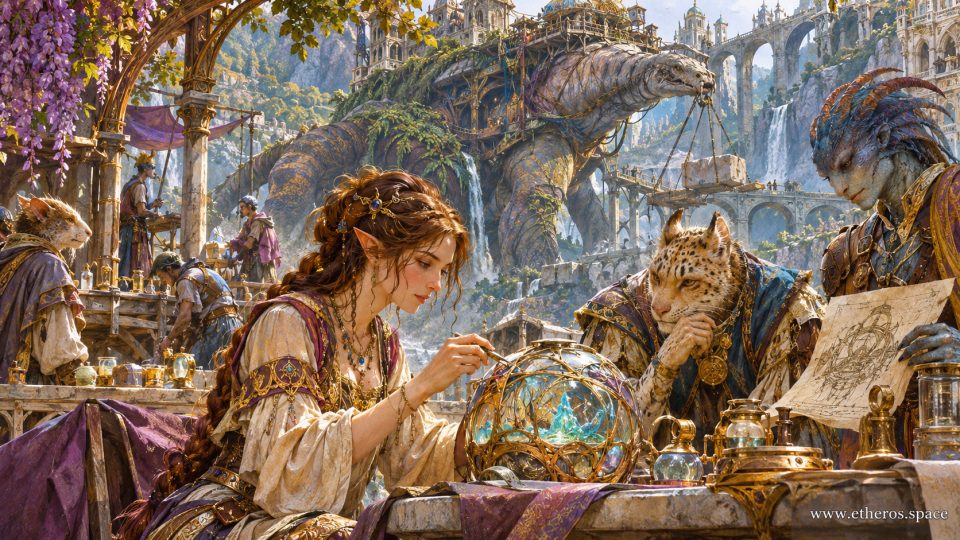
In the high-water city of Ilvarin, nobody called the walking carrier a machine. It was older than most of the bridges and it could feel a crack forming in stone through the soles of its six enormous feet. The citizens called it Kelith, and treated its long hours of hauling as a civic vocation rather than a miracle. Its back supported terraces of small workshops, gardens that took root in seams of mineralized dermis, and a scaffolded freight deck whose cables sank into living load-bearing ridges. Today Kelith carried a quarried pier block toward the unfinished eastern causeway. Men and women on the far galleries paid out restraining lines as the stone swayed in the afternoon wind.
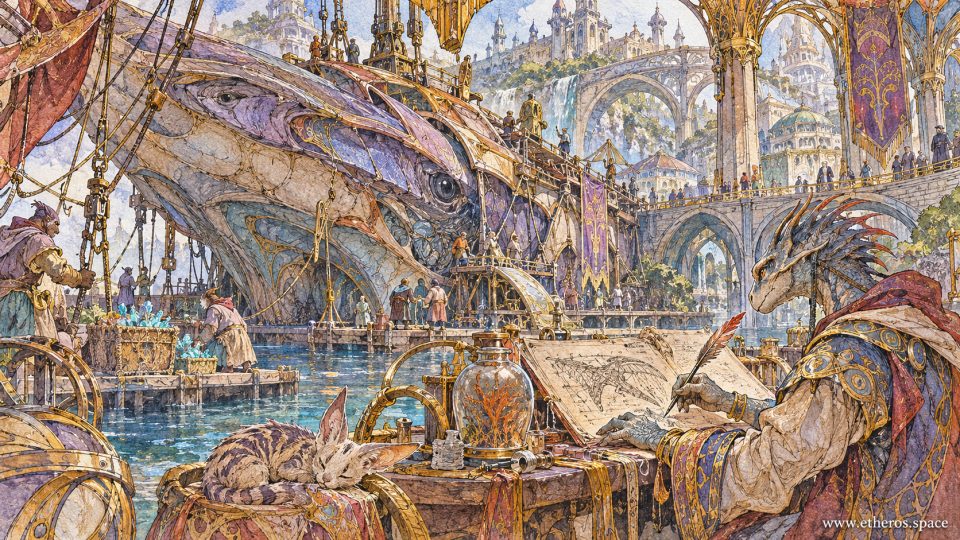
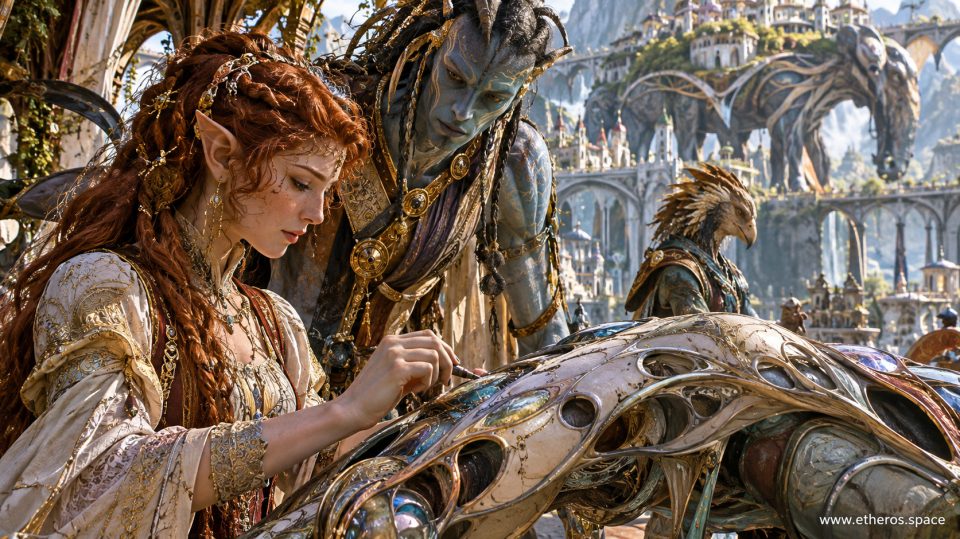
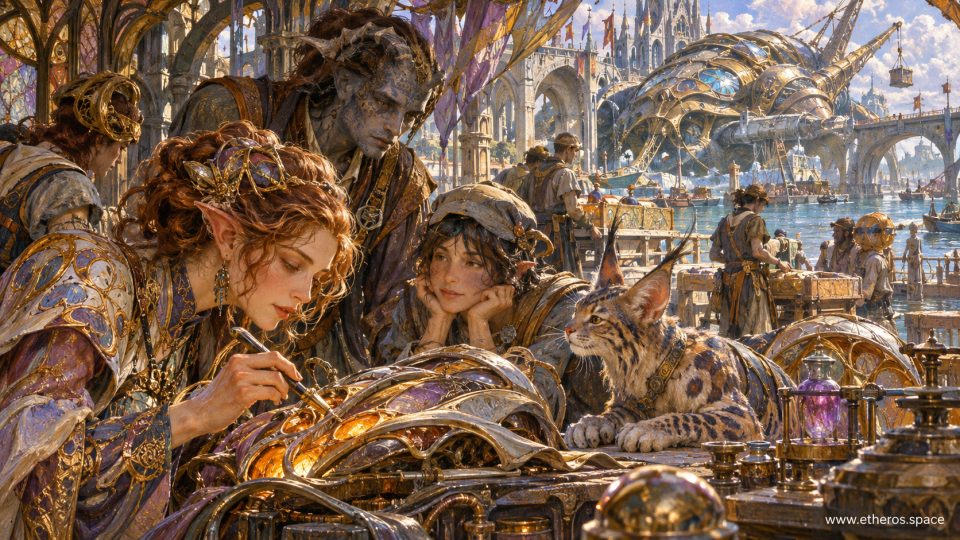
Above a narrow bench sheltered by wisteria, Iri Venn bent over a sphere of glass and curling brass ribs. She had been awake since the dawn maintenance bell. Her sleeves were bound above the wrists, the filigree at her cuff carefully kept away from the warm calibration aperture, and a translucent blue current moved through the vessel like tidewater beneath ice. The sphere was not a miniature world, despite what visitors liked to believe. It was a sensitive pressure and tension register, seeded with mineral filaments cultured from Kelith's old harness tissue. When its small blue fronds bent, the engineers knew how much load the carrier's side tendons could accept without pain.
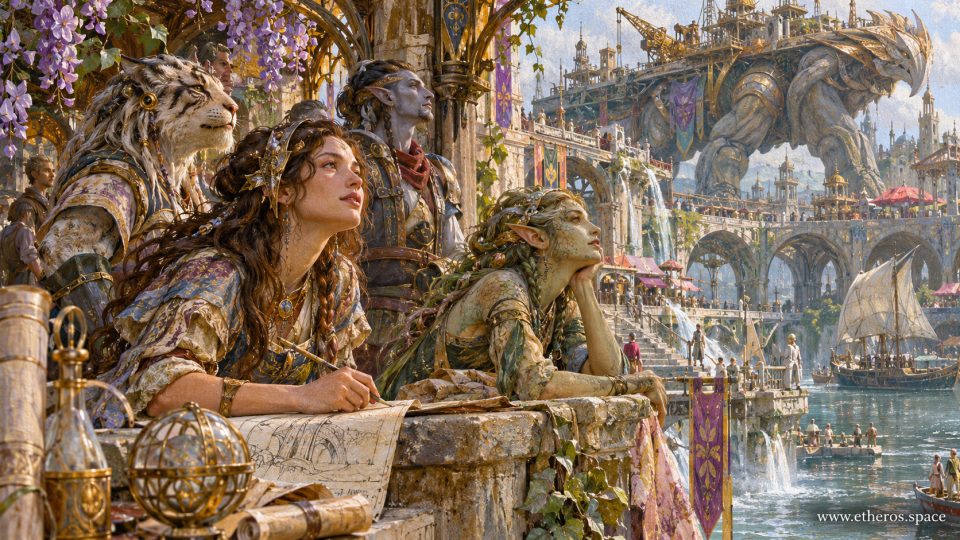
Across the table sat Tarek, a spotted-fur surveyor of the riverward clans. One broad hand propped his jaw while he studied Iri's adjustment. Tarek knew timber by scent and stone by the sound of a mallet, but a living cable was something different. At the start of the season he had argued that the new bridge should be built with rigid chains, because chains could be measured and replaced. Then an autumn flood had made the old chains sing, and one of them had severed a cargo raft. Since that day he listened when Iri spoke of elastic fibers and the price of asking flesh to behave like iron.
Vesh, the blue-scaled apprentice standing to their right, held the plan against the light. His swept horn-crests marked him as one of the canyon's cliff-nesting peoples; the weathered cuffs of his yellow-trimmed work mantle showed that he had already been climbing scaffolds all morning. The diagram under his fingers described an arched cradle, not a cage. Its braces would transfer the suspended pier's weight into Kelith's plated shoulders, then down through its legs to the stone floor of the valley. The water spilling from the high aqueducts served another purpose: runoff from the carrier's terrace gardens was filtered through reed beds before returning to the river, and its metabolic cooling water was exchanged through stone channels rather than wasted.
At the back of the balcony, a small tawny messenger waited beside flasks and survey weights while other workers assembled, argued and laughed under the arcade. Across the gorge, pedestrians paused on bridges too slender to be seen from the quay below. White cascades broke into a thousand bright strands. A rope crew made a tiny knot of movement on the freight deck, their gestures nearly invisible against the vast patient neck that rose through the canyon. No parade had been announced. This was simply how a difficult afternoon's work looked in Ilvarin: commerce, friendship, maintenance, and the long practiced trust between a city and one of its own immense living citizens.
Iri moved the stylus by a fraction. Inside the globe, a bright line of mineral light bowed and steadied. Tarek let his hand fall from his chin. Vesh looked from the plan to the distant suspended block. At that precise instant, Kelith shifted a single foot and the ropes tightened; its burden remained level. Nothing spectacular happened. That was the result they wanted. A bridge would gain a pier, an old carrier would finish the day without injury, and tomorrow the market boats below would have another safe route across the water.
Years later, when the eastern causeway had weathered its first great flood, the guild would remember this afternoon as the hour a small adjustment mattered. Iri would remember something else: the weight of the stylus in her hand, the way Tarek's thoughtful expression changed when the glow became still, and the sight of Vesh holding his drawing not as proof of his cleverness but as a promise that another being's strength would not be spent carelessly. For a city built over falling water, care was the most practical kind of engineering.