The Last Tooth Before Rain — The Veyrfall Rotor
Story
The Last Tooth Before Rain — The Veyrfall Rotor
The first thing Ferren Veil heard that morning was the water, not the hammers. At Veyrfall Foundry the river fell three hundred fathoms through stone channels beneath the casting terraces. The noise travelled through the benches, through the soles of every boot, and up the long brass teeth of the machinery. Ferren, a spotted feline metalworker whose left wrist had stiffened after an accident years before, had learned to measure each change in that vibration with the pads of his fingers.
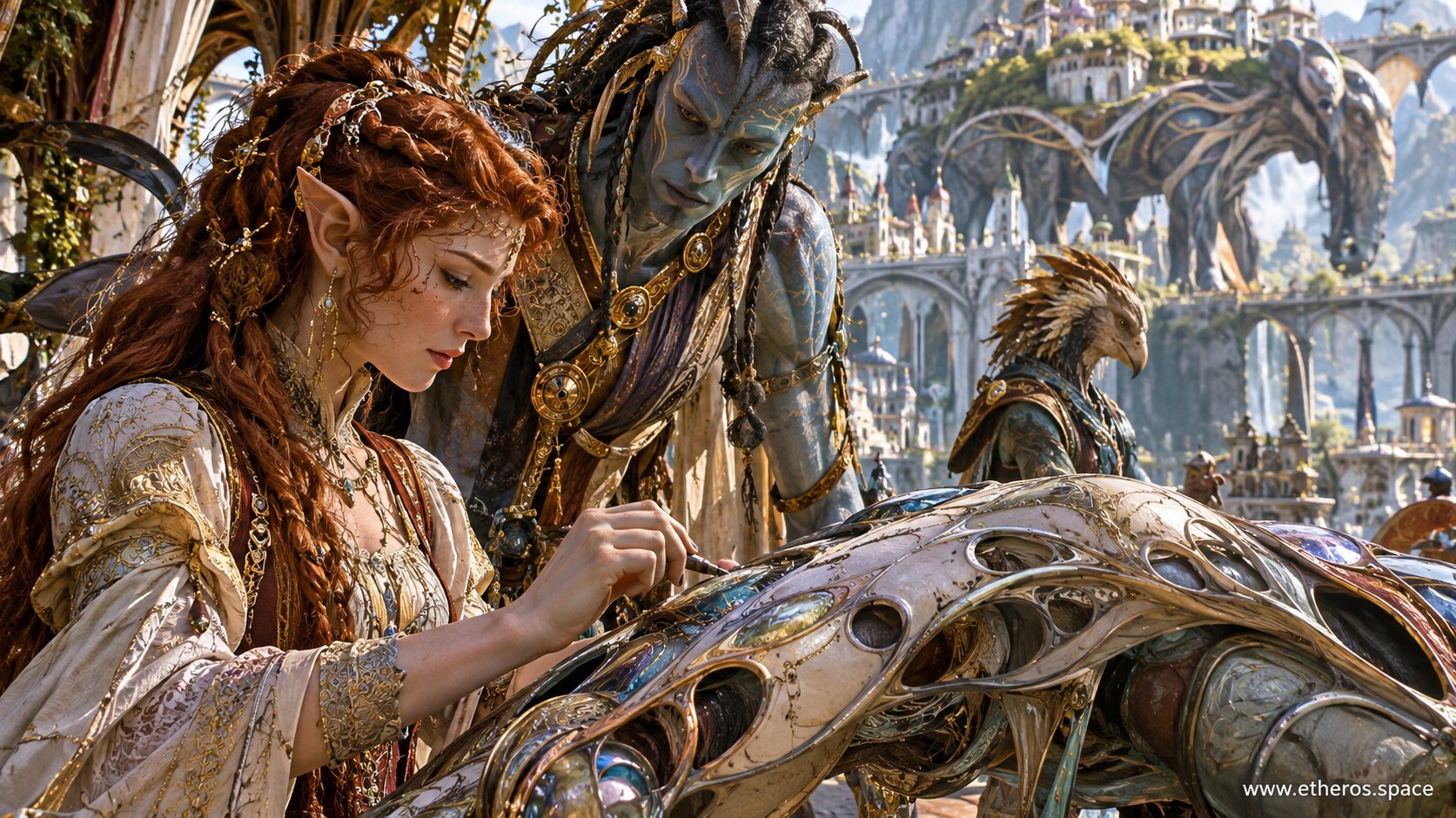
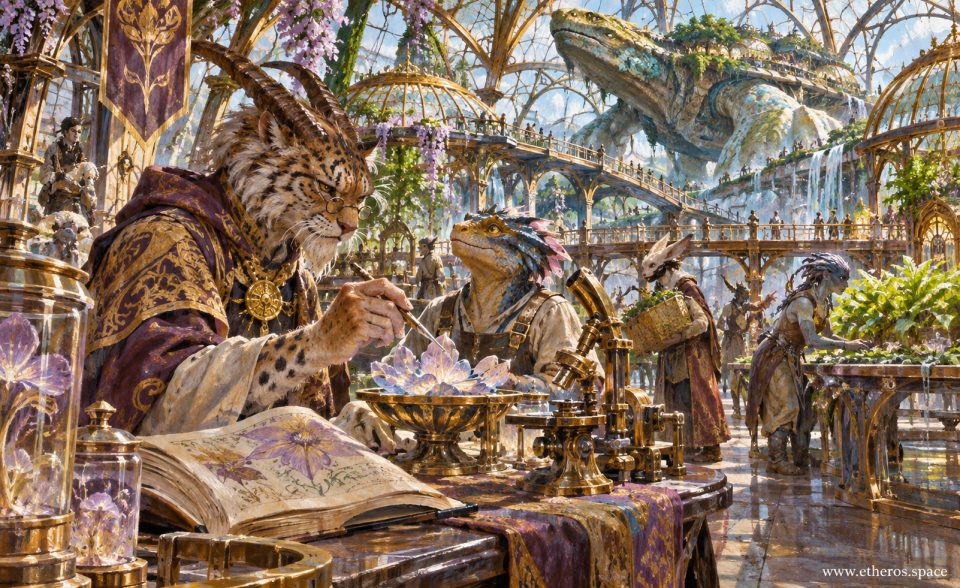
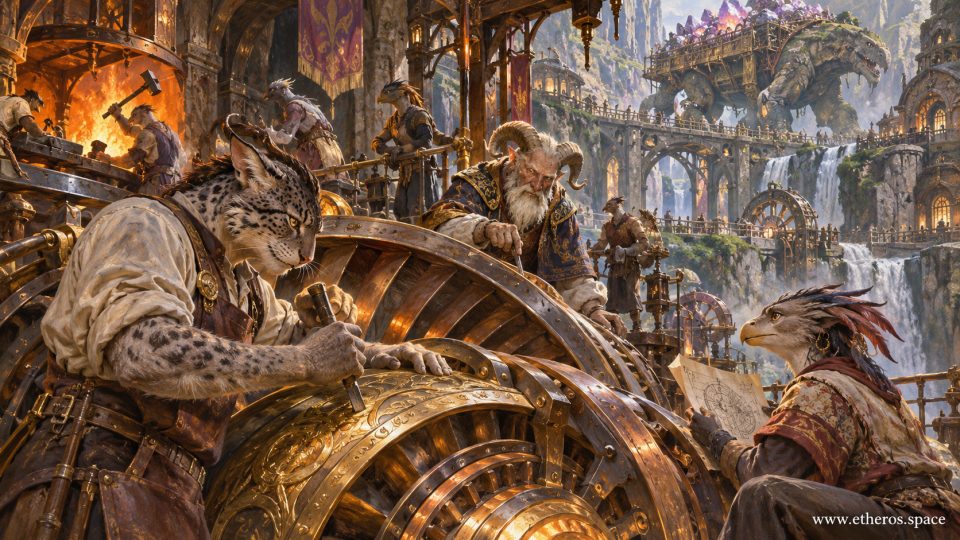
By late afternoon he was bent over the last curved segment of a pressure rotor. Its copper-gold surface bore delicate leaflike grooves, but the work was not merely ornamental: the fine channels would shepherd warm lubricating fluid toward the bearings as the rotor spun. He guided a short engraving tool along a rib until the line met the next notch without catching. The air smelled of charcoal, wet limestone and the bitter resin used to seal living metal to its ceramic cradle.
The rotor would be fitted below the eastern spillway before the evening rains arrived. For six days the lower terrace homes had received water in irregular pulses. The old impeller had lost a tooth where a migrating colony of shell organisms had attached itself to an inlet; every revolution sent a shudder through the distribution pipes. Children in the workshops called it the coughing river. To Ferren it sounded like the beginning of a larger failure.
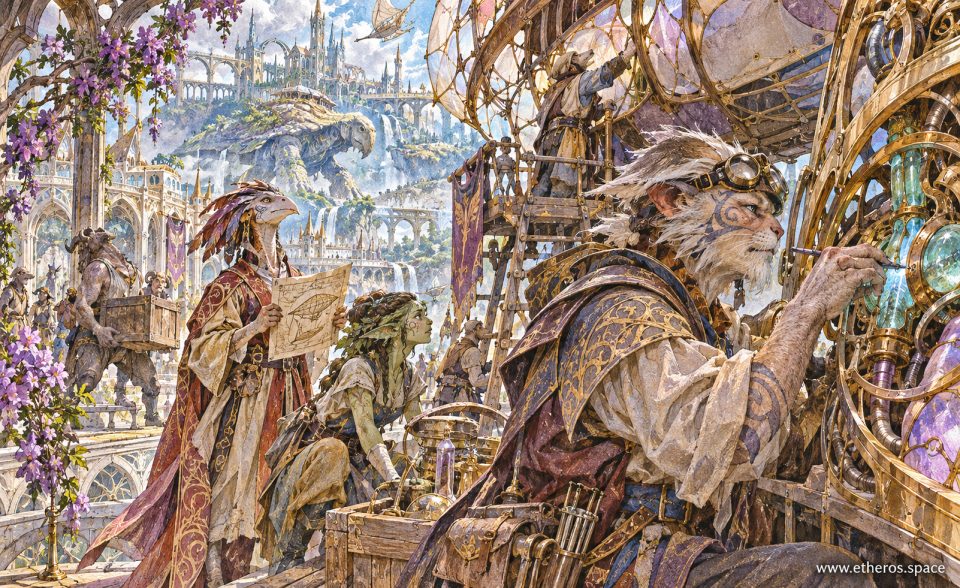
On the other side of the immense circular frame, Master Dovren kept one weathered hand against the metal as he checked the clearance with a narrow instrument. Dovren was horned and white-bearded, the last of the old spillway masters who could read a pressure problem by listening to the water. He had once taught Ferren how to distinguish a bearing's complaint from a conduit growing a new internal membrane. His expression now was not stern but attentive. The rotor had only the smallest margin between moving steel and a living intake wall.
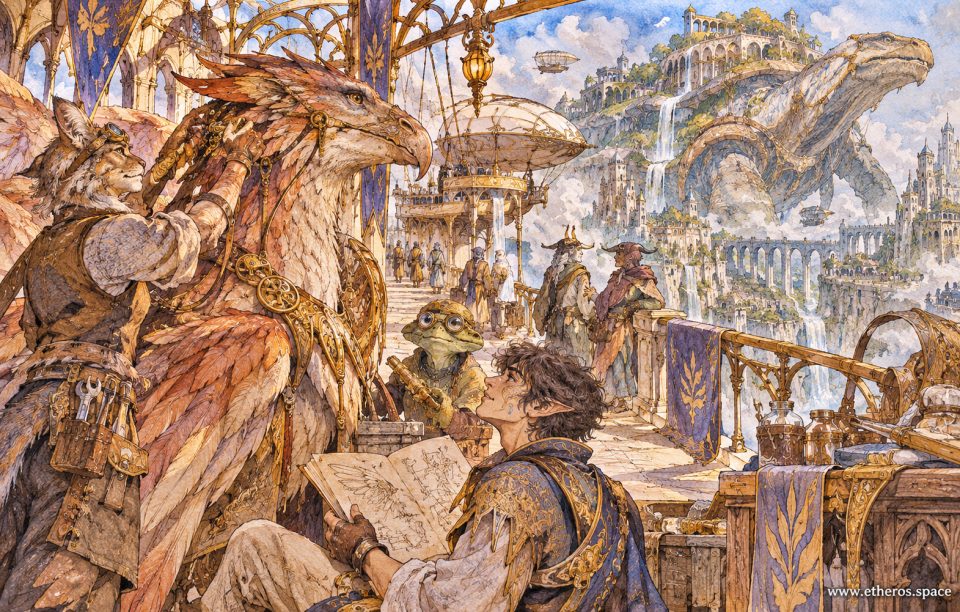
At the right of the work platform, a birdlike drafter named Siva held the sectional drawing in both hands. The diagram recorded measurements taken by apprentices along the river, but some were already hours old. Siva's task was to update it whenever the other workers found a mismatch between the cast geometry and the foundry's swollen wood-and-bone support rig. She looked from paper to wheel, thinking less about beauty than about the exact path by which the water would push, turn and depart.
Behind the three of them, the foundry lived its ordinary loud life. A hammer rose against the mouth of a blazing furnace. Workers leaned over hot billets beneath vaulted arches. Others stood on bridges and platforms, guiding chains between workshops cut into the cliff. A wheel beside the waterfall caught the river's force and returned it through long shafts to the machinery. Nothing here moved without something else taking its weight.
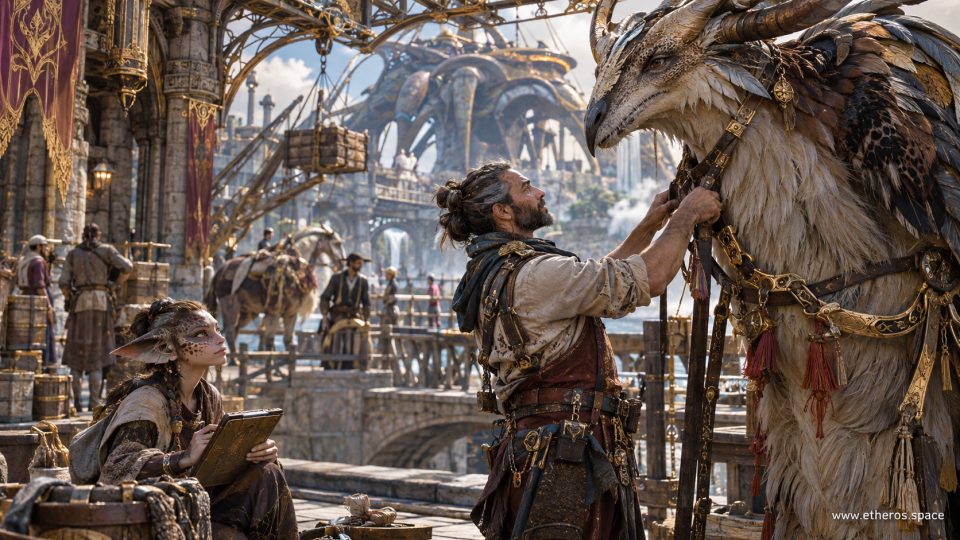
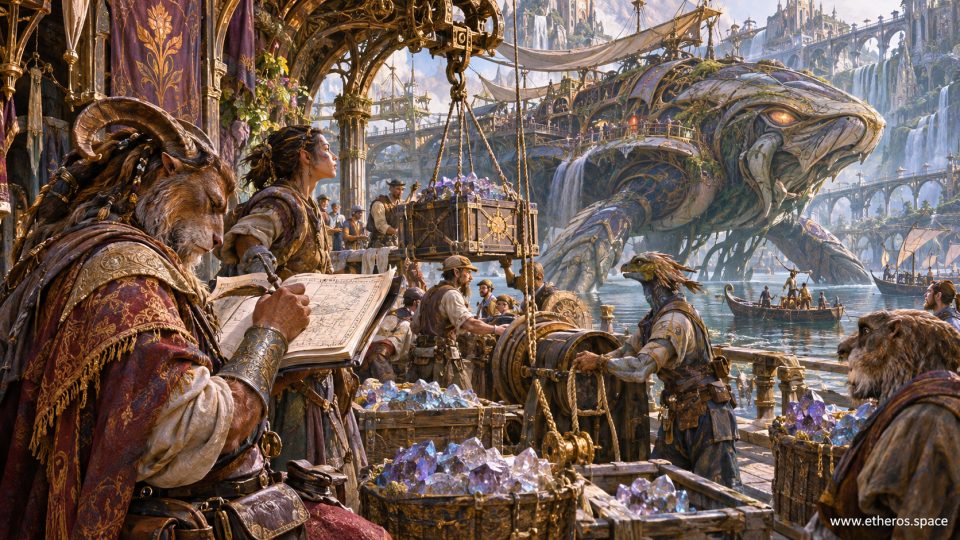
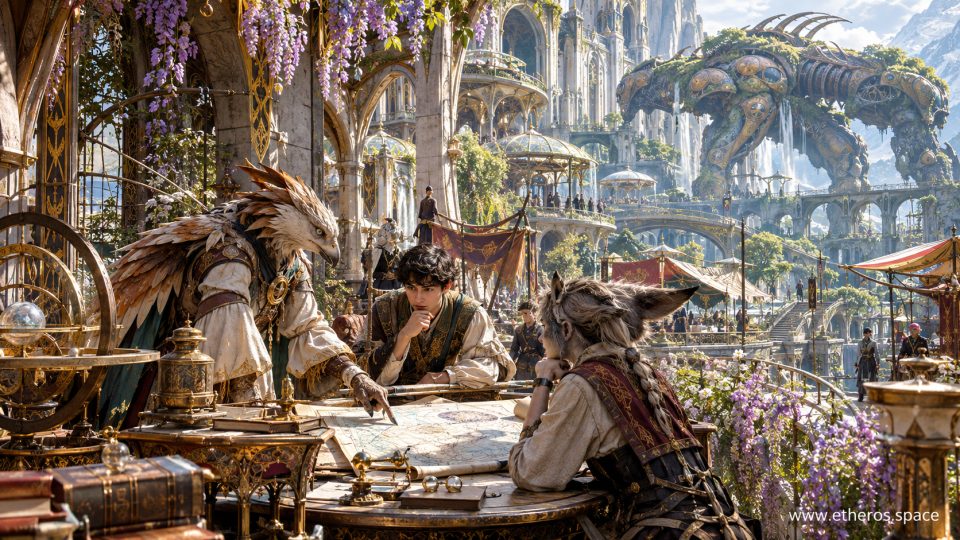
Beyond the high arches, a huge planet-born carrier moved along a distant viaduct, its moss-covered carapace strapped with a scaffold and luminous mineral bundles. Its people called it Varu-of-the-Ridge. The behemoth's four load-bearing limbs transferred immense mass into the old bridge foundations as it brought replacement crystal for the spillway's fluid regulators. Varu never appeared to hurry. Its slow footsteps had outlasted the foundry's oldest guild, and the bridge builders had widened entire sections of roadway around the measured cadence of its stride.
Siva noticed the problem first. One line on the drawing curved inward where the corresponding tooth curved out. There was no error in Ferren's cutting; the upstream ceramic cradle had expanded overnight after a stretch of heavy rain. A finished piece based on the old blueprint would scrape itself apart within a month. She tapped the discrepancy and showed Dovren, who laid his gauge against the rim once more.
Ferren stopped his tool. The work crew on the next bench were already calling for the rotor to be taken to the lift. Behind them the furnace bellows breathed, and the people waiting below the eastern spillway would be filling pitchers from a reduced flow. Each hour mattered. So did every day that followed.
Dovren placed a hand on Ferren's shoulder. 'We can gain a finger's breadth in the cradle,' he said, 'but we will owe it to the next repair.'
'Then we'll give the cradle back its room,' Ferren answered.
It was a tiny decision, no larger than the span between two etched leaves. Ferren deepened the return channel by a hair and redistributed the curve across the adjoining segments. Siva revised the pressure arrows on the drawing. Dovren ran the gauge around the rim, slowly enough that none of the workers behind them would have noticed the wait. Once it passed without touching, he lifted his thumb.
The crew carried the completed rotor toward the suspended lift. By the time the first rain-cloud shadow touched the higher aqueduct, a new current had begun turning below the city. Water reached the lower terraces in a steady, almost unremarkable stream. Ferren watched it from the foundry threshold as the lamps were lit, rubbing the stiffness from his wrist and hearing, at last, the river's old continuous voice.
No bell rang for the repair. In Veyrfall, the finest work was often the work whose success allowed everyone else to forget it had been necessary.