The Curve Beneath the Hammer
20261104T003224262676Z_088percent.png
Story
The Curve Beneath the Hammer
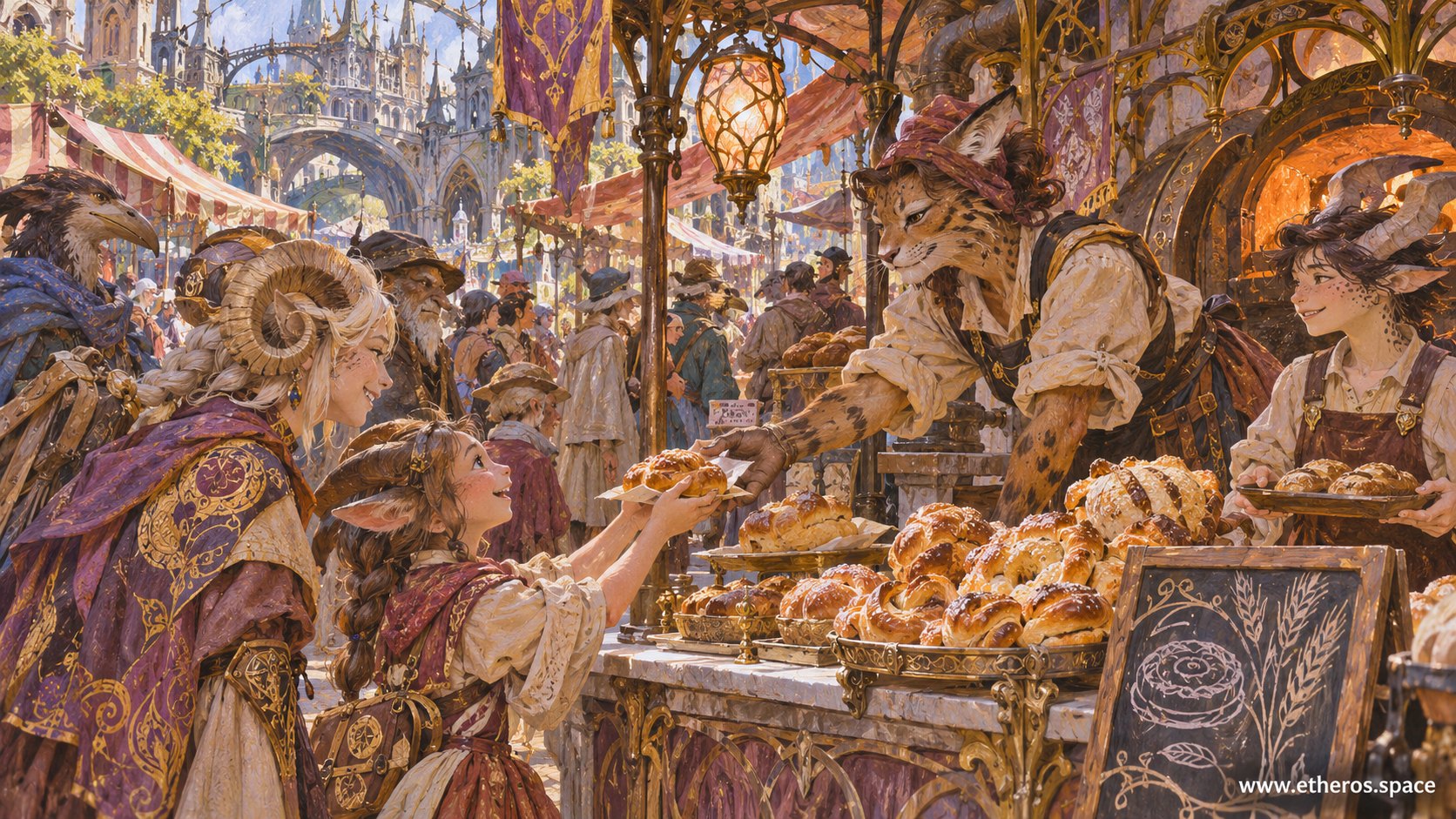
By the time the eastern bells reached the makers’ arcade, the anvil had already been warm for three hours. Heat made a small weather of its own there: the wavering air over the forge, the soot on the awning, the sudden orange stars each time iron met iron. Beyond the awnings, traders shouted across the stone thoroughfare and workers passed beneath bridges that had been mended so many times their original builders would no longer have recognized them.
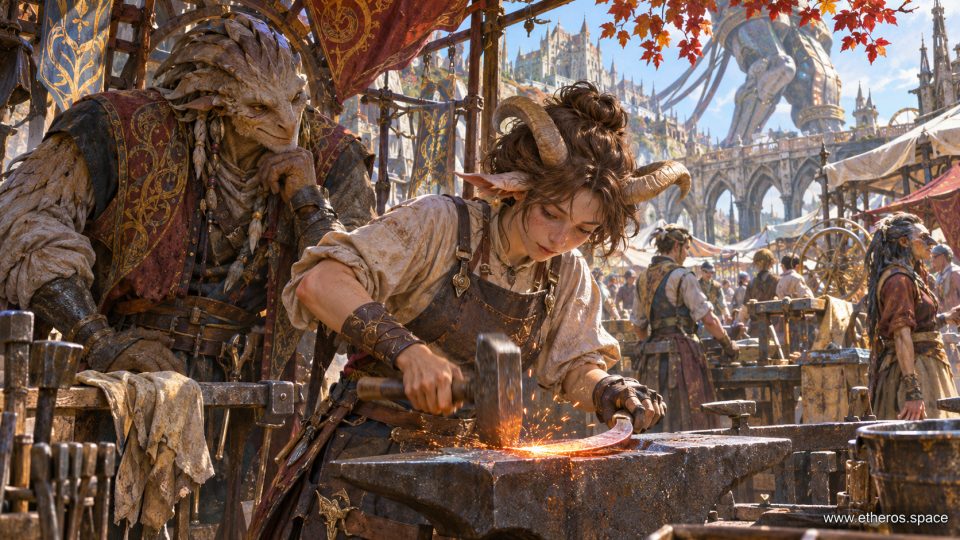
Tessa had been striking the same curved length of steel since sunrise. Its hooked end rested against the anvil’s face. With her left hand she steadied the work; with the right she brought the hammer down, not hard now, but precisely, drawing the hot metal toward a curve that would spring instead of snap. Her horns were tucked behind a disorderly knot of dark hair. Every blow made a small shower of sparks leap from the metal.
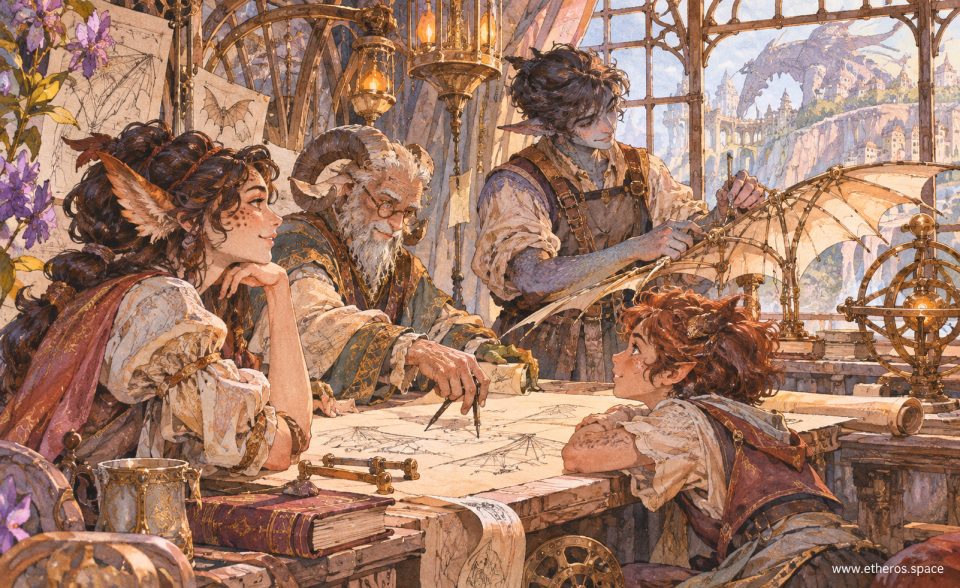
Beside her, Master Varrek watched without reaching for the hammer. His stone-colored scales bore the old scars of a life spent near furnaces. Beneath his embroidered red vest, one damaged shoulder sat lower than the other; a lifting injury from the year the south viaduct was rebuilt. When Tessa was younger, he had corrected every error before she could see it. Now he waited. That was harder for them both.
The implement was not a weapon. It was a narrow cutting hook for the keepers of the upper walkways, designed to slip between the living ceramic ribs of an old ventilation joint and cut away hard rootlike deposits without striking the sensitive conduit beneath. The joint served a crowded terrace of shops. If it jammed shut again in the winter dust, the hot air from the lower furnaces would have nowhere safe to go.
Tessa had seen a keeper try to free it with an ordinary chisel. The blade had slid; the keeper’s glove had torn. No one had been badly hurt, but she remembered the quick silence around the stalled machinery and the anxious look of the shopkeepers whose ovens depended on that passage.
Yesterday she had made a beautiful hook. Varrek had tested it against a block of fired ceramic. Its tip broke at the first turn. The fracture had sounded almost delicate.
Today she made the curve wider and the neck thicker. The result looked less graceful and felt better in her hands. She lifted the glowing edge, checked the shadow of its bend against the anvil, and struck twice more.
Varrek leaned in, his scaled fingers curled under his chin. “Where does it carry the force?” he asked.
“Not to the point,” she said. “Into the broad part of the hook, then back through the handle.”
“And the person holding it?”
“Stands outside the conduit. Both feet on stone. No one hangs their weight from it.”
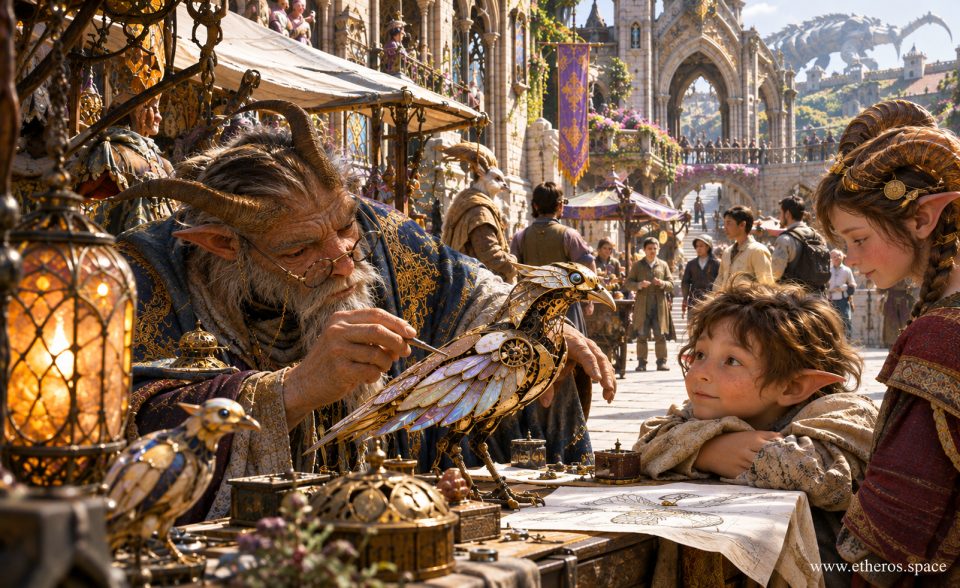
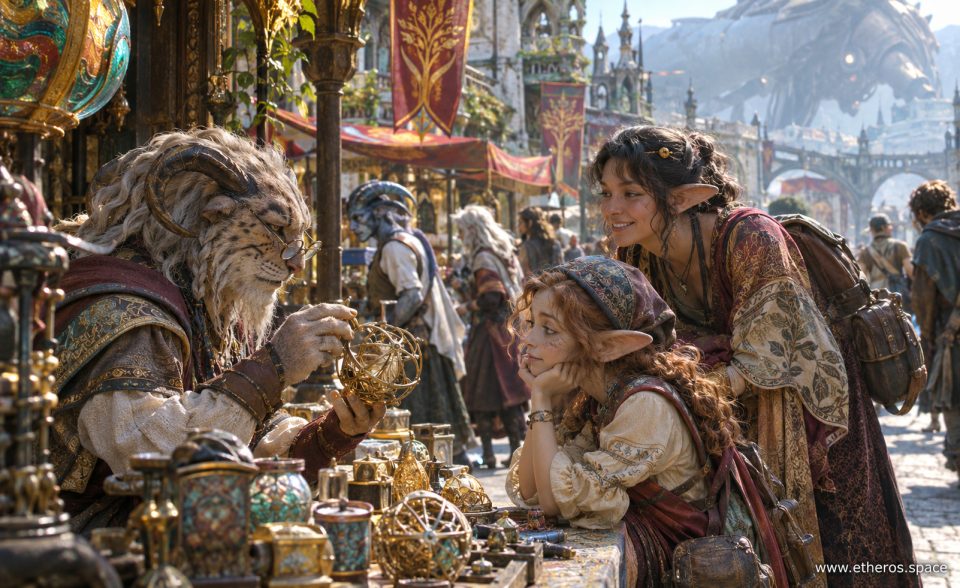
He gave the smallest nod. Around them, the market continued: a porter calling for passage, a shop assistant raising a basket, two merchants arguing about an invoice. Above the far colonnades, a pale articulated structure passed between rooflines, only part of it visible through the crowded city. It might have been a great service organism moving along the elevated works; from the forge there was no clear view of what its full body was doing. Tessa returned her attention to the anvil.
As the metal cooled from white-orange to red, she noticed an uneven brightness along its inner bend. It was a thin place she had not intended. Another blow would only stretch it further. She stopped, set down the hammer, and waited for Varrek to tell her what to do.
He did not.
Tessa returned the hook to the fire. She would thicken that section with a small scarf-weld, then shape it again. The extra heating would cost charcoal, and the walkways’ keepers had promised only the price of a common tool. There would be little left after materials. But the hook would not fail under someone else’s hand.
Varrek pulled the bellows lever while she watched the color of the metal. The forge breathed. Its air came from a foot-driven compressor at the back of the stall; charcoal surrendered its stored energy in heat, the metal softened, and the hammer translated the strength of Tessa’s shoulders into a new shape. There was nothing mysterious in that sequence. What mattered was knowing exactly where each force went.
When the repaired hook returned to the anvil, Tessa worked more slowly. A child paused beyond the railing to watch the sparks. A vendor called the midday price of dried fruit. Varrek's eyes followed the tool, not the apprentice. She felt unexpectedly grateful for that.
Near noon, the curve finally settled into its proper line. Varrek fetched the testing block, heavy with rough ceramic and fibrous deposits from a discarded section of conduit. Tessa set the hook into its narrow crevice, planted her feet, and pulled. The hardened growth split cleanly. The metal flexed and came back true.
Neither of them cheered. The market was too noisy for ceremony, and there were still the handle, the final tempering, and the keeper’s inspection to finish. But Varrek reached across the bench and turned the hook in the sunlight. Tessa saw that he was looking at the thickened joint, the part she had almost hidden beneath ornament.
“That,” he said, “is where it will live.”
By afternoon the tool would leave the arcade wrapped in coarse cloth. Tomorrow a keeper would carry it up a steep service stair, open the obstructed vent, and send warm air safely through the terraces again. No one in those shops would know the name of the person who had shaped the curve. They would notice only that the ovens drew properly, the rooms were breathable, and the old city had continued working for one more day.
Tessa took up her hammer once more. This time Varrek stepped aside to make room.