The Second Heart of Orrin Quay — The Current-Shell Repair
20261102T191620120122-0800_066percent.png
Story
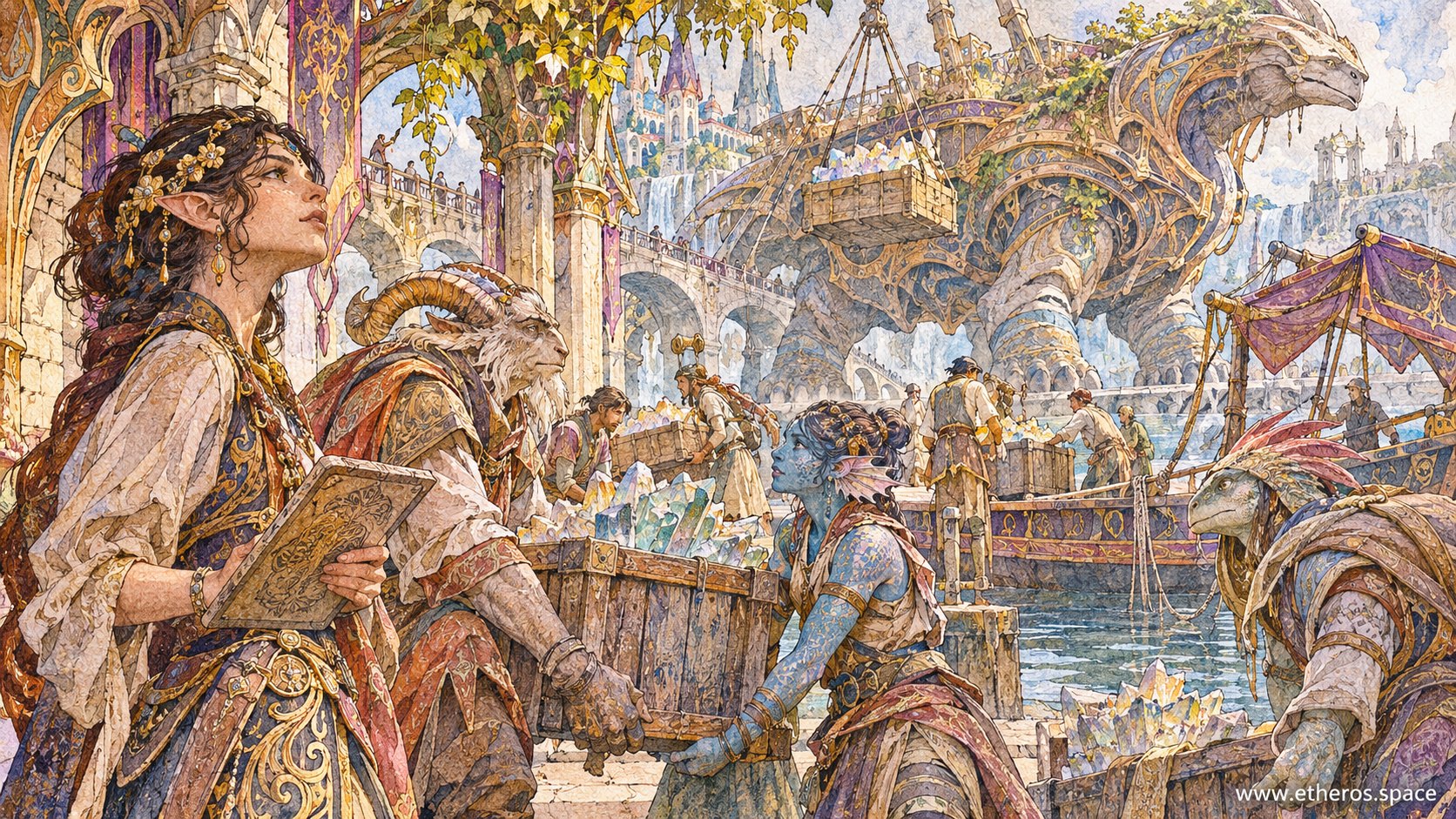
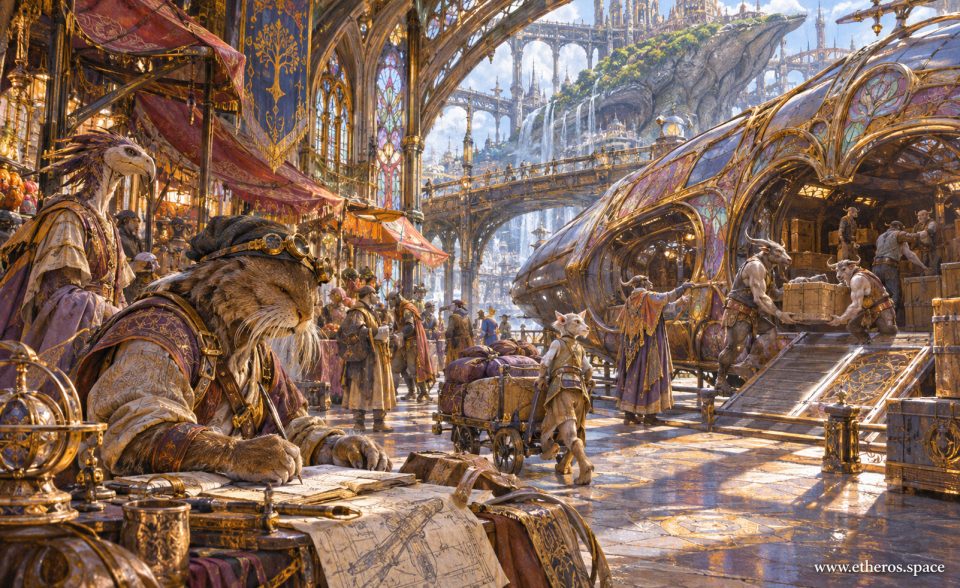
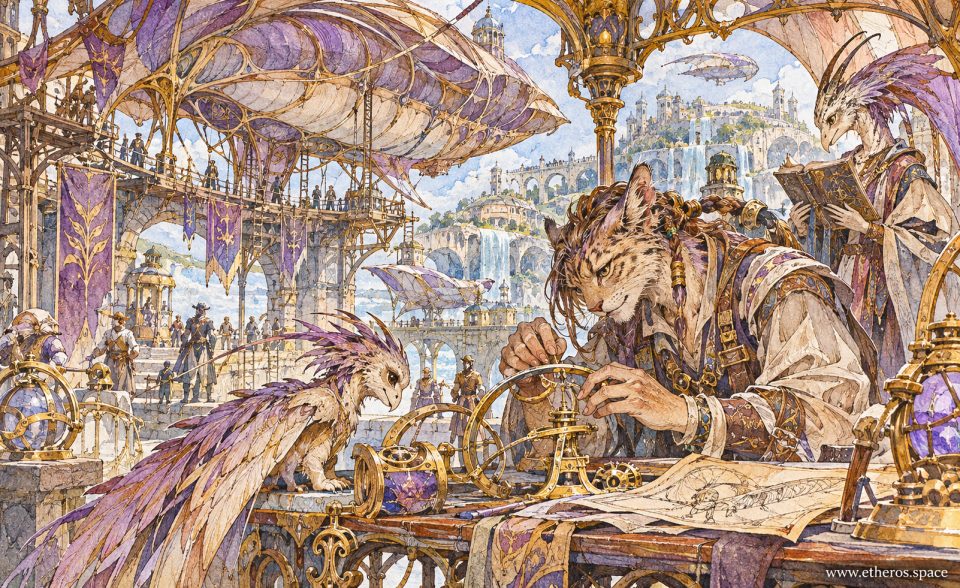
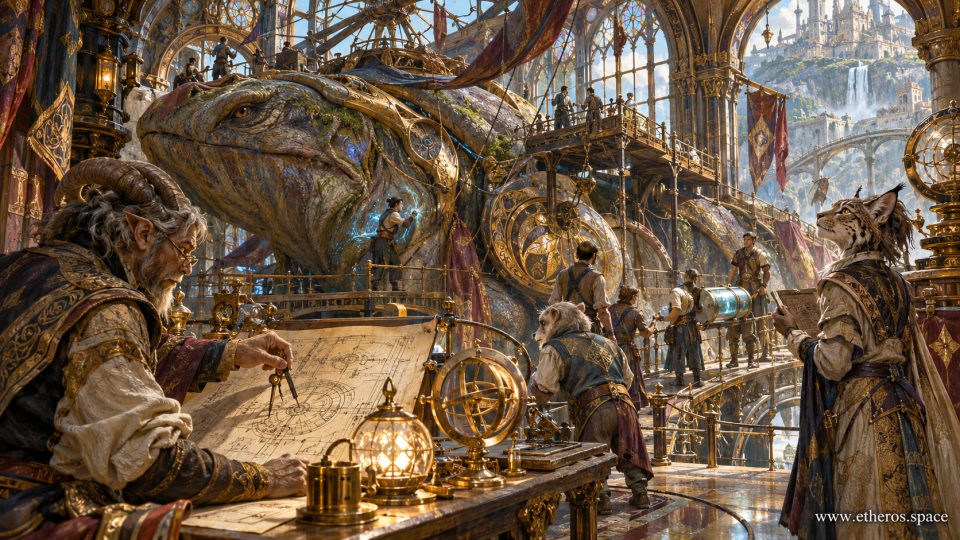
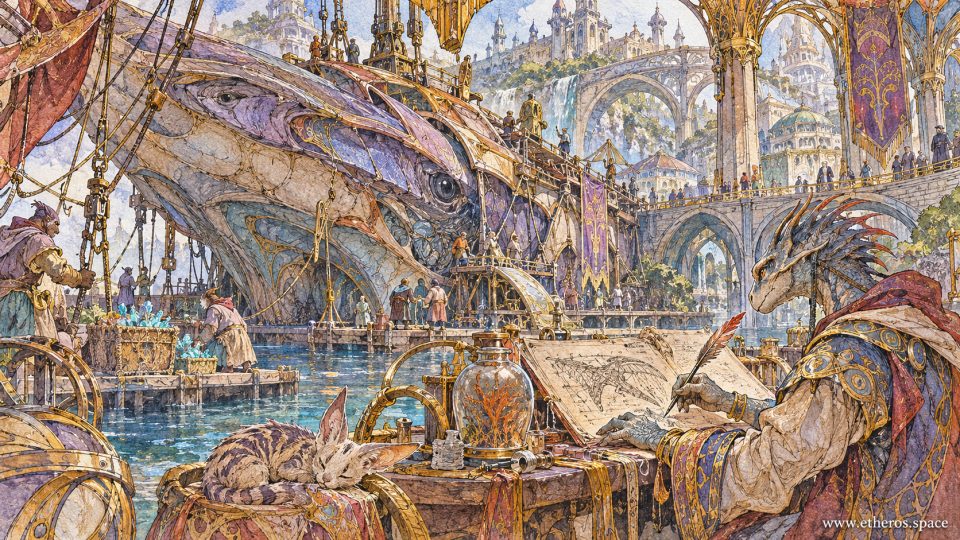
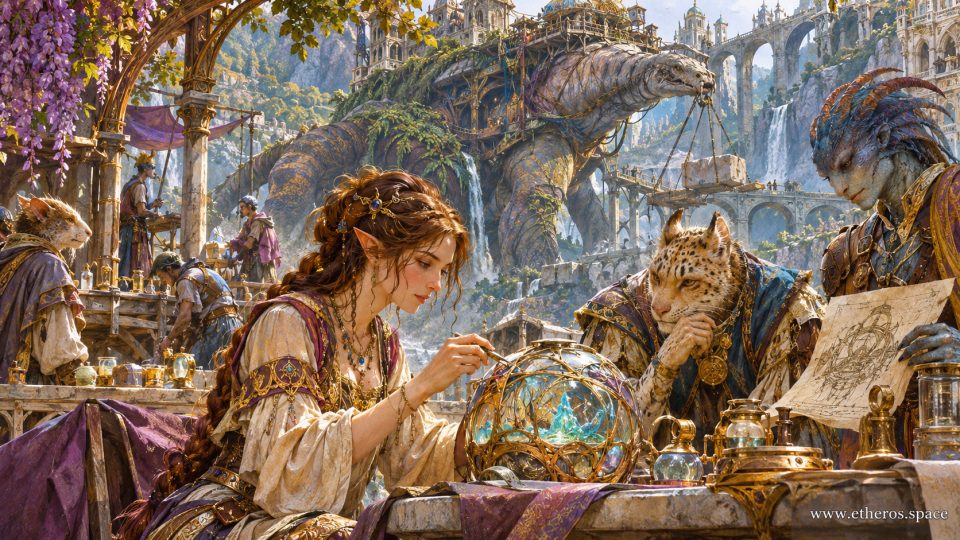
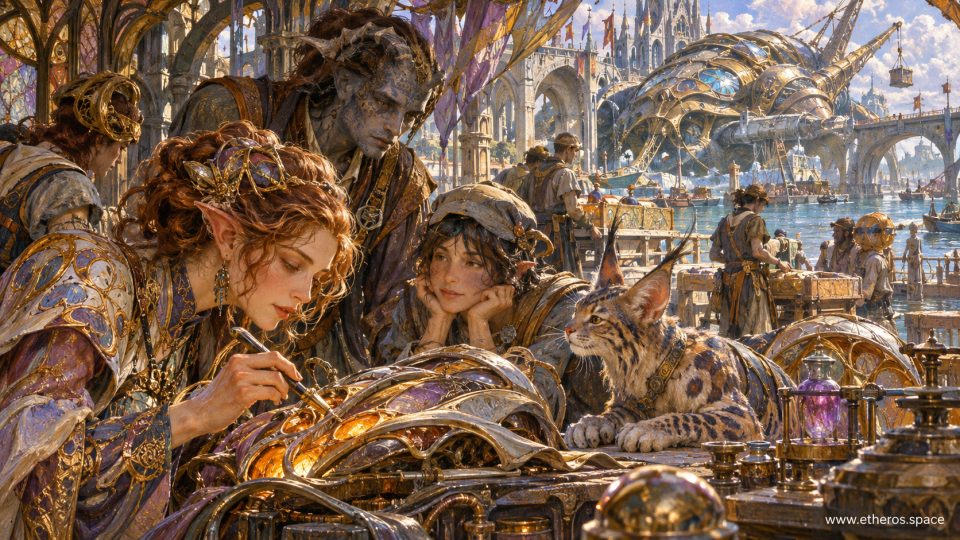
In Orrin Quay, the morning tide arrived with the cranes already turning. The city's stones held the warm smell of river salt; the blue reaches beyond the bridge shone under pale banners, and the great metal-backed harbor creature stood half in water as if listening to the clocks of a hundred working households. At the western repair arcade, three people bent over a broken current-shell and tried to finish a task too small for the city's notices and too important to leave undone.
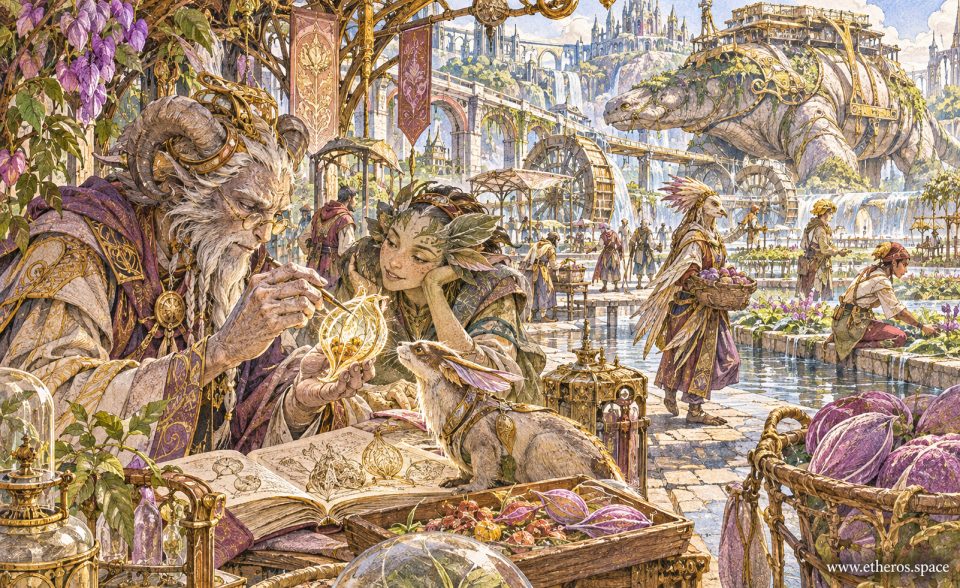
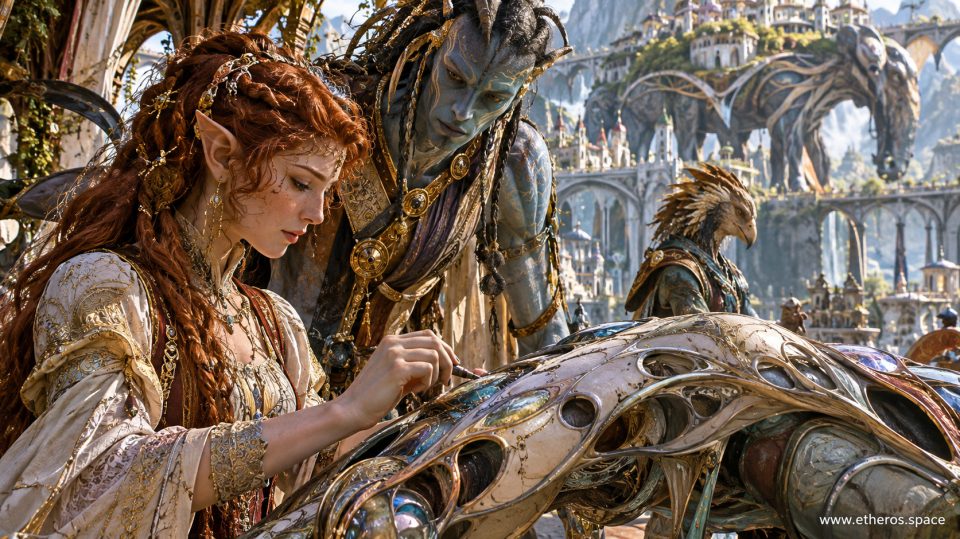
The shell was a curved instrument of brass ribs and purple-black living membrane, its inner lattice warm enough to illuminate a worker's hands. It belonged to a neighborhood water-keeper, a creature whose paired chambers could feel the changing salinity of the lower canal. Each morning the shell gathered a minute charge from the movement of those chambers, fed the difference through a vascular copper coil, and sent a pulse to the sluice gates. A pulse too weak and the freshwater cisterns took salt. Too strong and the gates slammed against their own beds. Neither failure was spectacular, but both could spoil a week of drinking water for the families living behind the quay.
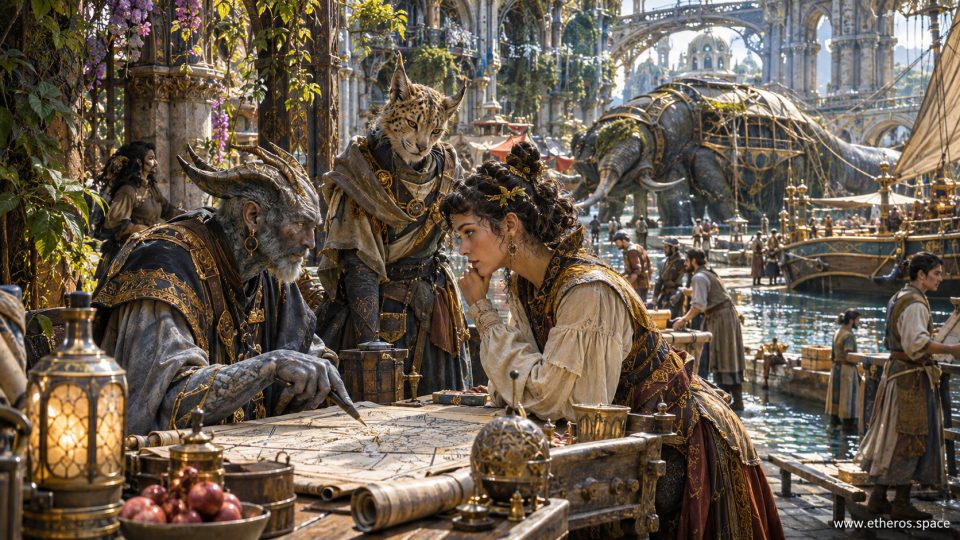
Aveni Sarr, the freckled, copper-haired woman at the bench, held a narrow probe inside the opened casing. Her pointed ear emerged from beneath a braided gold headpiece, but her attention remained on the small glowing seam she was trying to reconnect. She had inherited the workshop from a grandmother who worked by daylight and kept her accounts on scraps of sailcloth. Aveni had inherited the debts as well, and the stubborn certainty that a repair made properly was worth more than a new instrument made quickly. She adjusted the probe a fraction; the membrane contracted around its tip without tearing. That small courtesy from living tissue felt like permission to continue.
Behind her stood Therr Osken, a tall blue-gray Veyran with dark bone ridges at his temples and the old patterned scarwork of a tidal engineer across his cheeks. The guild had once paid him to calculate the loads of the city's moving bridges. When a footing failed during a spring crossing, the inquiry called it an error of maintenance. Therr called it a failure of listening. He had come to the quay to work among things small enough to hear. From behind Aveni's shoulder he watched the copper conduit and, without taking the tool from her hand, warned her when the tension moved in the wrong direction. She answered with a nod. They had argued over this repair for three nights, yet neither had used the argument as a reason to leave.
Across the bench, a young apprentice named Eri folded her cheeks into her hands and leaned close enough to watch the light travel between the ribs. Her cap was pushed back; its stitched leather rim still carried the mark of the boatbuilding school. Eri's mother handled food consignments for the upper towers, while her father ferried discarded machine cartilage to the rendering sheds. She had never seen the water-keeper itself—only this small, luminous piece of it—and was trying to learn whether machinery might be both useful and alive without being sacred or expendable. Every time the membrane brightened, Eri's eyes followed it as though she could catch the answer before it vanished.
Beside her waited Nettle, a sand-colored quayside lynx with long dark ear tufts and a harness of gently articulated gilded plates. The animal's forepaws rested on the table edge. Nettle was no ornament: it carried tiny sample canisters between the river gauges, crossing girders too narrow for a boot and returning by scent when fog hid the bells. Eri had raised it after a freight cart crushed one of its hind tendons; Therr had fitted the brace that returned its spring. Now Nettle stared at the quivering shell with the suspicion of a hunter confronted by a creature that neither ran nor fled.
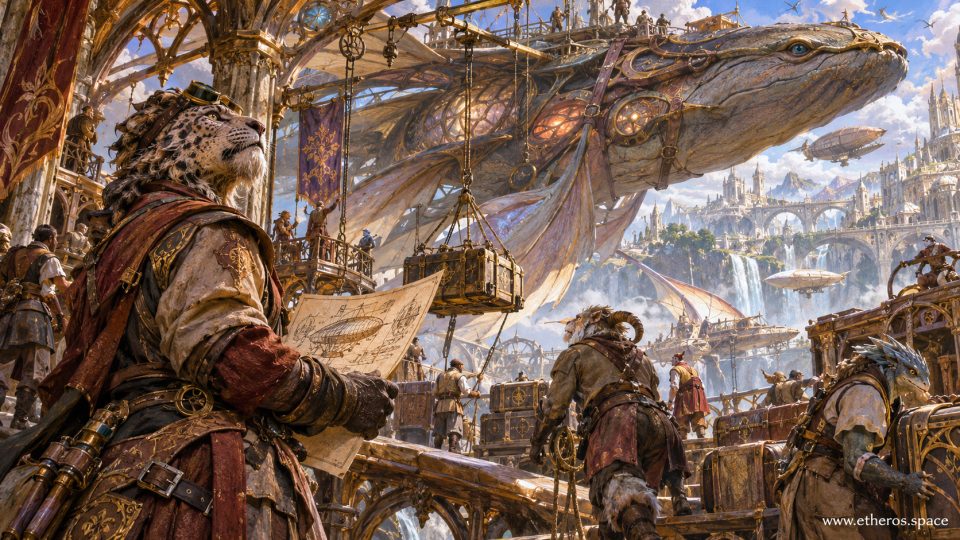
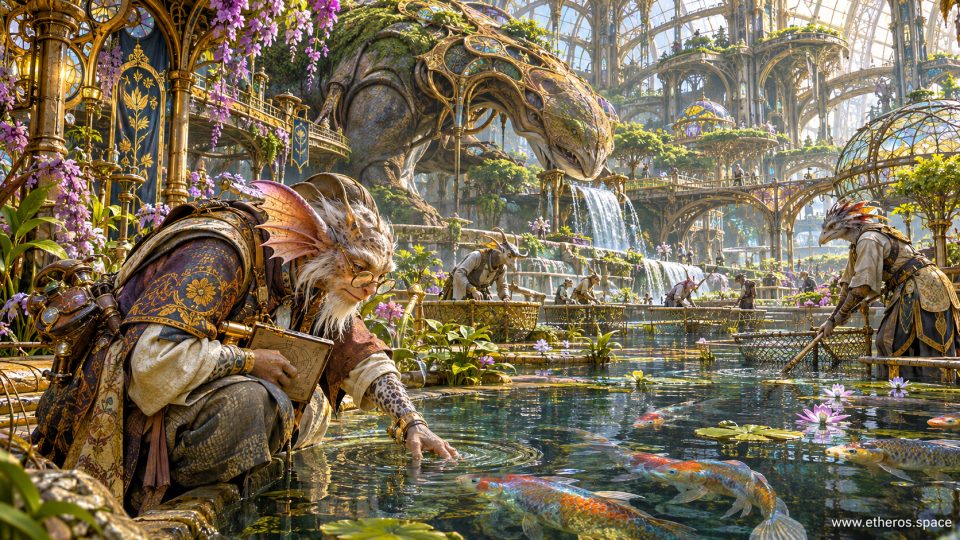
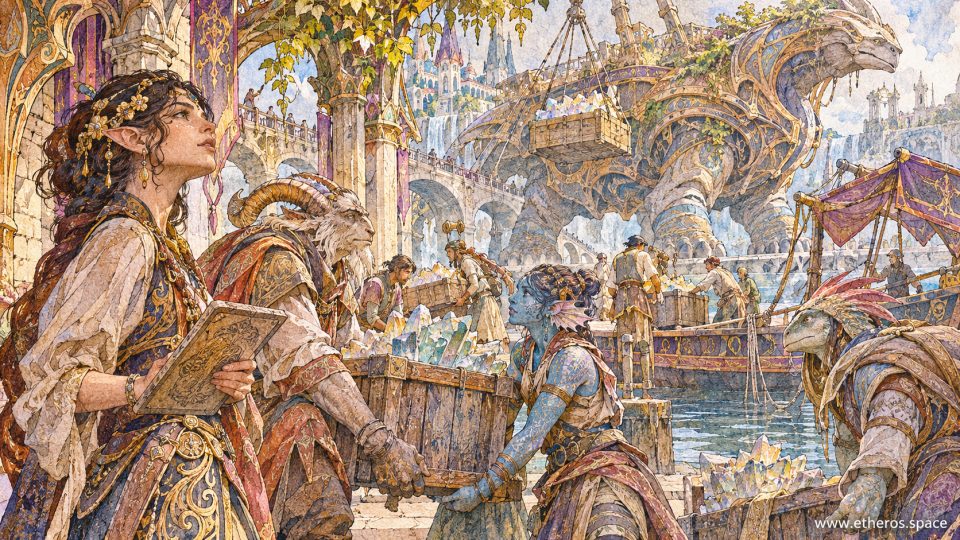
Out across the channel, the harbor behemoth known as Longwake advanced one anchored support at a time. Its plated back bore a water-lift and cargo cranes, its ventral pump assemblies drew brackish water through root-fiber filters, and its long articulated hoists transferred full cistern vessels to the upper footbridges. Every lift passed through its own broad hydraulic struts before the load could reach a deck or a worker's rope. People on the far platform managed hooks and lashings; others directed boats away from the footprint of its next step. The machine was planet-born, but its service was not a miracle delivered without labor. Its workers needed wages, its filters needed cleaning, and the canal needed room for the water it returned.
The failing current-shell had been removed at dawn when the harbor gate began opening an instant too late. Nobody had been hurt. That did not comfort Aveni, who knew how quickly a little salt could become sickness in the low streets. Therr watched the distant cranes, counting strokes against the pulse he hoped to see in the glass. Eri leaned forward. Nettle placed one paw on the edge of the shell and then withdrew it, as if respecting work it did not understand.
At last the living membrane closed around Aveni's probe. A soft amber ripple traveled through the copper veins; the instrument answered the changing water beneath the quay with a steady rhythm of its own. Eri smiled, not because she believed everything was saved, but because the first test had passed. Therr allowed himself a tired, almost invisible smile. Aveni lifted her hand, checked the pressure a second time, and prepared to send the shell back to its keeper. Beyond them, the boats kept arriving, the immense machine kept working, and the city kept depending on a hundred ordinary acts of care that no statue would ever remember.