The Bowl That Remembered the River
ETHEROS_RANDOM_20261103T112631504851Z_006percent.png
Story
The Bowl That Remembered the River
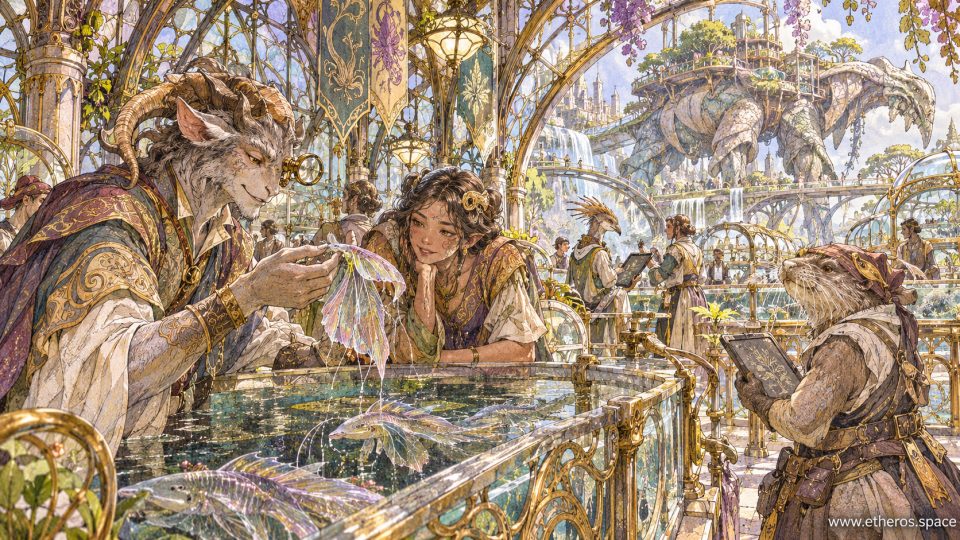
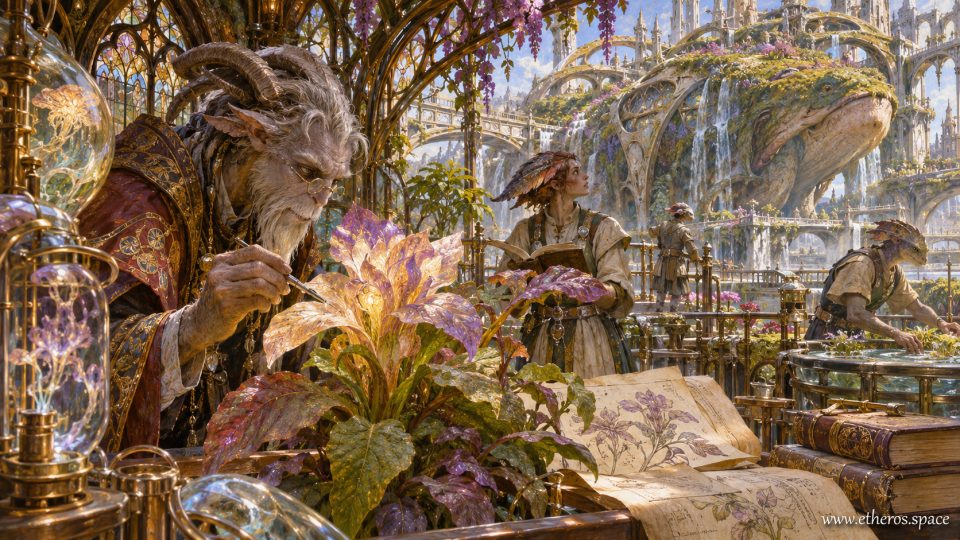
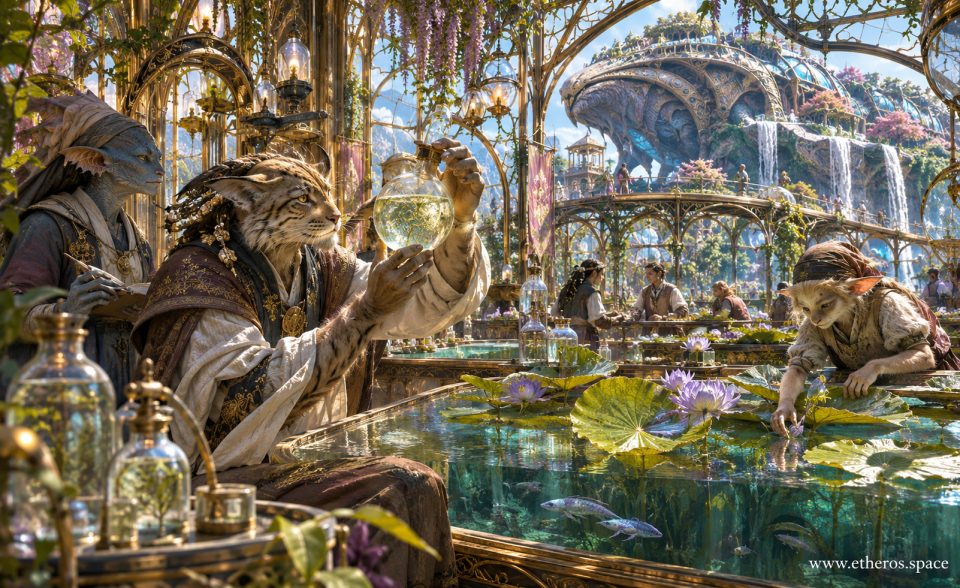
At the uppermost pool of the Lethen Glasshouse, the morning sun arrived before the delivery bell. It passed through the ribbed greenhouse roof, through a thousand leaves of hanging wisteria, and came to rest inside a small green vessel held up by an aging feline naturalist. The vessel was scarcely larger than his paw. Below it, the public pond lay bright and still, patterned by broad floating leaves and violet flowers; beneath the glassy surface, slender silver-blue fish moved between stems.
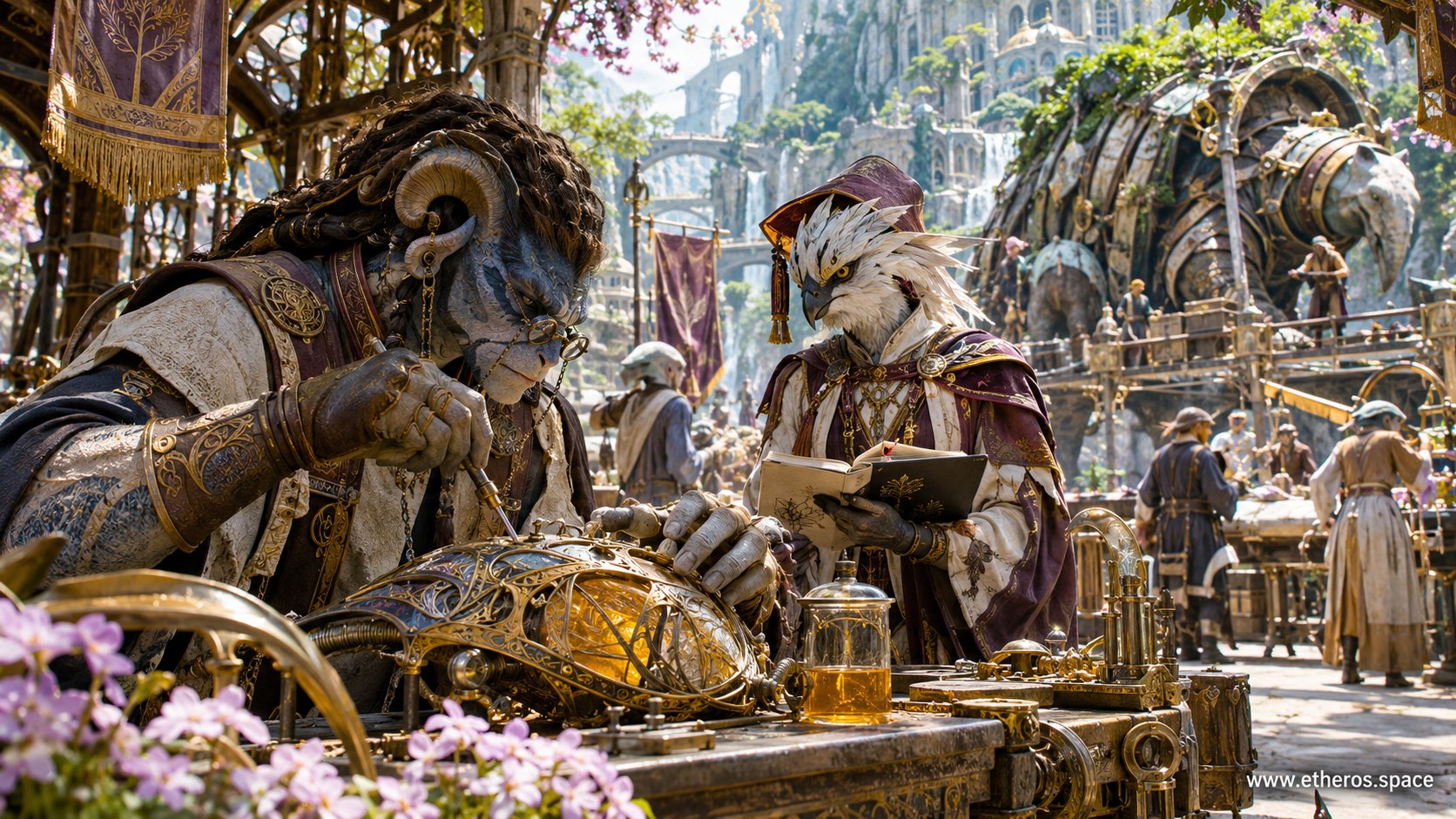
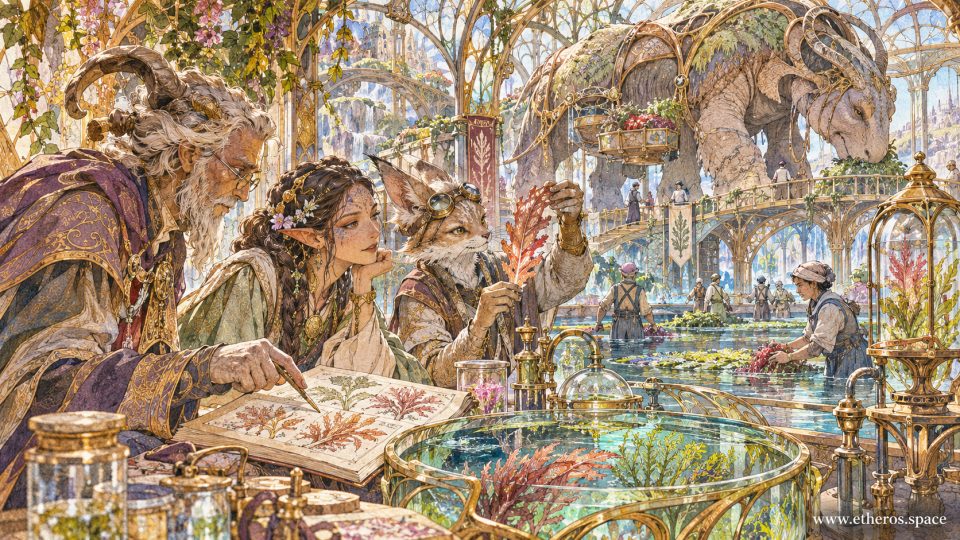
The naturalist was Master Sovan, keeper of passages: the places where water, living creatures, and people crossed the boundaries they had built for themselves. He had never cared for the title. It made his work sound like the construction of gates, when most of his life had been spent arguing that gates ought to open.
Beside him stood Irad, a blue-gray, fin-eared colleague whose slate was already crowded with observations. On the far rim of the pool, young Peli reached carefully between two floating leaves. She kept her palm flat, waiting for the small fish to approach on their own. The visitors crossing the balconies above mistook her patience for inactivity. Peli was the only one who knew how much work it took to be still.
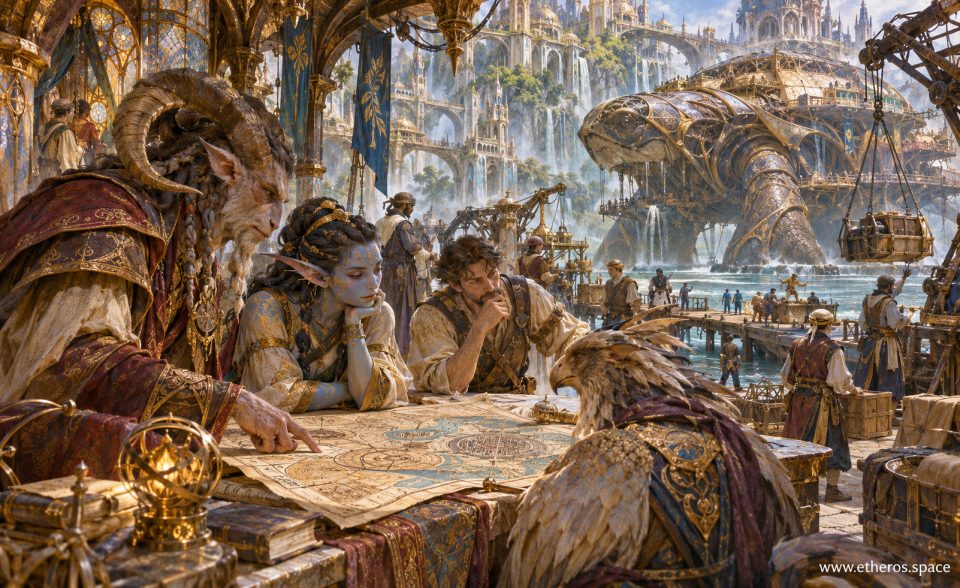
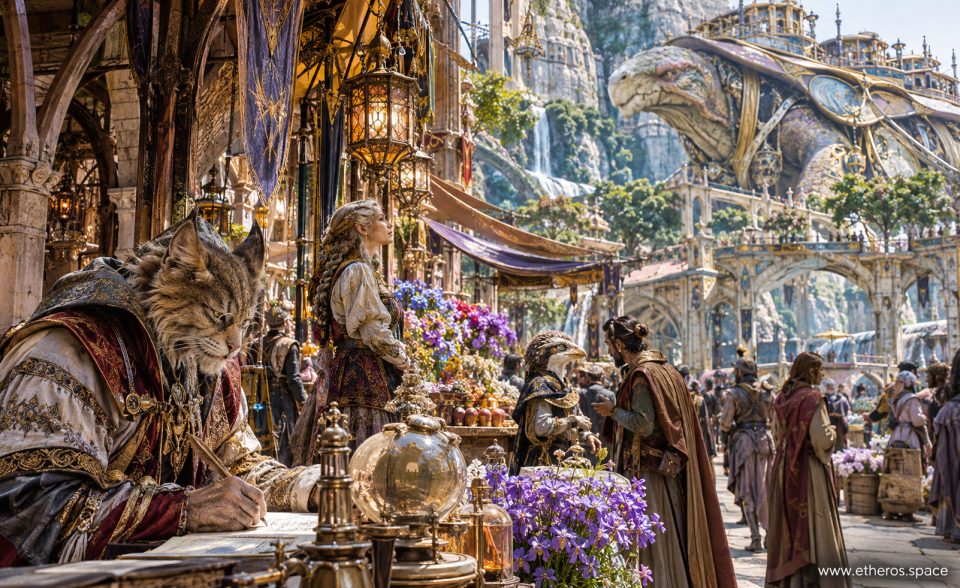
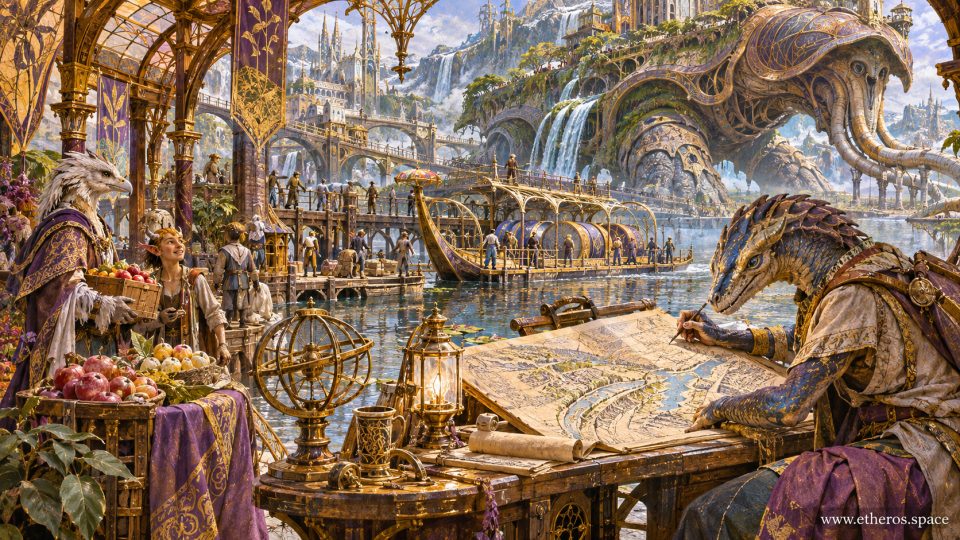
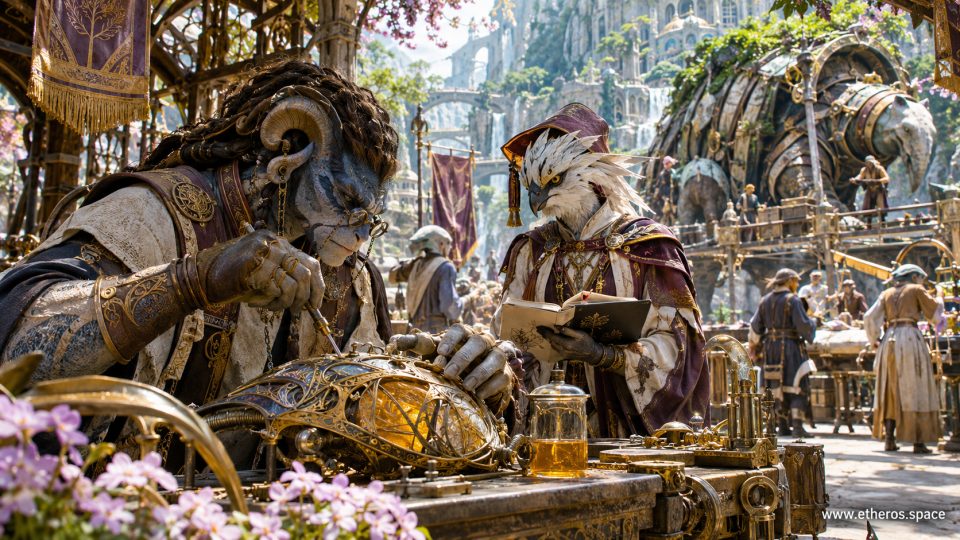
Far beyond the atrium, a colossal living carrier advanced along the garden bridges. Its immense head was crowned by terraces, blue-lit articulation and flowering growth; ribbons of water poured from its flanks into channels that fed the glasshouse. The creature, called Auroth by the gardeners, was neither a captive beast nor an ordinary machine. It had been born of Etheros's deep substrate, had carried orchards before there were bridges, and had acquired the habit of changing course whenever a city's need began to resemble its convenience. The people repaired its passages and measured its loads; it chose where its great feet would rest.
Today Auroth was due to pass the eastern distribution locks, carrying a season's stock of nursery plants and clean upland water. The glasshouse had been allotted twelve minutes of that water, a routine exchange that usually attracted no one beyond the regulators. But in the pool, a brood of silver-blue traveling fish had arrived three weeks earlier than the calendar allowed. Their fry were tiny, the color of wet glass. The council had called them an accidental introduction and ordered the basin emptied after the carrier's passage.
Sovan had spent four nights reading the old basin books. The records said the fry had not been introduced at all. Before the high bridges existed, the river used this route each spring. The fish were returning along a path older than the city's walls. When the canals were elevated and diverted, their migration had survived in a chain of neglected drainage pockets. The glasshouse was not their temporary home. It was the last remaining piece of a place they remembered.
He tilted his green vessel into the light. Within it floated a thin, rooted strand collected from the pool's lowest stone seam. Irad compared the strand against a page of old watermarks; the roots had grown in the layered mineral bands left by decades of the carrier's seasonal overflow. That made the strand evidence, but not enough. It would be easy for an impatient councilor to say a plant could have drifted here yesterday.
Peli raised two fingers without looking up. A shoal of young fish had gathered beside her wrist, each one turning toward the shaded underhang of the pool. Their movement traced a narrow line from the basin to an old culvert hidden beneath the goldwork. Irad added the direction to her slate. Sovan lowered the vessel. Suddenly the argument was no longer about a basin or a pretty flower. It was about an unrecorded road, still traveled by lives too small to notice from the council chamber.
On the terraces, Auroth shifted its weight. Water quickened in the channels and the lilies trembled. Workers on the high bridge looked down toward the pool, then toward the gatehouse, wondering whether the daily transfer would be delayed. Sovan did not send them away. He asked the nearest technician to open the old culvert's inspection hatch and measure the current rather than dam it. He asked the keeper of the public walkway to leave enough room for the fish to pass while visitors watched. He asked for a page in the distribution ledger to be marked *habitat*, not *loss*.
The first fish entered the dark opening on its own. Then another. Neither made a heroic gesture. Peli merely withdrew her hand and smiled as if a friend had found the correct stairway home.
At noon, the great carrier moved on. Its gardens and waterfalls continued toward the eastern quarters; the city's pipes still carried drinking water, its bridges still bore their measured loads, and no nursery had been deprived. The council would later debate who owned the culvert and what it should be called. Sovan knew these arguments would take weeks. For the moment, the old route worked. That was a fact even a council could eventually learn to recognize.
Before closing his notebook, he drew the simplest map of his career: a pool, a narrow line beneath it, a river beyond the greenhouse, and a single arrow pointing outward. In the margin he wrote, *Not every passage we discover is ours to govern.*
The botanical terraces shimmered in the afternoon, fragrant with wet leaves. Peli stayed beside the pond, where the youngest fish were still deciding whether to follow. She would stay until they had made up their minds.