The Night the Moth Took a Second Name — Backstage at Rootglass Theatre
Story
THE NIGHT THE MOTH TOOK A SECOND NAME — BACKSTAGE AT ROOTGLASS THEATRE
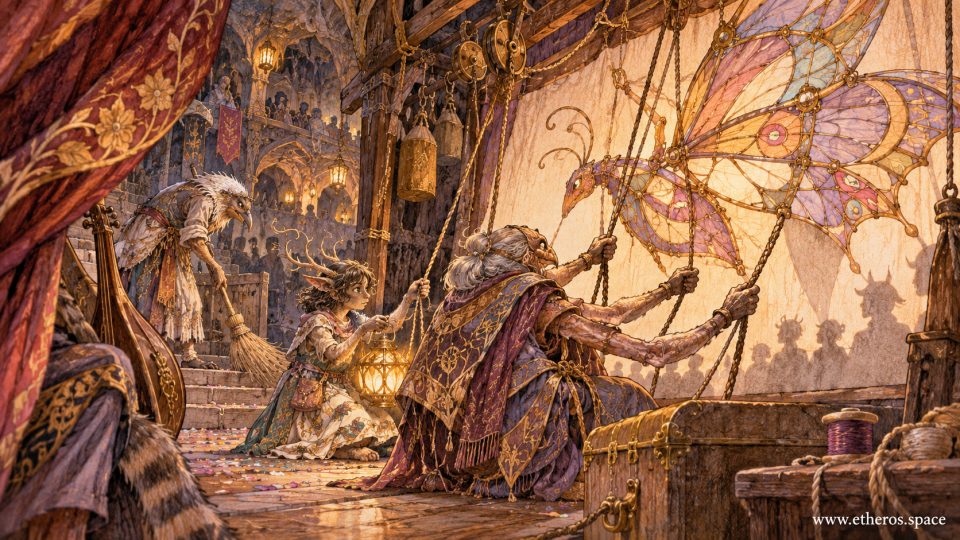
By the time the third gallery filled, Pessa had swept the same stair twice. The audience was still bringing fragments of the street inside: sand from the dry terraces, yellow leaves from the upper road, and little scraps of festival paper that clung to their hems. She took the broom in both feathered hands, leaned into the stone step, and pushed the debris toward the basket beneath the hanging harp.
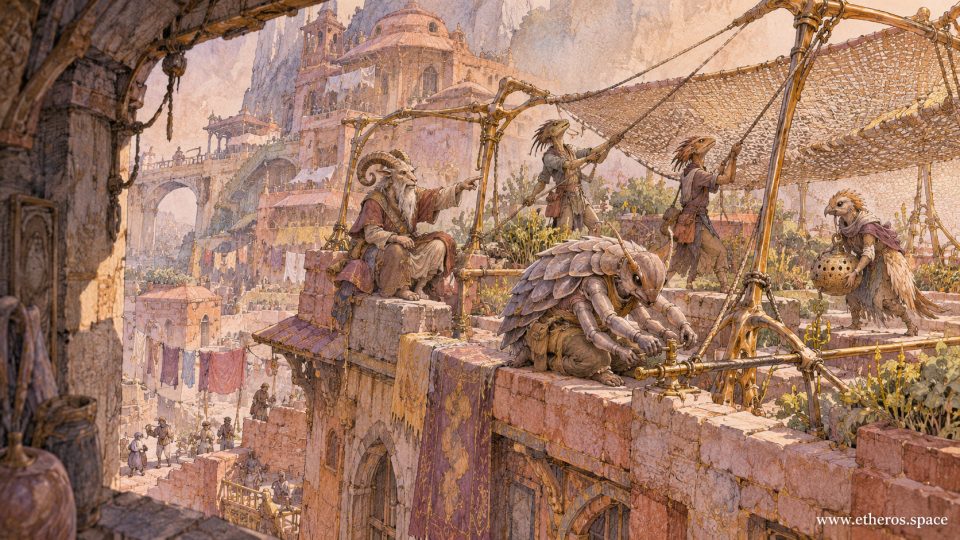
To the right of the red curtain, the great moth waited in its forest of ropes. Colored membranes stretched between gold-ribbed spars; the huge wings could open, curl and turn by the pull of separate lines. Behind them glowed a warm silk screen. Three figures on the other side of it had already become shadows, though the play had not begun.
Horrun was kneeling at the brake handles. His four thin arms worked independently, as they had for most of his sixty years in the Rootglass theatre: one testing the weight of the left wing, one holding the right restraint, the other two gathering slack into neat coils. He had spent the morning insisting that the new scene was impossible.
“It has one name,” he had told Ciri. “We cannot give the moth two names without changing the tale.”
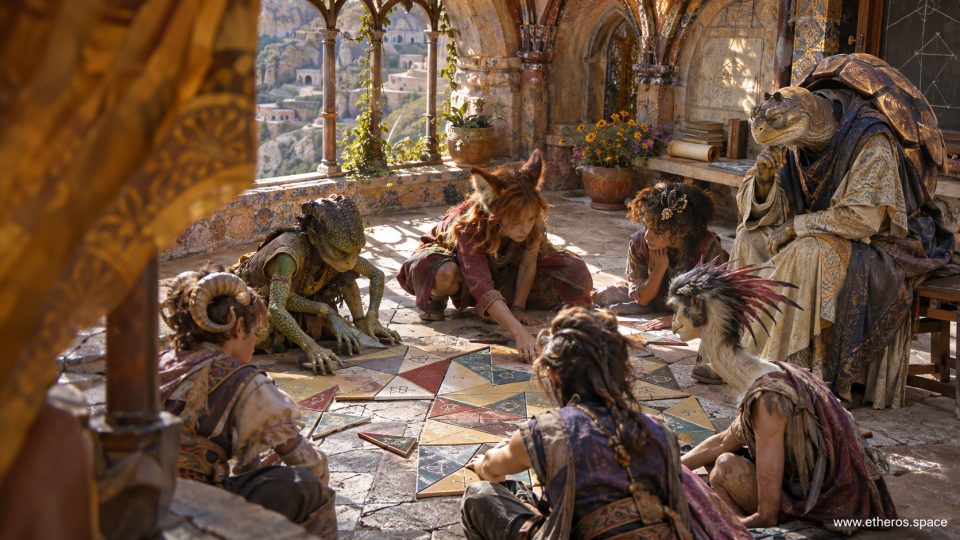
Ciri, the young antlered stagehand, had not argued. She held a lantern by its carrying ring and watched the ropes at the old man's elbows. For three days she had tried to explain that the people from the southern scarps did not think the moth stole the sunrise. In their story, it carried a dying ember through a winter so long that nobody remembered the word for morning. To Ciri's family, it was not a thief at all.
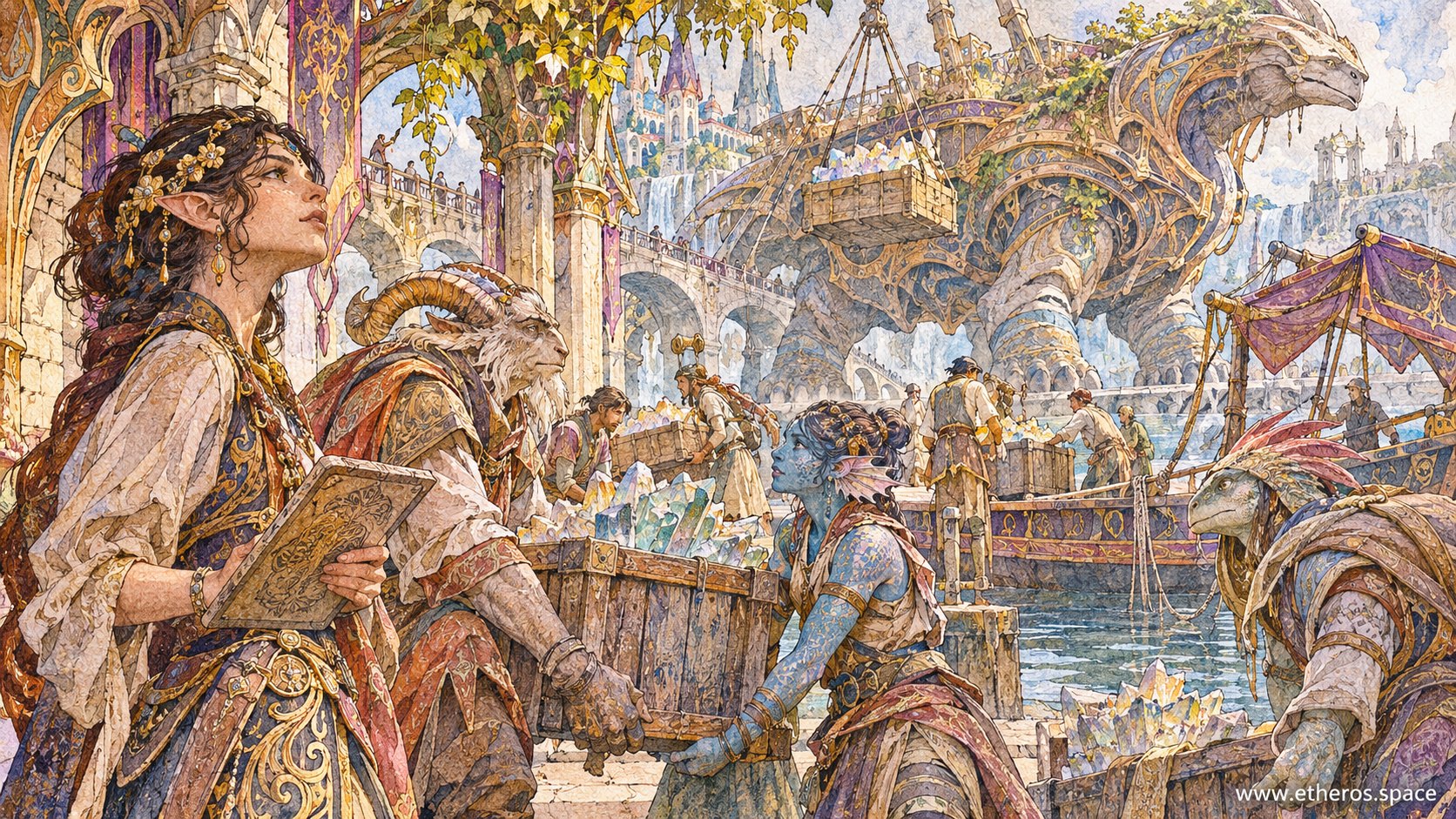
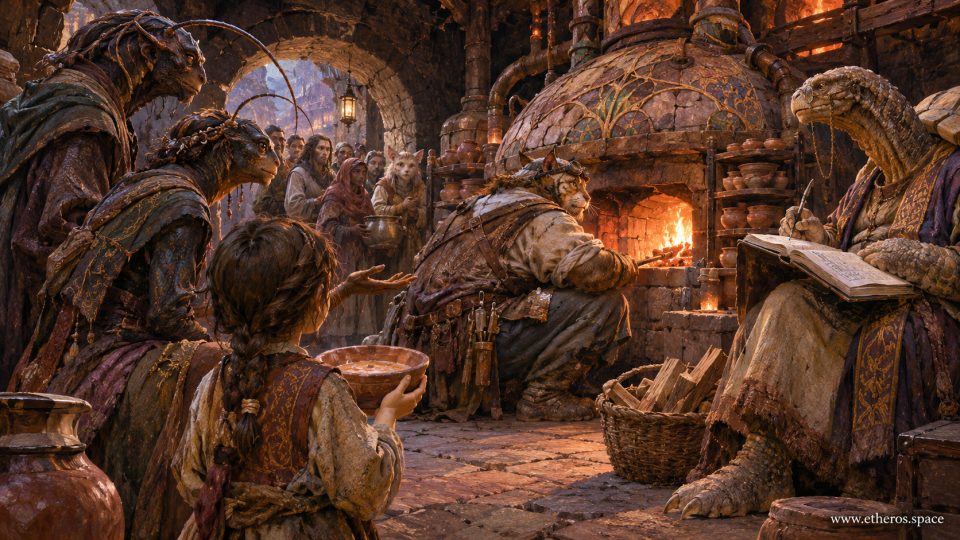
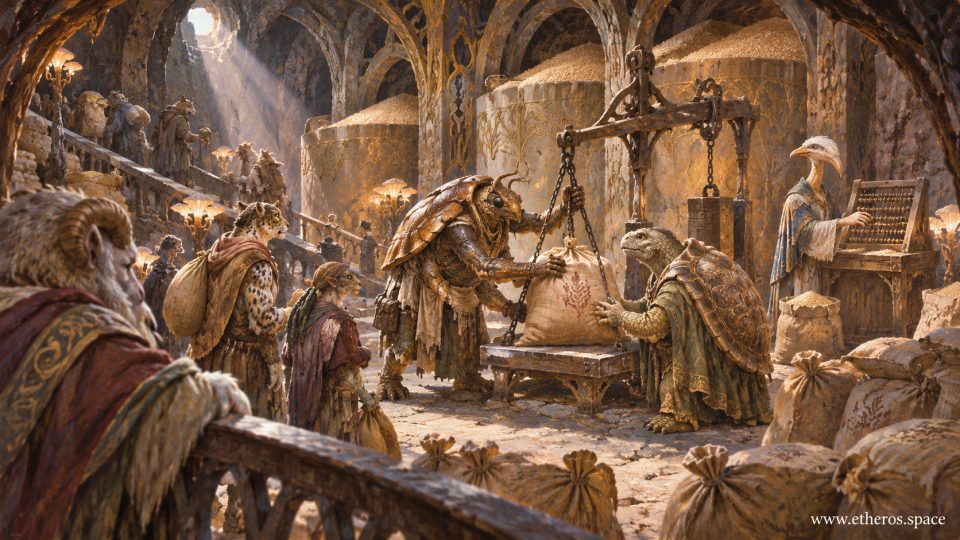
Rootglass was a theatre carved inside a dry mountain, and its audiences arrived from the roads threading across the plateau. Some came for the finely worked lanterns, some for the underground songs, and some because the ticket cost no more than a bowl of warm grain. In recent seasons the city had welcomed households from farther south. They brought tools, seeds, work songs and stories told with different endings. Most nights these differences made the theatre richer. Occasionally they made its oldest performers afraid of losing something.
Horrun gripped the load line. The moth's upper wing lifted a handspan and stopped. Its weight passed through a bronze hinge, over a polished pulley and into the wooden brake set firmly against the stage floor. He relaxed the line slowly. The wing descended without a jerk. A beautiful illusion, Pessa thought, always involved an unromantic account of where the load went.
“The audience will notice,” Horrun muttered.
“They will notice if the left wing falls,” Ciri said. “They may not notice that a name has changed.”
He gave a reluctant laugh. She was old enough to know when his indignation was a rehearsal of its own.
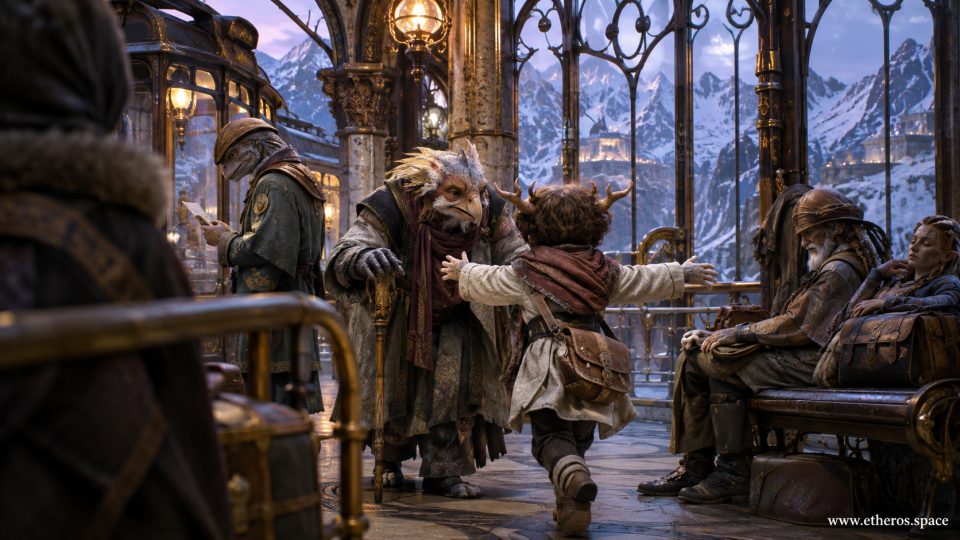
Pessa left the broom against the pillar and moved the lamp a little farther from the screen, so its heat would not reach the stretched membrane. The moth's shadow grew smaller. From the gallery came the restless, ordinary murmur of a crowd finding its places: a child asking whether the wings were alive, an elder settling a cane, someone calling to a friend across the benches. No one there knew that a quarrel about a name was taking place only a few steps behind the curtain.
Horrun looked at Ciri's antlers, at the little painted bead on her lantern, then at the new line she had tied to the moth's lower wing. Its knot was sound. She had learned that knot from him.
“Tell me your family's name for it,” he said.
“Ember-Bearer.”
“And ours is Dawn-Thief.”
Ciri nodded. “Maybe the audience can hear both.”
There was a long silence. Pessa returned to the stairs, not because they needed sweeping but because she knew the value of leaving someone room to think.
At last Horrun drew both wing cords taut and gave Ciri the smaller handle. “Then you must tell them why the moth did not drop the ember. I can make it turn at the moment you speak.”
For a moment Ciri only stared at the handle. Then she set her lantern safely on the stone and took the line with both hands. Together they tried the movement: the far wing opening toward the warm silk, the near wing yielding slightly, a long, wavering shadow spreading across the screen. Its balance depended on their separate pulls.
Out in the hall the first bell rang. Pessa lifted her broom again. Horrun checked the brake; Ciri checked her knot. Neither looked toward the audience. They were busy making something the audience could believe.
When the second bell sounded, the moth opened its wings. The old name came first. The new name followed, gently, before anyone had time to be afraid of it.
And among the crowded galleries, someone who had come from the southern scarps smiled in the dark.