The Line That Would Not Stay Still
20261104T083521457491Z_091percent.png
Story
THE LINE THAT WOULD NOT STAY STILL
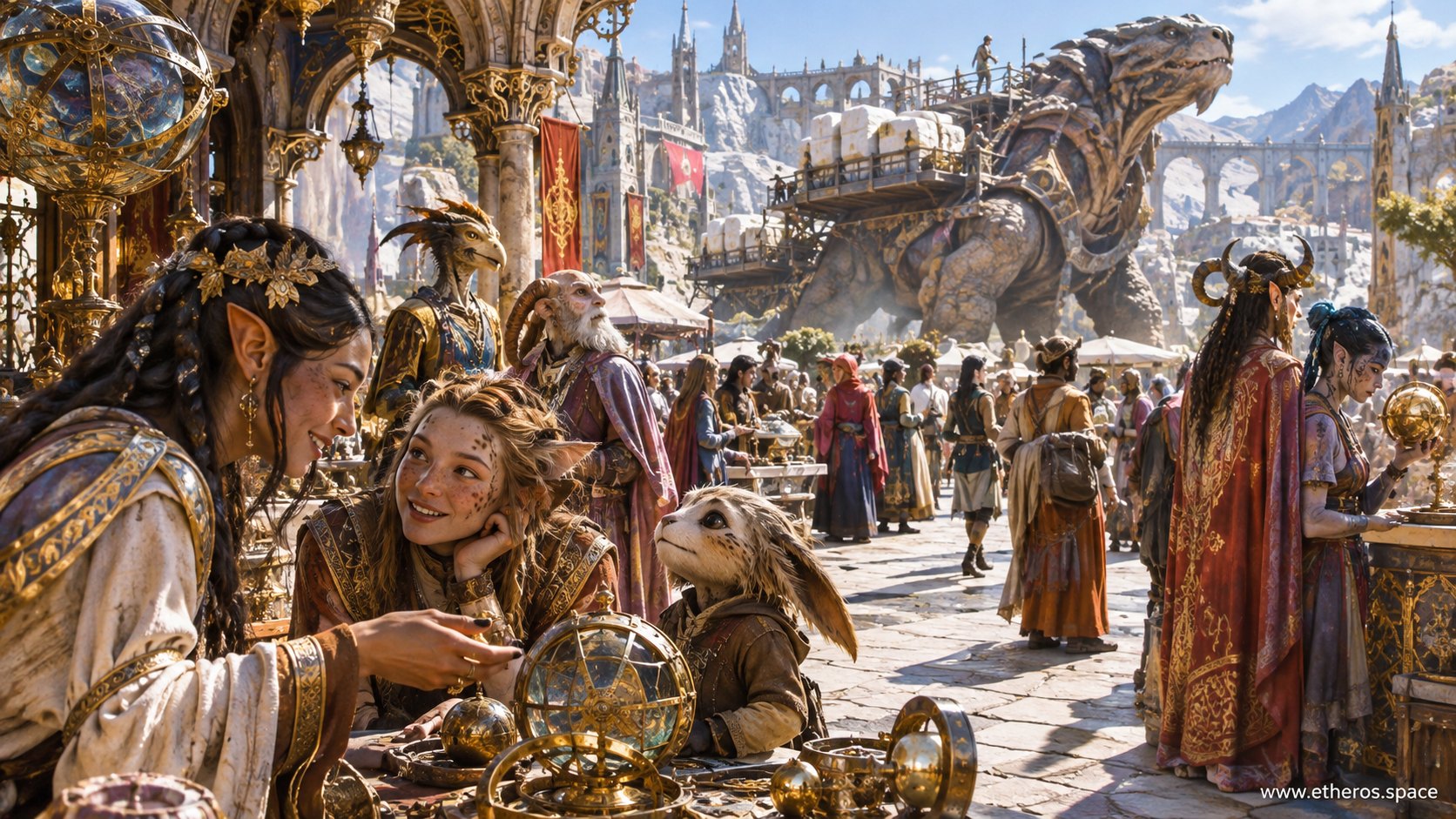
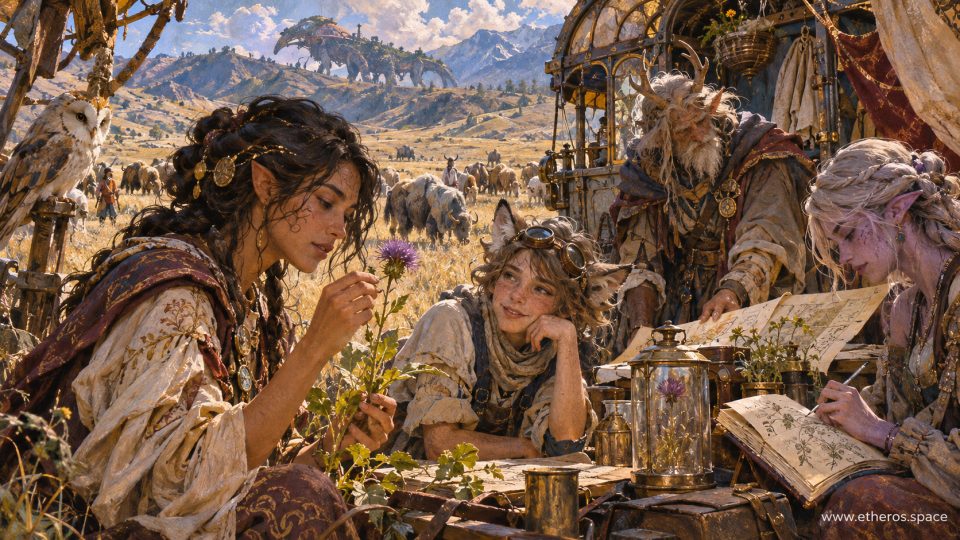
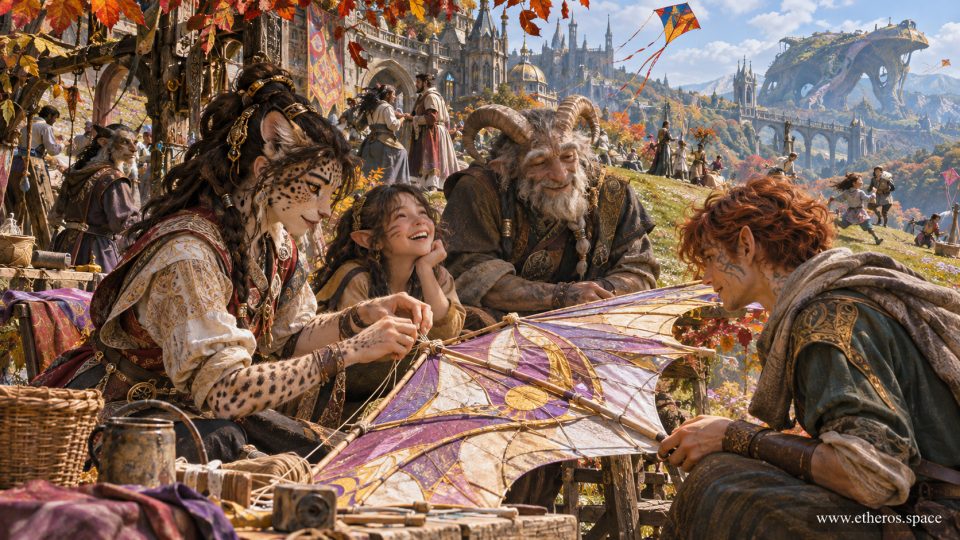
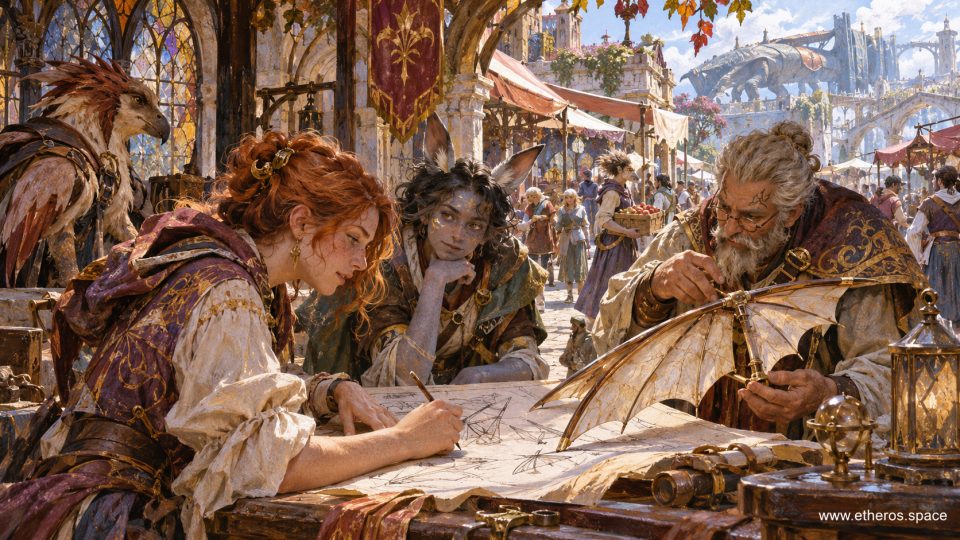
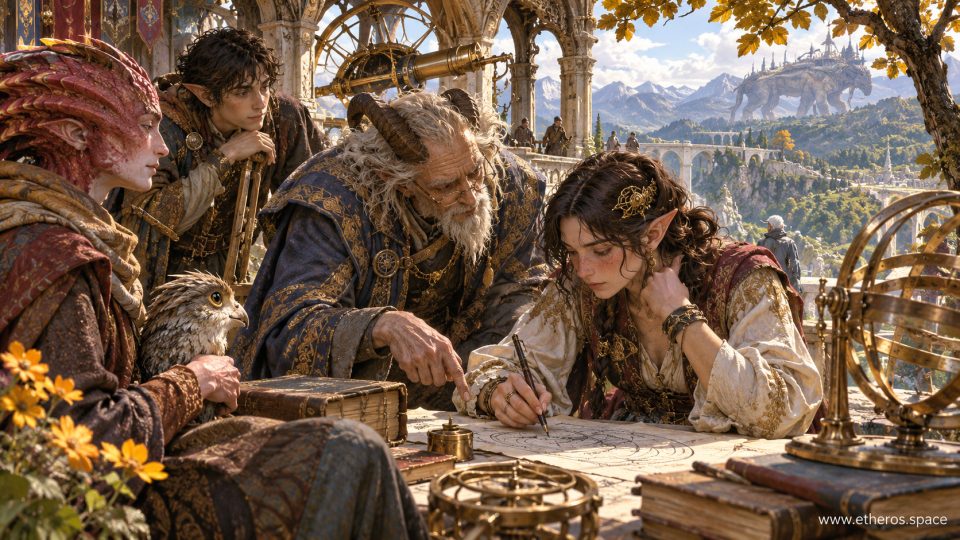
The small observatory on the eastern shoulder of the Antherine Hills was busiest when nothing appeared to be happening. Across the sunlit terrace, the stone ribs held the afternoon in strips of blue and gold. A brass telescope stood beyond the table. Autumn leaves scratched quietly against a tall arch, and the valleys below lay far enough away that even the freight bridges seemed delicate. On the opposite ridge, something enormous, many-limbed and plated, moved or stood against the hills. From the terrace nobody could say what work, if any, it was doing.
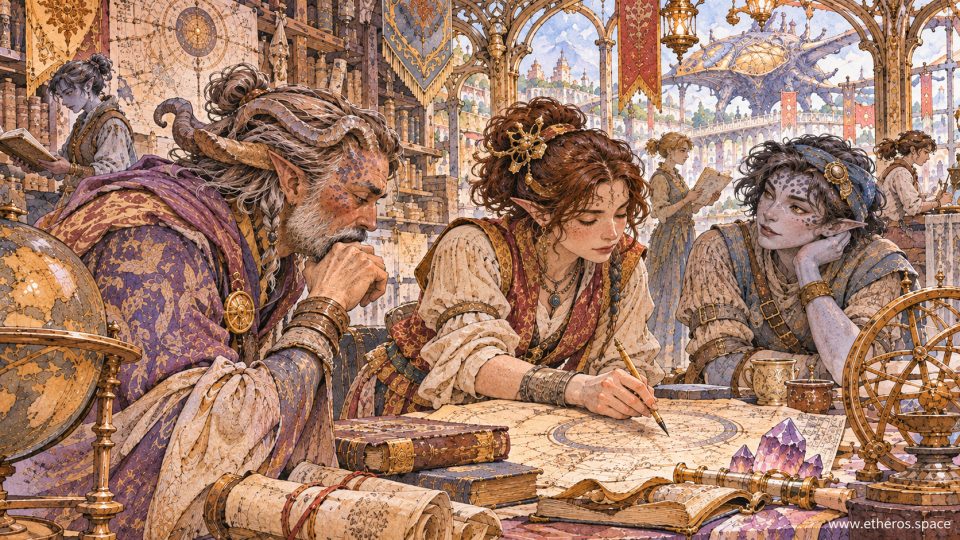
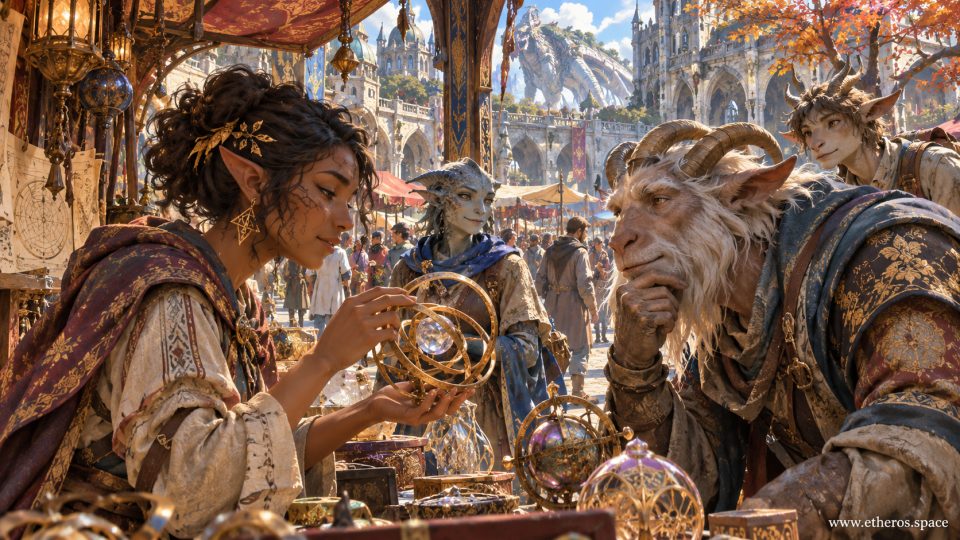
At the table, a young chart keeper called Ila Venn bent over a circular drawing, holding a dark pen where two curved lines almost met. Her dark hair was pulled back beneath a small gold clasp. The pale fabric at her elbows had been stained by many days of ink; the red-and-gold garment across her shoulders had been mended more carefully than its decorative weave required. She did not look up when Mentor Sovan leaned closer. A white beard fell between the elder's curled horns, and his spectacles had slid halfway down his nose. He laid a heavy finger at the edge of the parchment without covering the mark Ila had just made.
"That is where the old road appears," he said. "Not where it is. Where the instrument says it is."
The distinction was small on the paper, less than a fingernail. At the bottom of the valley, it was the width of a freight wagon.
A third scholar, the young dark-haired Leth of the high terraces, rested his chin against one hand, watching the elder's finger rather than the distant panorama. Leth had returned from the night watch with two lists of angles that should have been identical. Neither was. He had expected the measurements to be dismissed as the product of cold fingers and fatigue. Instead Sovan had asked him to bring both lists to the table and to keep the originals untouched.
Rassa, a red-scaled traveler wrapped in a russet shawl, held a small feathered cliff-bird close to her chest. The bird had flown with her along the saddle road that morning. It was not an oracle or a measuring machine, only a nervous creature whose sudden stillness alerted her to changes in the wind. When she arrived, she found the terrace full of diagrams and one question no one wanted to answer too quickly: had the far road moved, or had the device by which they judged it become untrustworthy?
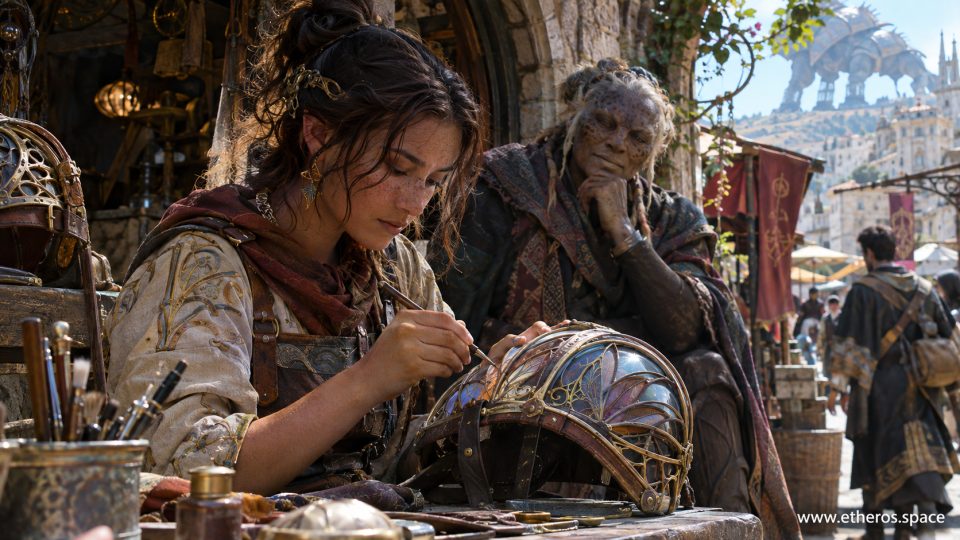
Ila compared the pen marks with the brass circles of a tabletop instrument. The outer ring tilted smoothly. The inner did not. Once per full turn it met an almost invisible resistance. She could feel the hitch in her fingertips. The fault would have been easy to disregard on a calm day, because the ornament around the bearing concealed the wear so beautifully. That was what frightened her most. A decorated error invited confidence.
Weeks earlier an openly circulated correction to a public calibration index had reached the hill observatory from Ardem. The notice was signed by instrument-maker Elya and had been copied by freight keepers who preferred a small embarrassment in daylight to a dangerous mistake on the road. Ila had not met Elya, and the document did not say who had made the original mistake. It only described how to test the bearing without trusting the bearing to test itself.
So Ila made a second measurement against a carved masonry point whose position had been checked from two separate ridges. Leth read aloud the old night angles. Sovan held the scratched frame steady. Rassa waited without impatience, the bird shifting once against her coat. No one asked the enormous distant silhouette for an answer; it was too far away, and its outlines were broken by treetops and haze. The landscape was allowed to remain ambiguous while the local machinery was made accountable.
The second test did not make the valley leap back into place. It showed that the instrument had exaggerated the shift. A smaller movement remained, and the mountain road was still vulnerable after the last cold-season tremor. They could now say how much of their fear belonged to worn brass, and how much belonged to stone. Both mattered.
Sovan proposed sending the apprentices with a reassuring notice. Ila refused the word. "Send a precise notice," she replied. "Then the bridge keepers can decide what weight crosses today."
Leth copied the findings in two columns: observed line, corrected line. Rassa offered to carry one copy to the southern saddle before the evening carts departed. The bird relaxed against her wrist. Nothing beyond the terrace was repaired that afternoon. The distant ridge remained difficult to read. The enormous creature—worker, traveler, or something neither—remained a shape moving slowly through the scale of the world. Yet somewhere below, a driver would be told to leave one overloaded wagon behind, and an old suspension cable would not be asked to bear a certainty that existed only on paper.
Ila put her pen down after one last stroke. The round drawing was no prettier than it had been an hour before. It was simply truer, and on Etheros that was sometimes the difference between crossing a mountain and returning from it.