The Road Beneath the Little Orrery
Story
THE ROAD BENEATH THE LITTLE ORRERY
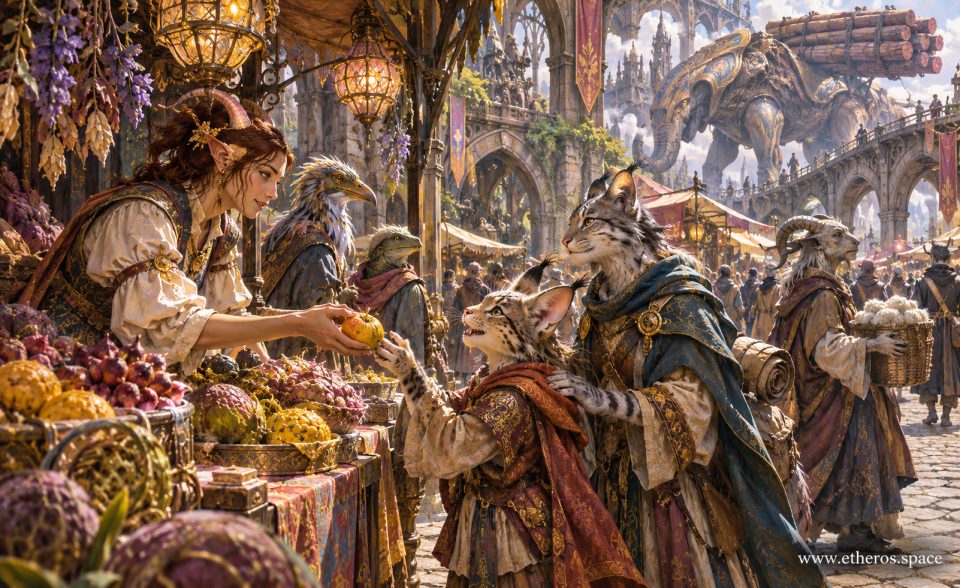
In the high dry market of Veleth, a city terraced into pale mountains, the morning's first argument was never about money. It was about space.
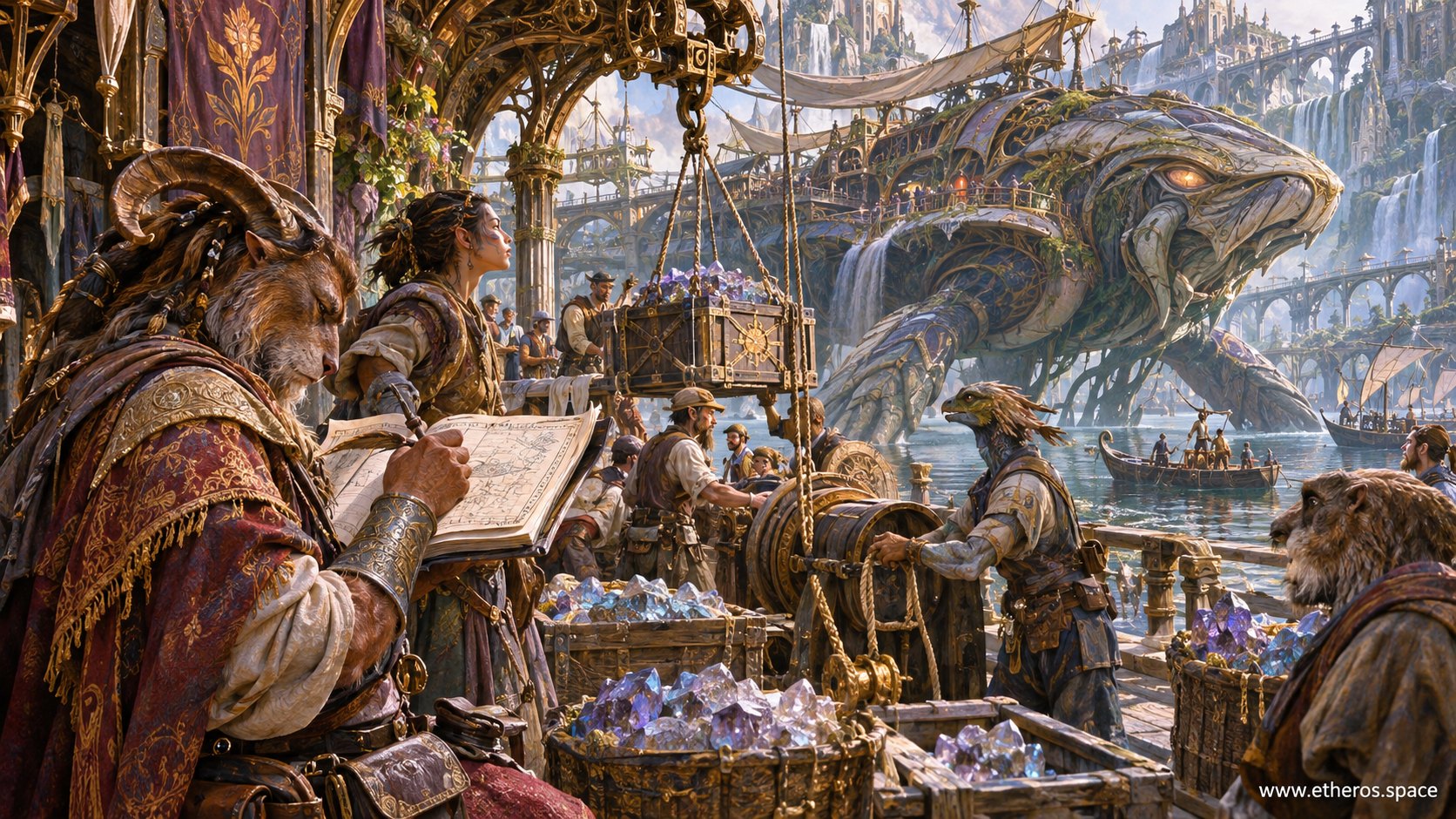
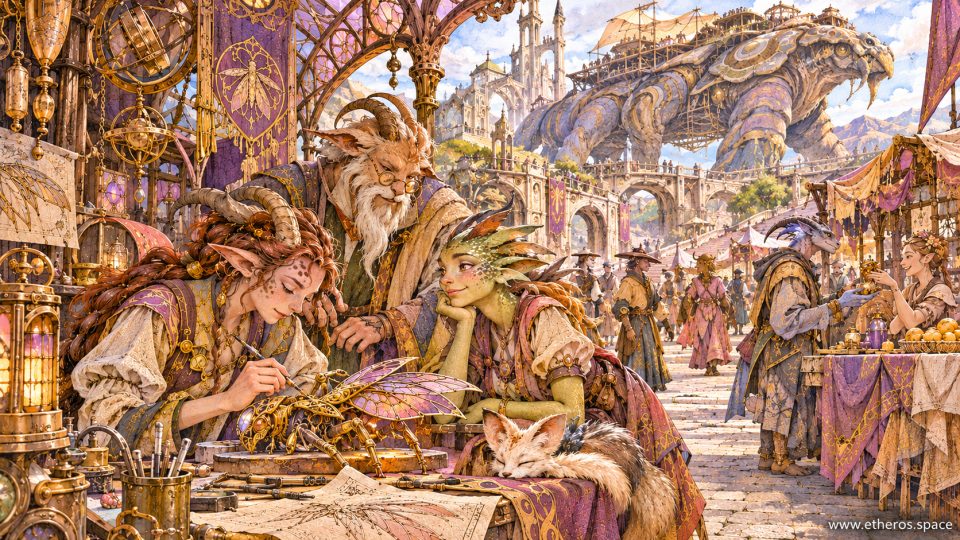
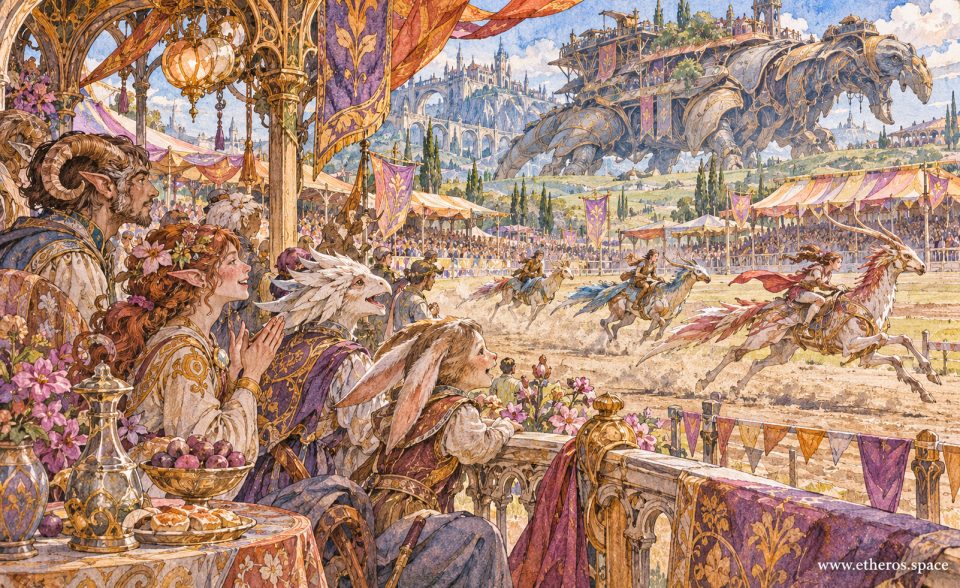
Space for the fruit vendors to spread their cloths. Space for apprentices carrying bundles of copper lattice. Space for visitors whose tails, wings, antlers or wheeled carts demanded more room than any city planner had ever admitted. And space, above all, for the great living freight-carriers that crossed the avenue behind the market every sixth bell.
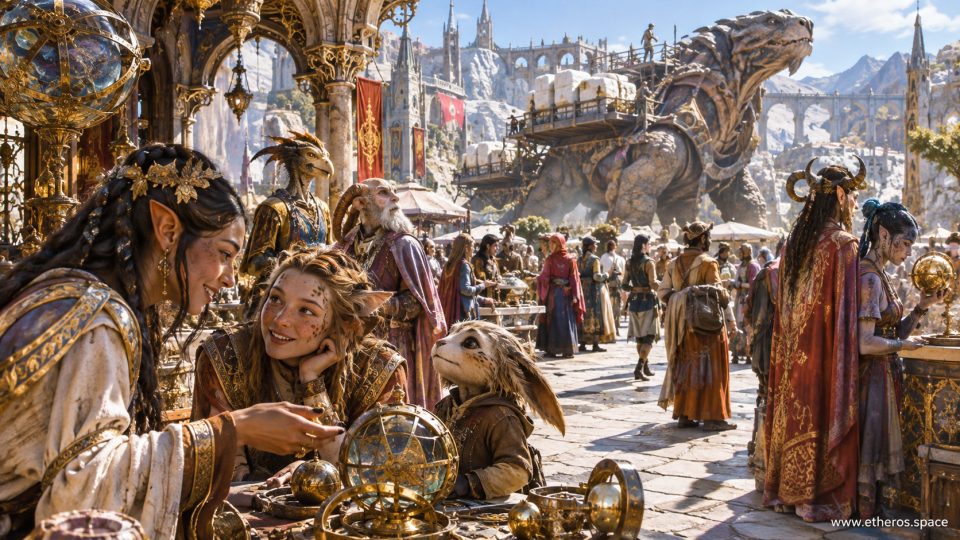
On this day the greatest of them, an old reptilian behemoth named Orrum-Vast, stood in the sun beyond the marble arcade. Its broad back carried several levels of timber walkways and pale packed cargo. Small figures moved along the scaffold above its shoulders, checking straps and the balance of each load. Beneath the ornate harness, living muscle and jointed supports passed the weight into four colossal feet. The street trembled softly each time one of those feet settled.
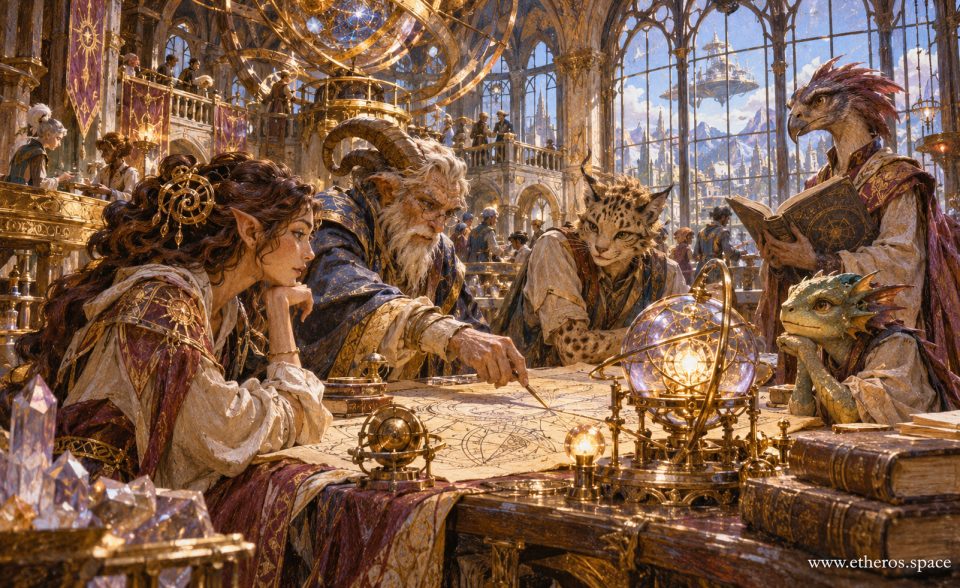
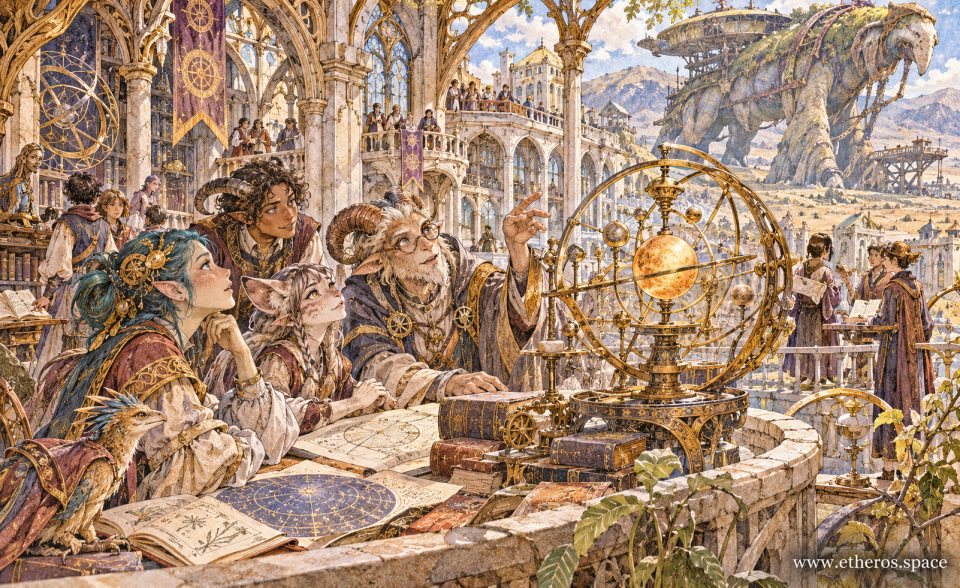
At a merchant's table beneath the gilded arches, Sera brought out an instrument small enough to lift with both hands. Brass meridians embraced a clear globe etched with a street grid, and miniature counterweights moved inside it when she touched the rim.
Two young listeners leaned close. Tali, whose freckled cheeks and alert, tufted ears betrayed her excitement, rested her face in one hand. Beside her, little Berr, a long-eared child in a worn traveling cloak, stared at the glimmering instrument with a seriousness usually reserved for weather forecasts and hungry animals.
"Does it tell the future?" Berr asked.
Sera smiled. "No. It tells you what is in the way. That is often more useful."
She turned a brass ring. A narrow shadow traveled over the instrument's miniature streets. At once Tali spotted what the adults had not: the shadow of the next carrier's path overlapped the market's shaded waiting area, where a crowd had gathered to escape the heat.
"They won't have time to move," Tali said.
Sera's expression changed. Their city's carriers were gentle but neither small nor capable of stopping instantly. Orrum-Vast's suspended cargo had tremendous inertia. His ground crew could ask him to slow, but trying to force a heavy turn beneath an overloaded scaffold would shift strain into the living attachment tendons that stabilized the load. An accident would harm the animal as surely as the people below.
Across the plaza, the tall avian route steward stood with a horned elder reading the morning's traffic sheets. The elder had signed the route that now crossed Tali's little shadow. Sera caught his eye, raised two fingers, and pointed to the globe.
He approached skeptically. "The schedule was approved yesterday."
"Yesterday the waiting awning was closed," Sera said. "Today it is open. Look at the crowd."
Tali rotated the instrument again, giving the miniature carrier time to make its turn. The small weights swung outward. Berr caught one gently before it touched the frame.
"There," said Berr, pointing to a narrow line beyond the archway. "What about that road?"
It was the delivery lane used by quiet handcarts. Wider than it appeared, if the stalls were moved, but old and built over deep foundation vaults. Moving Orrum-Vast there without inspecting the vaults would simply shift the danger into the stones beneath the city.
For the next hour, the market became an improvised public assembly. A mason was called to attest to the lane's weight-bearing foundations. Two porters volunteered to relocate the handcarts. The awning keeper accepted compensation from the route authority to clear the crowded waiting area early. At the carrier's shoulder, workers removed two pallets from the upper platform so the animal would not need to lean against its own harness during the turn.
None of the changes were heroic. Each was a small transfer of effort: a crate lifted, a scaffold adjusted, a piece of information carried to the right person. Together, they made the route safe.
By midday the great carrier began to move. Orrum-Vast stepped through the avenue at a measured pace, his towering neck rising above the gold banners and the mountain bridges. The market's inhabitants watched without panic. The load remained level. The scaffold crew stayed in place. The crowd had room to breathe.
Berr pressed close to the table and watched the tiny instrument complete the same motion.
"So it doesn't tell the future," the child murmured.
"Not by itself," said Sera.
Tali looked from the golden globe to the living giant beyond the arches. "It gives everyone a chance to change it."
Sera said nothing. She let the small counterweights come slowly to rest. Around them trade resumed, the avian steward returned to the route ledger, and an elder who had expected only signatures took a seat to rewrite his assumptions.
Long afterward, what Tali remembered was not the size of Orrum-Vast or the brilliance of the brass. It was the moment Berr reached out and stopped the tiny moving weight with one finger—and the discovery that a city, unlike an instrument, could decide to be gentler.