The Measure That Could Not Hear a Purr
20261105T235804980982Z_100percent.png
Story
THE MEASURE THAT COULD NOT HEAR A PURR
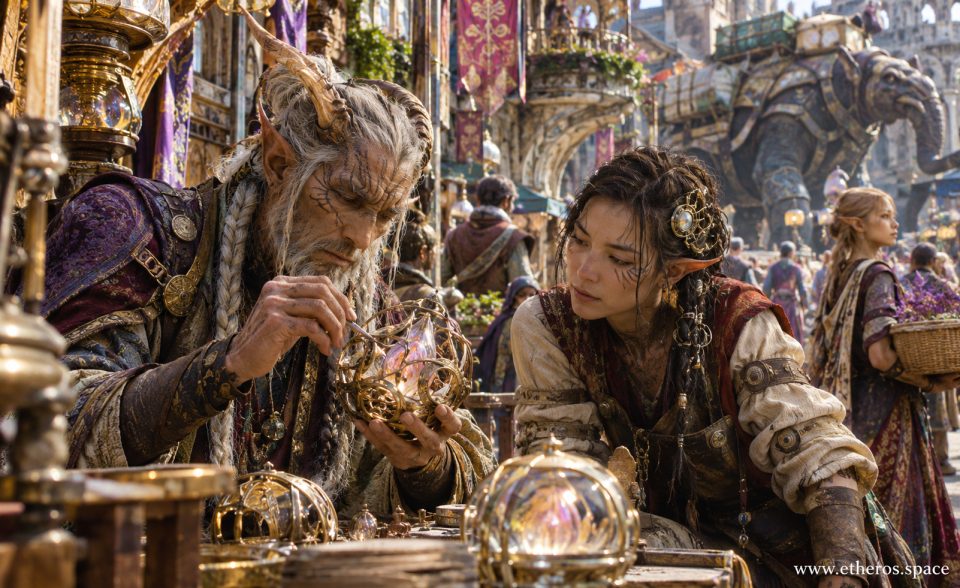
The Sunward Yard of Keldran woke twice each morning. First came the freight handlers, whose enormous road animals arrived before the shop shutters rose. Then came the crowd: flower carriers, spice porters, apprentices running late, children looking for the cats that slept beneath the awnings. Every street in the old quarter seemed to pass through the square, although its crooked arches had been built long before anyone called the place a crossroads.
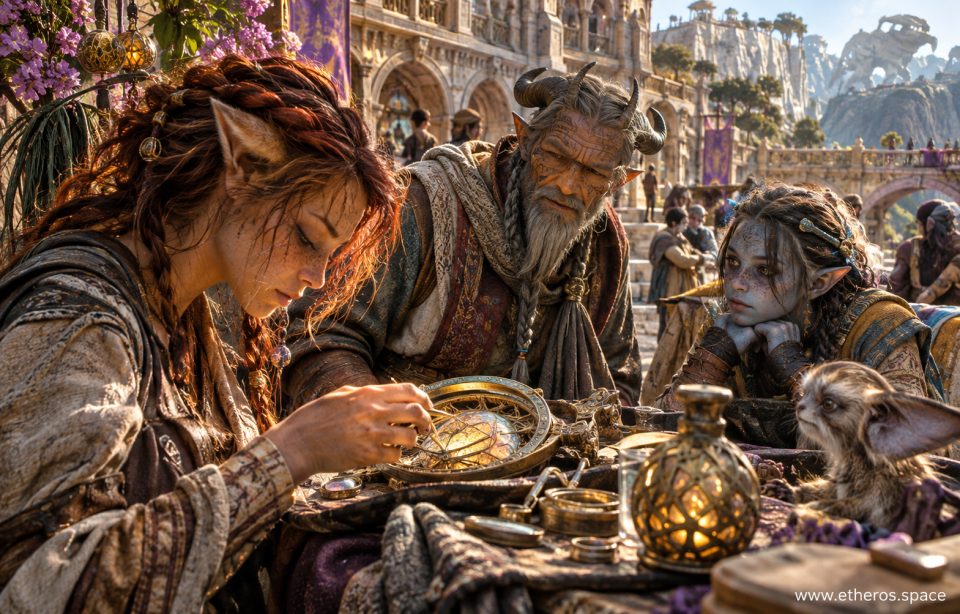
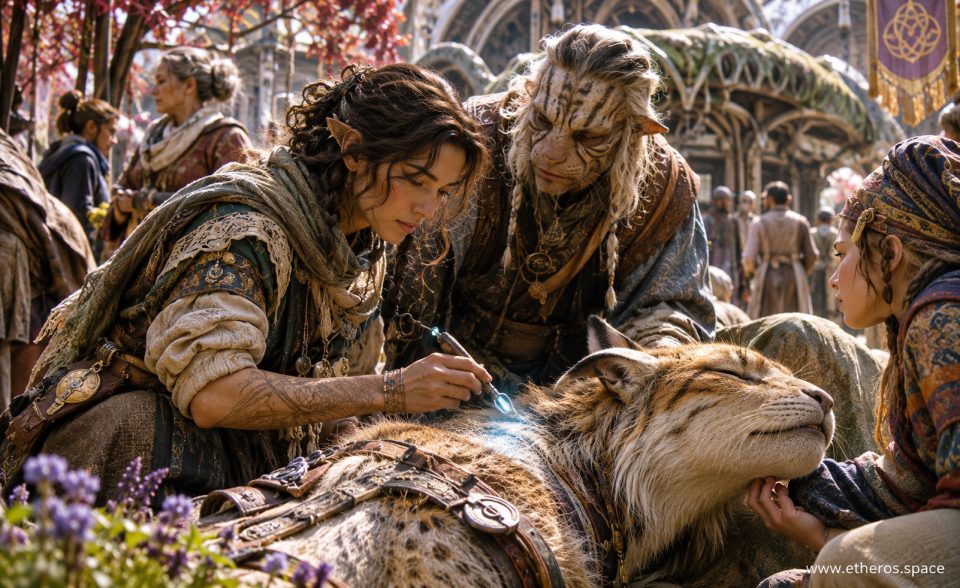
Miran had borrowed a low worktable and three lengths of shade cloth to set up her examination station. By midday the cloth had been pulled aside to let light fall on a broad-backed, golden-furred ridge-lanther resting on the paving. Its name was Veyl. Across its shoulders lay a complicated leather transport harness, polished by journeys and fastened with brass plates that protected the animal when cargo shifted. The beast had lowered its head of its own accord. That, its keeper said, was usually a good sign.
Miran held a narrow blue-glowing sensing stylus just above the fur behind Veyl's shoulder. Its cold light traced a small line across the place where the harness had pressed through a long journey. It could measure a change in surface heat and in the response of living tissue to gentle pressure; it could not tell anyone how frightened an animal had been, or why it had chosen to lie down today.
Sarn, the keeper, leaned over her shoulder. His striped muzzle and pale mane made him look rather like the ridge-lanther, though he belonged to an entirely different lineage and had learned the animal's language over twenty seasons. His hands hovered near the fastening, ready to release the straps if Veyl stirred. On the other side, little Osha supported the lanther's chin between her palms and waited for its breath to settle into a long, even rhythm.
The square had opinions. A merchant behind the table wanted every animal examined with a sensing stylus before entering the city. The old freight guild distrusted a tool that made its judgment in colors and left no trace on a worker's calloused fingers. One driver said the city's inspectors would use the new measurements to confiscate animals from families who could barely afford their feed. Another answered that families who could barely afford feed had most to gain from recognizing pain before a beast could no longer walk.
Neither argument could be settled by Veyl's quiet breathing.
The stylus gave one pale blue flare at the edge of a brass buckle. Miran marked its position on a little slate, then asked Sarn to loosen the harness. Beneath the strap, the fur was merely compressed. She found no open wound. The reading might mean irritation, or it might have come from the metal buckle warming in the sun. Miran knew the instrument had been tested on smaller animals with thinner coats. Calling this result certain would have been convenient, but it would not have been true.
Sarn turned the buckle in his large fingers. He remembered Veyl stumbling once on a steep northern stair, then rising before he could reach its side. Miran could not see that memory in the blue light. Osha remembered something different: when Veyl slept, it often stretched one forepaw toward the child who fed it. That morning it had withdrawn the paw when the harness was lifted. Osha had noticed and told no one, afraid the inspectors would forbid the animal to travel.
"You should tell us the uncomfortable things," Miran said softly, "even when you think we will dislike them. Especially then."
Osha watched the creature's half-closed eyes. "Will it be taken away?"
"Not for a number we haven't understood," the healer answered. "And not without listening to the people who know it."
Miran proposed a small trial instead of a decree. Sarn would adjust the leather padding and walk Veyl without freight for two short circuits of the yard. Osha would record its pauses, appetite, paw placements and willingness to be touched. Miran would repeat the reading in shade, then compare it with observations from other ridge-lanthers whose keepers volunteered. Nothing would be declared a universal test until the guild had examined its errors as carefully as its successes.
Sarn agreed to the walk, but not yet to sharing his records with the whole city. A ledger could protect a creature, or it could reveal a family's routes and debts. Miran drew a line across the slate, separating observations needed for treatment from details that belonged to the household. The distinction looked small. In the months ahead it might matter more than the stylus itself.
Above them the market went on living. A basket of flowers passed behind the table, and the long shadow of a burden carrier moved through the far arches. Veyl opened one eye, felt Osha's hand beneath its chin and closed it again. The blue light faded as Miran set the instrument down.
There would be more animals, more tests, more mistakes, and arguments that could not be settled in a single market afternoon. For now, the only thing Miran could say with confidence was that the creature was resting, the harness needed adjusting, and everyone who cared for it had something to teach the others.
The lanther gave a deep rumbling purr. No mark appeared on the slate for that sound. Sarn smiled anyway.