The Crescent That Could Be Silent
20261106T113119022953Z_066percent.png

Story
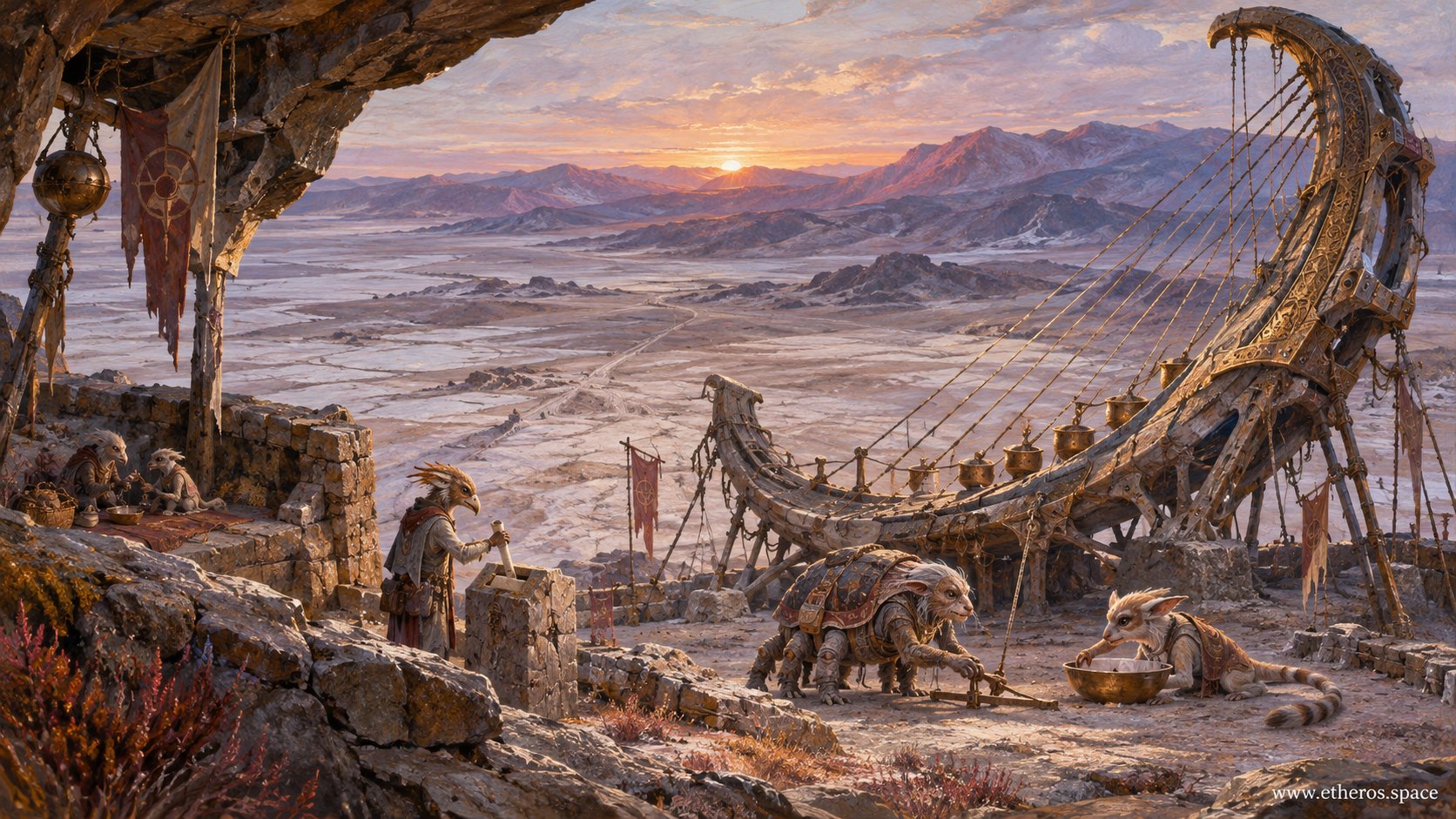
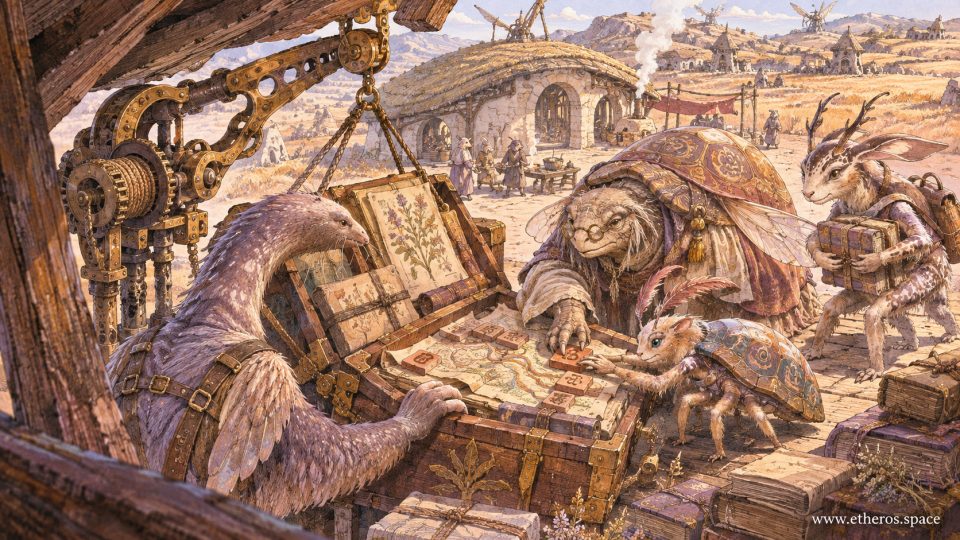
At first light the salt plain of Vanreth held no moving shadow except the thin ones cast by the Listening Crescent. The instrument stood on the high western ledge, a carved curve of bone-colored alloy and living dark timber, its many lines drawn to stone footings. Below it, a single pale road wound across a basin so wide that travelers sometimes mistook its far shore for the beginning of the sky.
Kesh Tharel had kept the Crescent for more seasons than the road commission cared to count. His shell was crosshatched with older repairs, his working limbs slow but exact. Kneeling beside the lowest anchorage, he tested a small bronze linkage with two fingers, then drew his hand back. The return vibration was wrong. The high line still held, but the little metal collar that kept it apart from the next line had opened like a seed pod.
Vael, the long-beaked keeper of the stone lever, listened from several paces away. The lever was not part of the music. It lowered a protective stop into the frame whenever the wind sharpened. Some people had long since forgotten why that mattered. A line released under full tension could cut through the reed shelter or the earthen track beyond it. Vael rested his hand on the lever and waited for Kesh's signal rather than guessing.
At the foot of the frame, a pale-furred youngster named Iva held a brass bowl against the ground. Iva had come from the lower settlement with a request: could they keep one note, only one, for the evening arrivals? Her grandparent had taught her to tell the distant crossing wind from the nearer valley current by the way the bowls beneath the Crescent answered. She was frightened that a new row of rooted path markers would take away a sound that had always meant home.
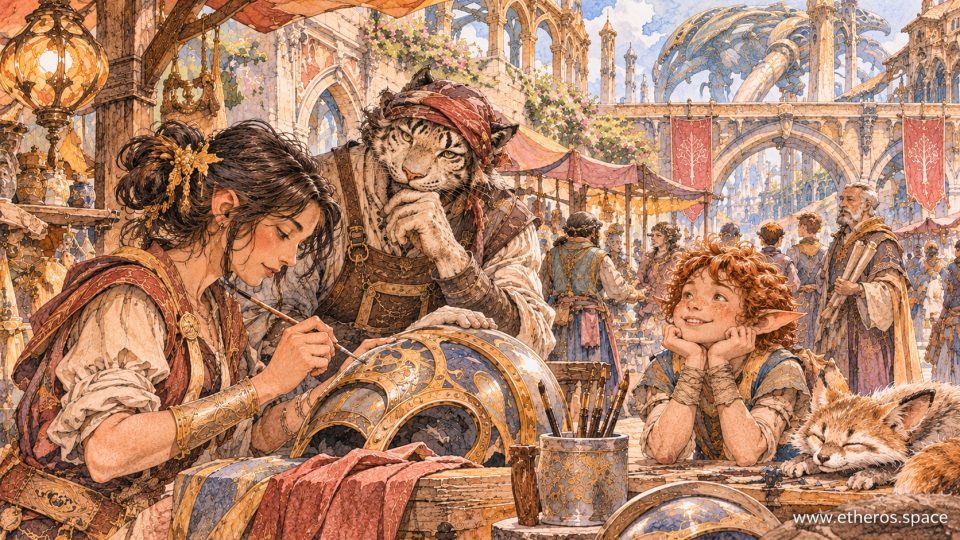
On the shadowed terrace, two early travelers, Orra and Jem, shared a heel of hot bread and watched the little team. Their packs lay beside the stone wall. They were the first to reach the ledge since the commission had announced its plan: the old instrument would be withdrawn as a warning device, and the rooted markers lower along the road would take its place. Orra, who had followed the Crescent's tones through dust more than once, objected. Jem, who had heard a line snap during a storm, supported the change. Neither felt the other was foolish.
The argument had never been as simple as old against new. The Crescent had done honorable work. Its cords, bowls and resonant chambers translated changes in air pressure into a pattern that attentive ears could learn. Yet cracked fittings had become more common, qualified keepers fewer, and wind did not always arrive in the predictable direction. The replacement markers were quieter and, in recent trials, easier to see from the road. They were not infallible either: a traveler might miss a marker under drifting salt, and a damaged root must still be inspected by someone who knew how it lived.
Kesh asked Vael to lower the stop. Together they slackened the high cable by the calibrated turns marked on the anchor, never releasing a taut line into the open. The great curve stayed where it had stood for generations. Without that one string, the morning breeze produced only a scattered, uncertain murmur. Kesh did not pretend it was safe to tune it back to pitch.
Iva knelt and set the bowl on the stone, crestfallen. Kesh asked her to strike its rim lightly with a wooden handle. It gave a small clear answer, not loud enough to guide a caravan, but unmistakably itself. Orra laughed softly at the familiar sound. Jem watched Kesh's hands and offered to help write down the exact sequence of checks the commission had overlooked. A machine could be retired from one duty without its makers' knowledge being thrown away.
The travelers carried the bread back to the bench. Vael marked the faulty collar in red chalk; Kesh recorded which lines had been safely isolated. Iva was given the first page of a new listening book, but only after promising to distinguish what she had heard from what others remembered hearing. At dusk the school would borrow three sound bowls for an ordinary lesson, and the old Crescent would be left quiet until a public inspection decided whether a harmless demonstration could ever be arranged.
The sunrise climbed above the distant stone ranges. Across the plain, light reached the new path markers one after another, though from the ledge they remained almost invisible. Iva looked down the road and then back at the suspended curve. It was possible, she thought, to miss a voice without wishing it into danger. Kesh closed his ledger and stood beside her until the wind turned. Nothing rang. The silence was not a failure of memory. It was the first careful thing the keepers had done for the next travelers.