The Handful That Had No Owner
Story
THE HANDFUL THAT HAD NO OWNER
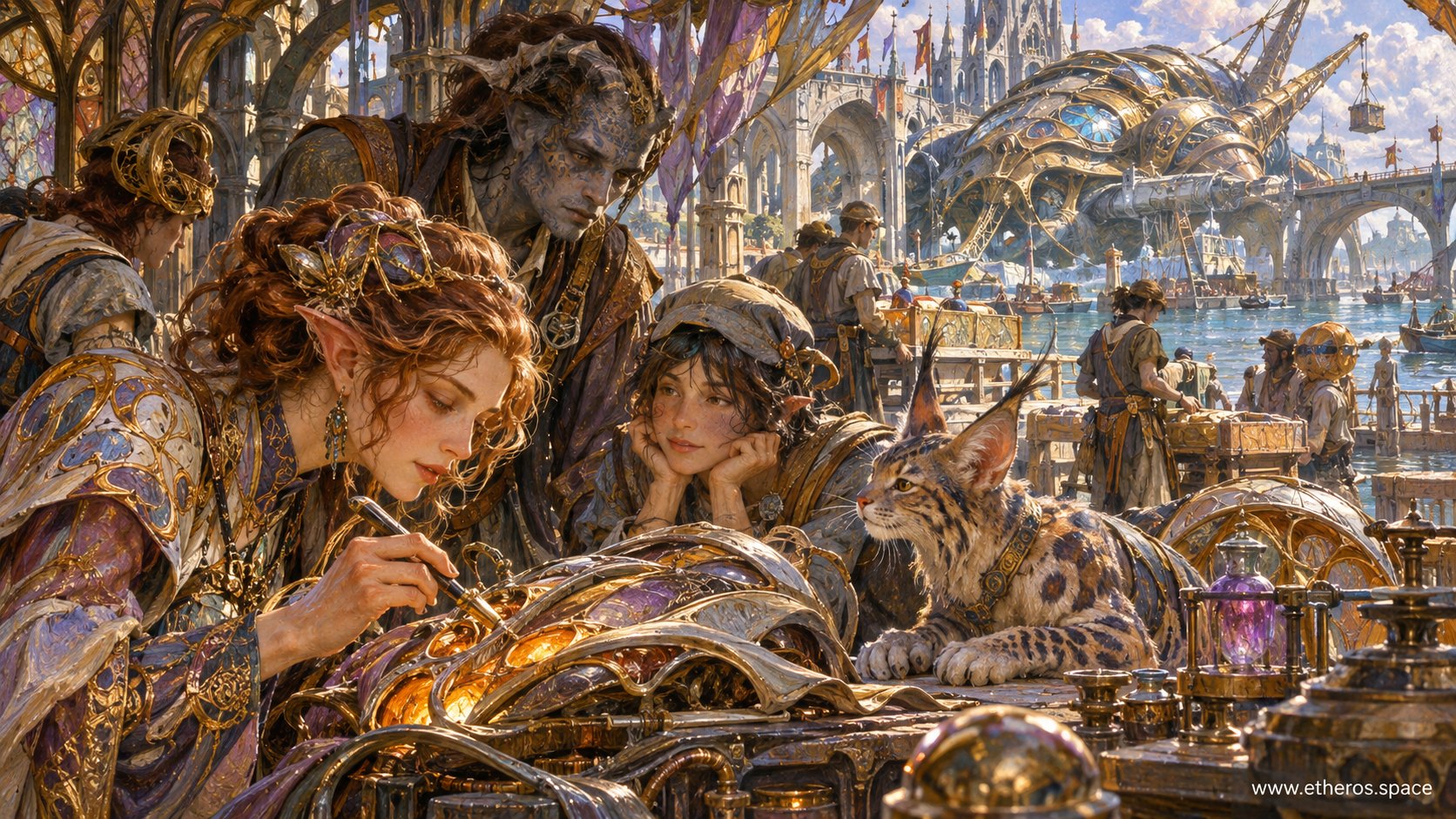
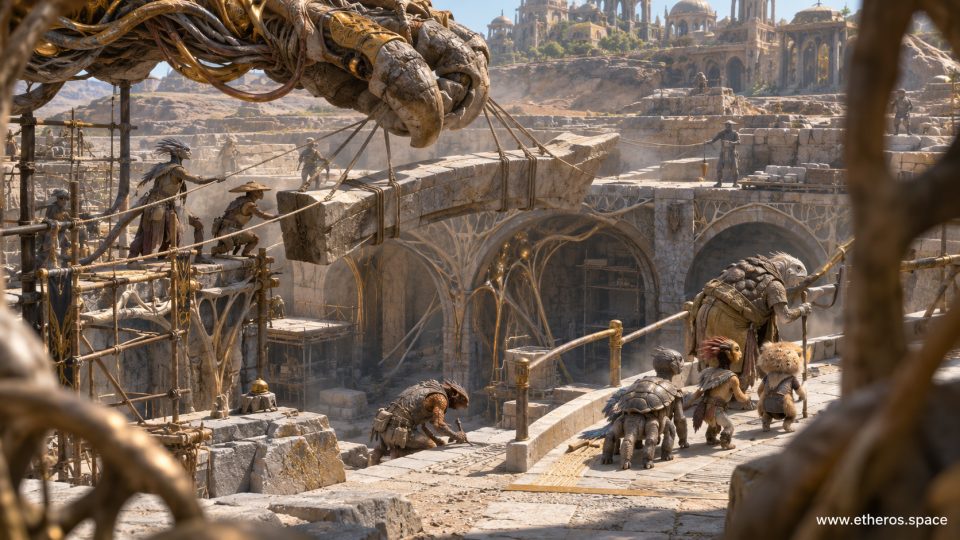
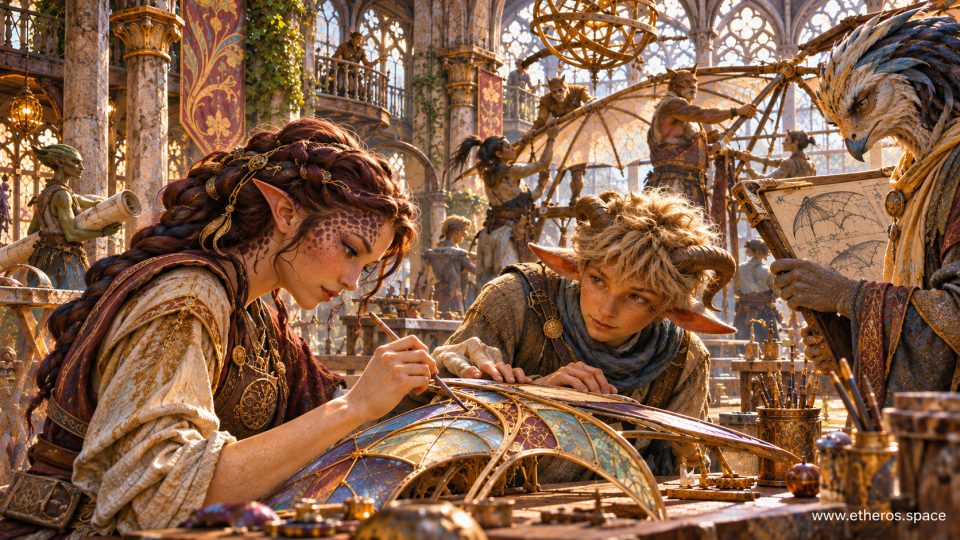
The terraces of Celyr did not wake together. Above the seed stalls the morning bridges filled first with couriers, then repair crews and the slow processions of residents who could afford a long route through the upper arches. Beneath them, shopkeepers lifted their cloth shades and uncovered shallow bowls of grain. Warm air carried the smell of roasted husks and the mineral tang of the living metal built into the city's old supports.
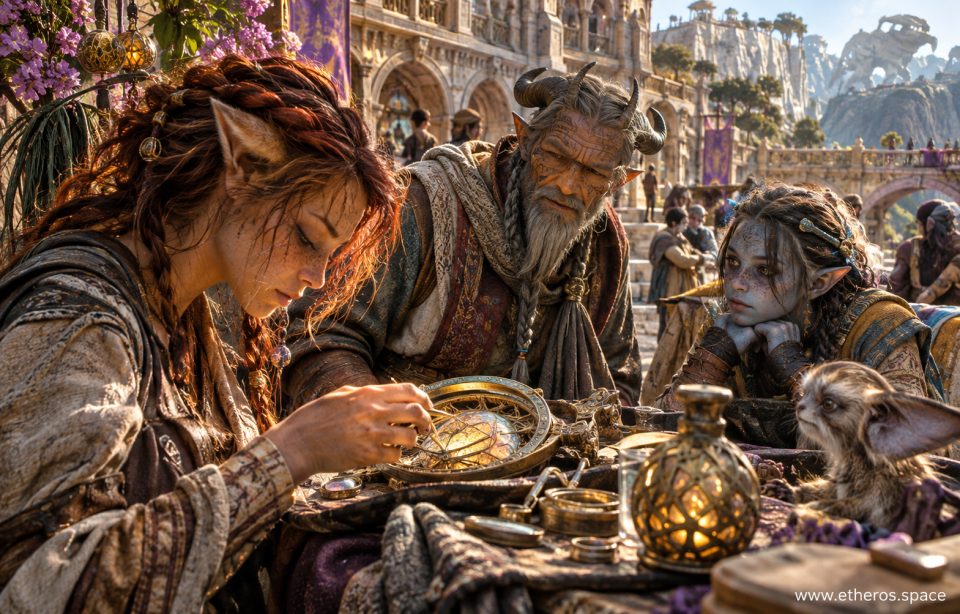
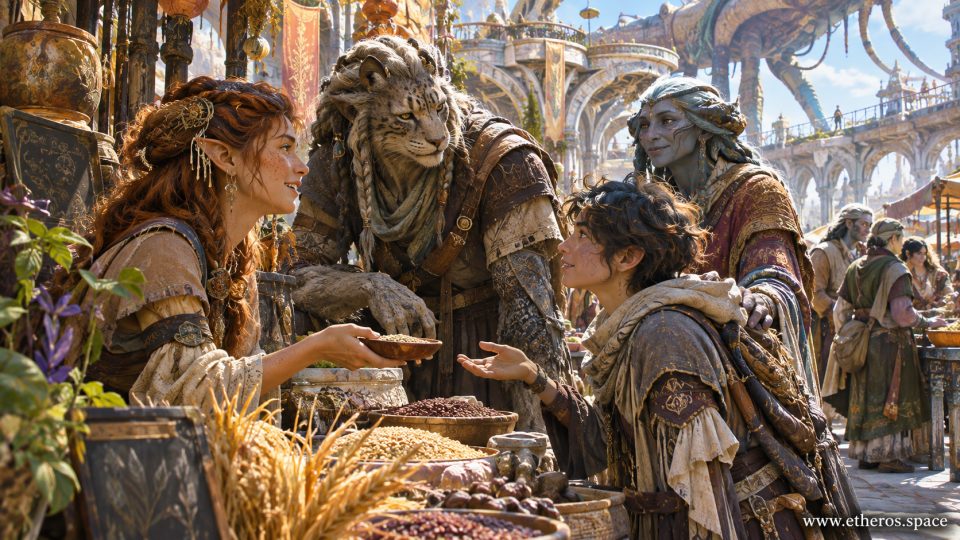
Savi kept her stall at the turning of two public stairways. She wore her red hair braided away from her face and knew the contents of every bowl without looking: pale hillgrain for cold plots, dense red kern for tired soil, dark storage pulses that slept through a whole dry season. She could measure a purchase with either hand, but this morning she held a small wooden cup motionless between them.
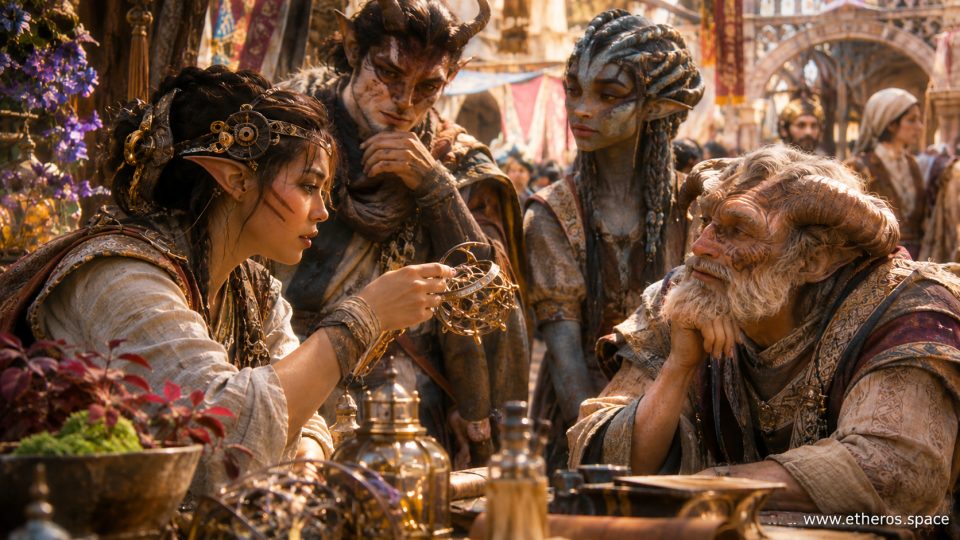
Across the counter a young traveler had opened an empty palm.
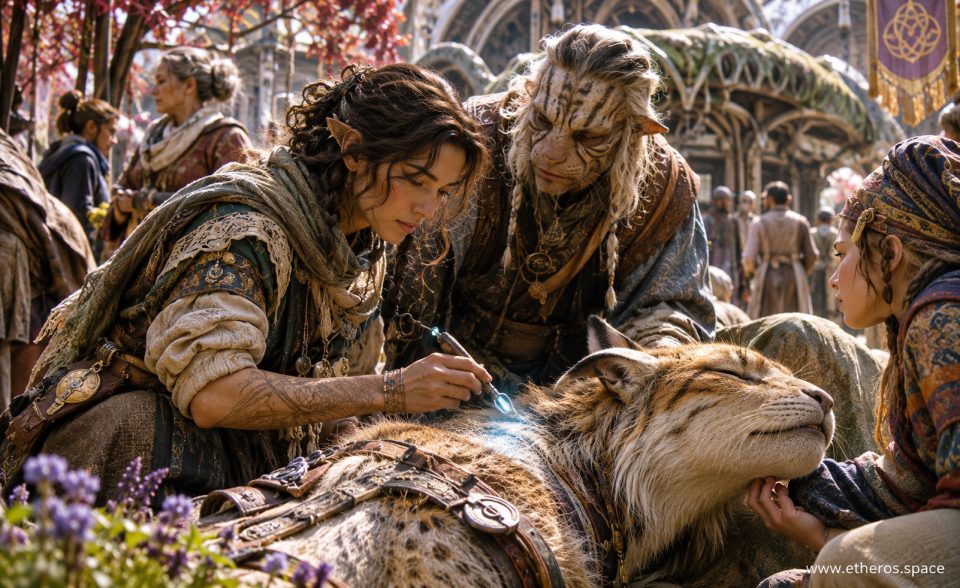
Mell was a new arrival from the upland hamlets, younger than the market's usual seed buyers. A shoulder bag hung against his worn cloak. Beside him stood Jorru, a tall spotted feline-kin whose heavy braid and working harness marked seasons spent carrying harvests along the outer roads. Oress, blue-gray and ridge-crowned, kept a reassuring hand against Mell's shoulder. Behind them people continued trading, looking briefly toward the four and then returning to their own errands.
"It is not that I cannot pay for food," Mell told Savi. "It is that I cannot pay for a harvest before I have land to grow it."
Savi glanced at the little cup. It contained enough of the pale grain to begin a trial planting, if the soil were sound and the wind did not lift the seedlings before the roots took hold. It was also the best seed in her market stock, selected by sorting, drying and testing hundreds of baskets. She had spent most of the previous season preserving it, and three neighbors had helped without yet receiving their shares.
"If I give this away," she said, "whose hours am I giving away with it?"
Jorru had expected that question. He had delivered seed to settlements whose storehouses became private property the moment the first difficult season arrived. His clan remembered promises that began with generosity and ended with a debt none of the children could repay.
"Then do not give it," he said. "Let him carry an obligation small enough to finish."
Oress stiffened. She had brought Mell to the city precisely to keep him from accepting another obligation whose terms were written by someone else. She had seen families lose the right to plant their own crop after signing away the next three harvests.
Savi heard the caution in her silence. She set the cup down between the bowls and removed a narrow ledger strip from under the counter. The existing market contracts were engraved there: seed advanced in exchange for a fixed portion of the harvest, regardless of whether the season had been kind. The system protected merchants against losses, but it also turned every bad year into a larger burden for the grower. In Celyr those terms had become so familiar that almost no one remembered choosing them.
Mell looked at the strip, then at the grain.
"Can I earn the cup by helping sort the next batch?" he asked.
"That would pay for my work," Savi replied. "Not the work of the people who brought it here."
This time it was Jorru who considered the price. The outer carriers were paid by weight delivered, not for the days when storms closed a pass or an animal needed rest. They had been pressing for a different tally, but their complaints sounded remote inside the bright city markets.
At length he put one broad paw on the counter. "When I bring the next load, I will mark which hands gathered it. And how long the road took. The growers may decide their share before the stall decides its margin."
"And what becomes of Mell's planting?" Oress asked.
Savi had no answer that could guarantee a crop. Nobody could promise germination, safe weather, or a purchaser willing to pay a decent price for the result. She could offer something more precise. She separated the cup into two portions, placed the smaller in Mell's palm, and retained the rest for a second trial. For the first planting he would owe three days of sorting work, recorded openly. If the seeds failed to sprout, the debt ended there. If they grew, he could purchase more at a price fixed before the harvest, with the carriers and selectors named beside it.
Mell did not smile immediately. He asked Savi to say the terms again. Oress repeated them in the language of his home ridge, and Jorru corrected the accounting for the return journey. Only then did Mell close his fingers around the kernels.
Their agreement was modest. It would not reform the markets of Celyr by nightfall. Savi would still have to persuade the other selectors, and Jorru's guild would still argue about what counted as time worked. Some traders would call her foolish for accepting a risk she could have placed wholly on a stranger. Others would note that the trial kept her expertise visible rather than treating it as charity.
Far above the stall a vast articulated living support shifted behind the bridgework, its exact task lost among banners and columns. Below, the city continued its ordinary exchange of goods and greetings. In the sunlight, the little sample of grain looked no different from any other handful on the terrace.
Mell put it away carefully, as though it were already a field.
And Savi, who had expected to sell the cup before noon, wrote a new heading in the ledger: Work known. Risk shared. Seed returned when it can.
The market bell rang. Another customer stepped forward. The day, with all its ordinary unfinished bargains, began again.