The Course That Bent for Everyone
20261106T145736487674Z_100percent.png
Story
THE COURSE THAT BENT FOR EVERYONE
The Ressel Steps, late afternoon on primordial Etheros
The first shout came from the upper bridge, where the wind carried it between the hanging flags. Then the whole hillside seemed to answer. The race had reached the bend, the part where the stone was old and the sunlight fell almost flat across the dust.
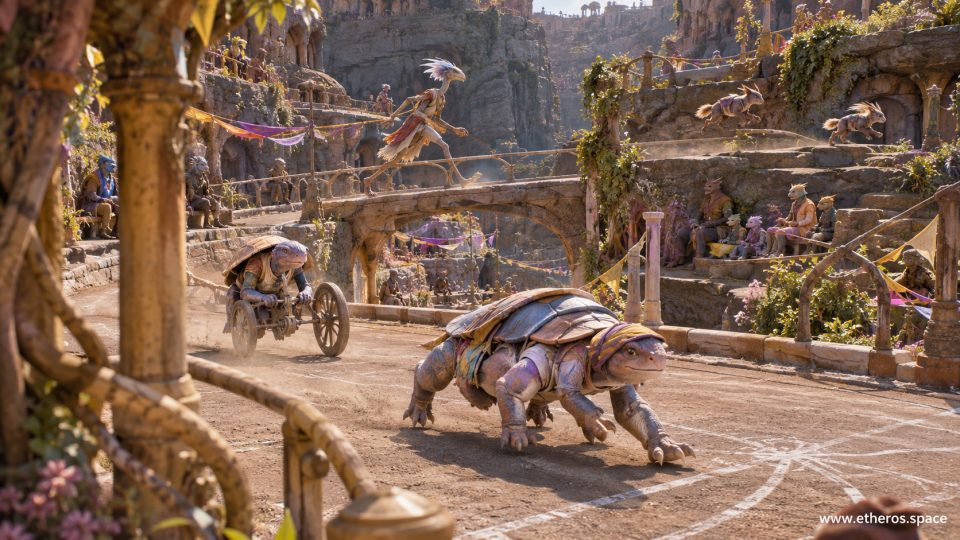
Hesh could hear the cheering without distinguishing a single voice. His broad, weather-colored shell took the light in broken streaks of lavender and copper, and the six points of his limbs struck the packed earth in a pattern no biped had ever managed to imitate. He had trained to carry loads across that slope. Today he was running with nothing on his back but a light strip of festival cloth and the enormous inconvenience of other people's expectations.
Behind him came Delren, low in a three-wheeled frame. The cart had broad-rimmed wheels and two crank handles positioned for a shorter shell-bodied reach. It was not the latest design. The left rim ticked softly at every turn. But it was Delren's own construction, balanced carefully enough that the front wheel did not chatter against the uneven flagstones. He pulled on one handle, released the other, and leaned through the curve as the dust rolled out from beneath him.
Above both racers, the feather-crested Vaeli crossed the narrow stone passage with her arms spread for balance. She followed an upper circuit where long strides were an advantage and the rail was low enough for a tail. Beyond her, two small, quick, furred runners bounded over the higher ledge, their forefeet touching down almost together. Ressel had three courses layered into the walls of its cliff town. For generations, the festival had treated them as three separate games.
That had changed this morning, when a young spectator asked why everyone was invited to watch the oldest stone race, but some bodies were never invited to enter it.
The answer had produced an argument of unusual length. The upper course was too steep for the wheeled frames; the lower course was too narrow for the fastest leapers; the middle way had steps that suited neither. Some elders proposed a single finish bell and the same distance for all. Others thought separate awards would be kinder. Delren, who had come to the meeting with a spanner still tucked into his belt, objected to the word *kinder*. A path that could be used was not a gift. It was a path.
The steward finally offered a trial: each participant could take a safe circuit suited to their anatomy, and all would finish at the same lower terrace. The bell would mark arrival, not a ranking. A ledger would record times privately so the organizers could judge the routes and repair them for the following season. There would be no winner announced today.
Hesh had disliked that last rule. He was old enough to know the sweetness of winning a fair contest, and proud enough to resent losing one. Yet as he rounded the dusty bend he caught sight of Delren's front wheel tracking cleanly past a repaired joint in the stone. Yesterday, that joint had been an obstacle. This morning, the two of them had helped the road crew seat a new slab. Hesh had carried it. Delren had shown them where its edge needed to fall.
A child watching from the upper seats shouted both their names. Hesh slowed by one breath, surprised at his own relief. Delren did not call out; both hands were needed on the crank. The light caught his shell, and he kept going.
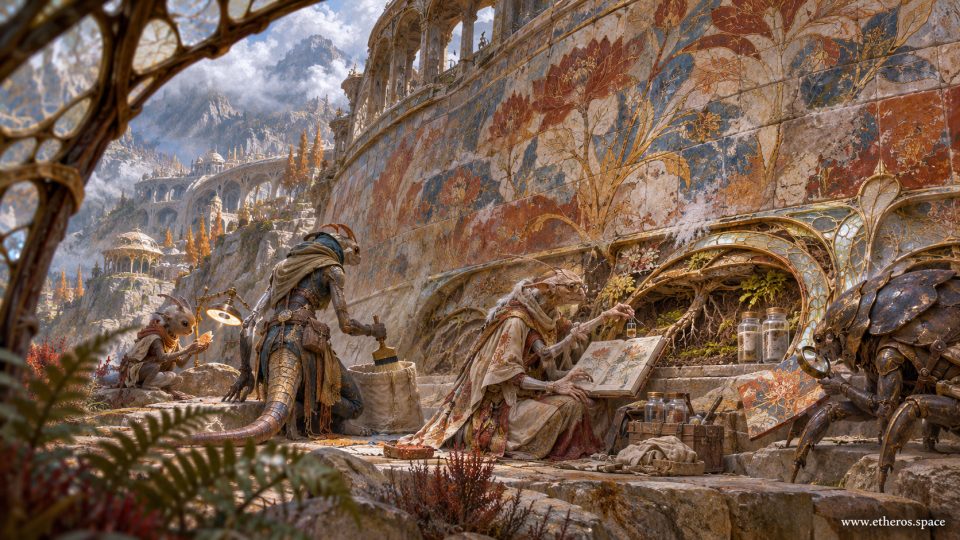
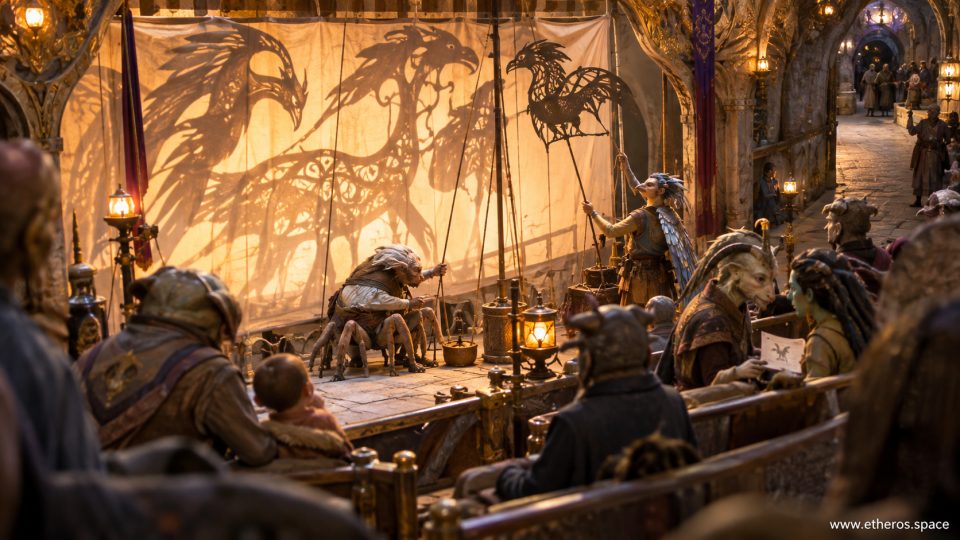
The city had come to the terraces in all its different shapes. There were elders seated beneath the flowering ledges, small creatures leaning between the rails, and workers still in dusty harnesses who had arrived after their shifts. No one had put away the vines to make the place look grander. The flags were patched, the stone had scars, and one of the old bridge supports had a root growing through its repair. Ressel had made its public ground out of the mountain it inhabited, and sometimes the mountain reminded everyone that it was alive.
At the third bend, Vaeli looked down across the bridge and saw Delren's wheel pass the line of chalk that had once been called the beginning of the race. From above, the tracks overlapped like the veins of a hand. She remembered her grandfather's saying: one creature's straight road is another creature's wall. It sounded less like wisdom today than a description of the engineering work still to be done.
Nobody knew yet whether the trial would last. A route designed for one anatomy might still exclude another. The wheel frames cost materials and skilled repair. The owners of the adjoining terraces wanted payment for the additional railings; the stoneworkers wanted assurance that the new ramp would not destabilize their steps. Even the stewards disagreed about whether a festival without a public winner remained a race.
For one afternoon those questions could wait for the bell, though they could not be wished away. Hesh reached forward, setting one broad forefoot in the dust. Delren turned his crank and followed the clear strip beside him. High above, the two furred runners disappeared behind an arch, and Vaeli continued across the bridge toward the place where the three courses would meet.
The spectators could not tell who was first from where they sat. They could see, instead, how many different ways there were to keep moving. The bell had not sounded yet.