The Mercy of the Thinned Rows
20261102T215412457618-0800_100percent.png
Story
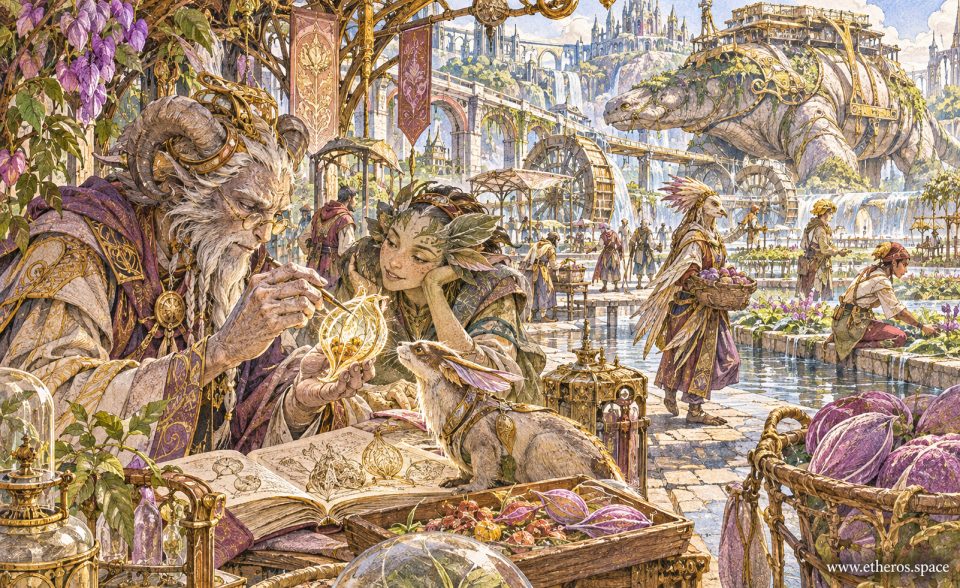
In the high terraces below Bellwater's blue domes, harvest began long before the city heard its first public bell. Water fell from the mountain into the upper spillways, ran through a necklace of carved aqueducts, and returned as thin shining veins among the vegetable beds. For six generations the groundworkers of the eastern slopes had kept these rows alive, measuring a year's prosperity not by the gold on the city's parapets but by the tenderness of a new leaf when it broke the soil.
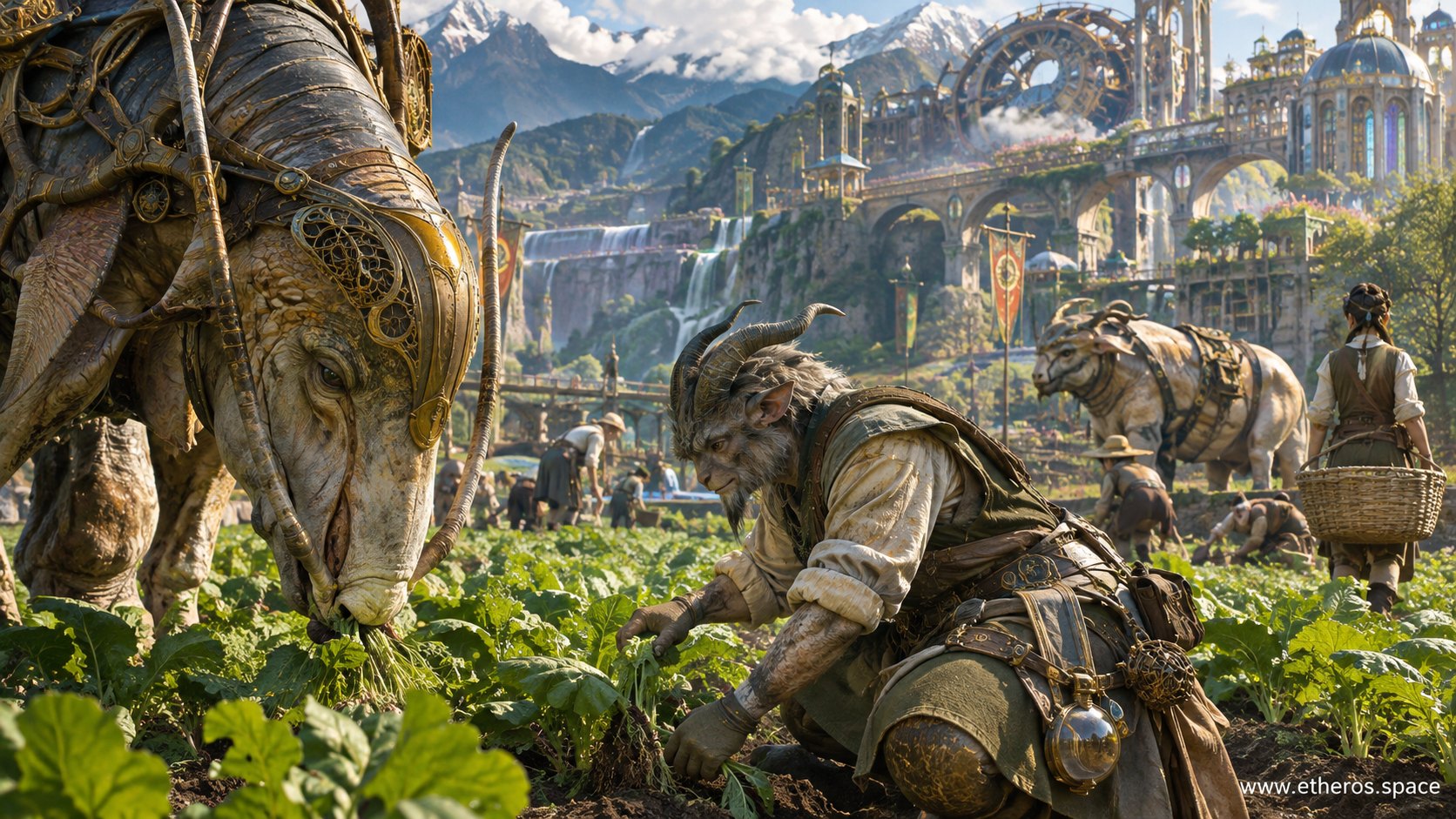
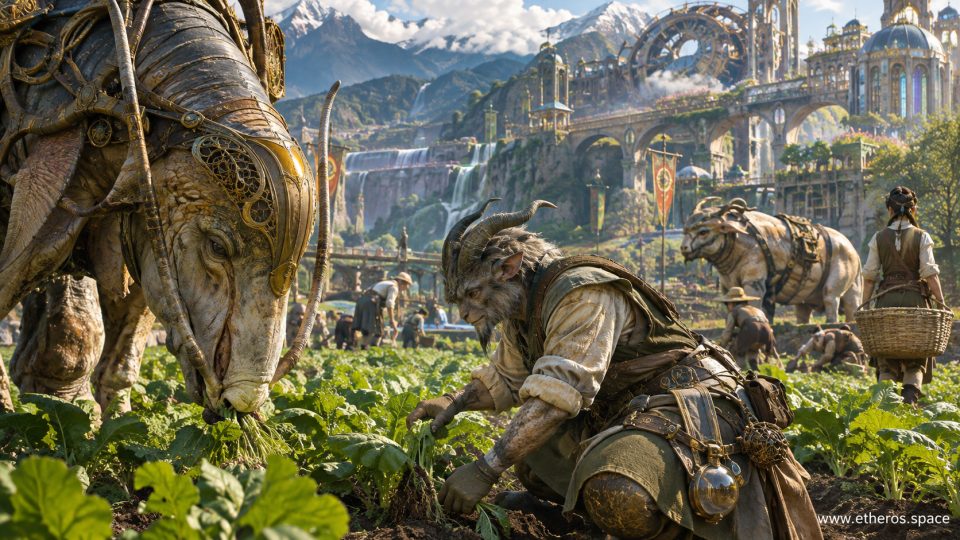
Tavruk of the Sarn was kneeling between two furrows when the enormous grazer lowered its pale head beside him. Horns curved from his silver-streaked brow, and damp earth had darkened the knees of his leather work trousers. At fifty-eight wet seasons, he still preferred to judge a root with his fingers. His kind had two short seasons of hunger in their history; neither had passed entirely into legend. He pinched a young stem, inspected its underside for the threadlike eggs of a marsh beetle, and returned the plant to the earth instead of throwing it into the collection basket.
The grazer beside him was Morrow, a centuries-old rhuun whose armored forehead carried delicate bronze regulators and an interlaced bridle of living tendons. The brass was not decoration. It distributed the light pulling force of the animal's enormous head across thick plates that were insensitive to pressure, leaving the narrow breathing channels along its jaw untouched. Morrow's slow mouth gathered only the weedy shoots the cultivators had marked for thinning, stripping them between hard lips. Within its layered stomach, tough cellulose would become warmth, compost and the nutrient slurry returned to the planting terraces. Nothing useful had to be wasted simply because it was not beautiful.
Tavruk extended one hand beneath a cluster of green leaves while Morrow drew a mouthful through its teeth. They had worked beside one another for nineteen seasons, and Tavruk knew the difference between the animal's patient grazing and the slight, uncertain pause that meant its jaw harness was chafing. Today the movement was even. Beyond them, other fieldhands moved at irregular intervals through the close-set beds, kneeling, reaching, tying their baskets, and calling quietly across the rows. Nobody needed to arrange themselves into a procession. They were tired, hungry, and intent on finishing the crop before the afternoon wind lifted grit from the upper roads.
Near the far terrace, a smaller pale burden-beast stood beneath the city wall with the weight of two empty carriers balanced on its spine. Its handler checked the shoulder straps before the first full basket arrived. To their right, Nessa, one of the riverborn women of the lower quarters, walked along a narrow path with her collecting basket resting against her hip. She had recently been promoted from sorting greens in the communal kitchen to coordinating the field returns. Tavruk had given her no ceremonial welcome—only a sharpened pruning hook and the job of remembering which old men might forget to drink when the sun grew warm.
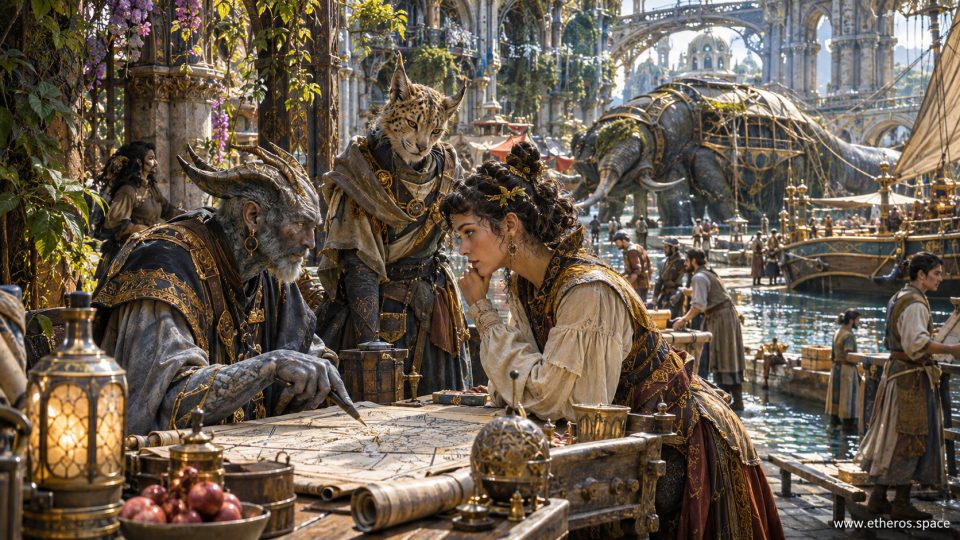
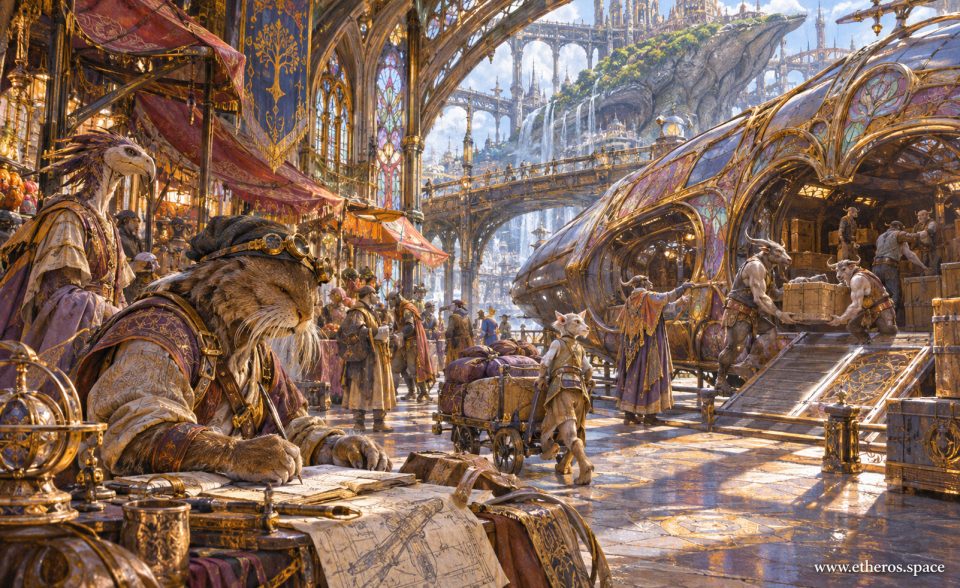
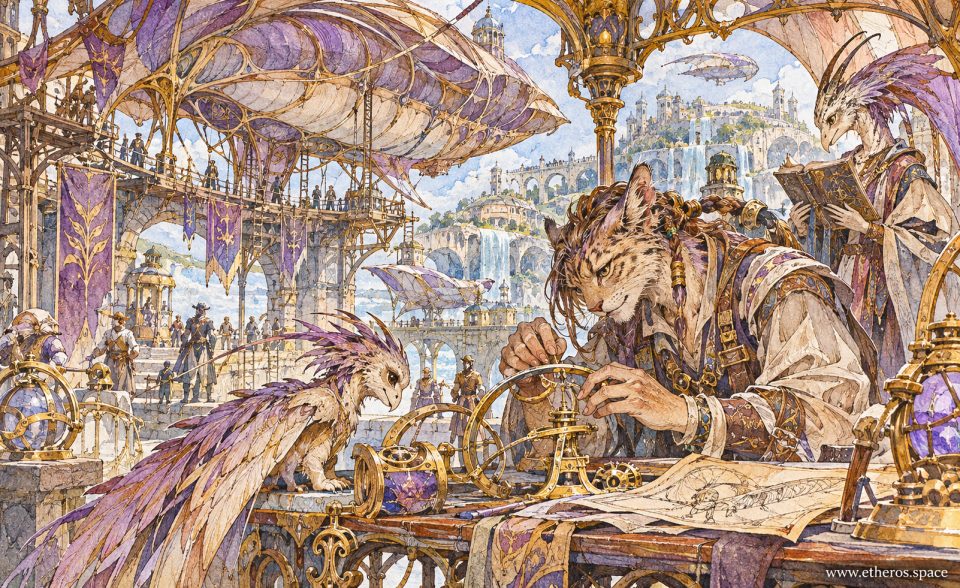
Above them rose Bellwater, a city built as much for water as for inhabitants. Its tall Gothic bridges carried people and carts over the river channels, but hidden beneath their ornamental stone were pressure pipes, filter roots, and suspended living troughs that fed the market gardens. The enormous circular crown high among the distant terraces was part of the upper waterworks: a slow-turning intake wheel that lifted a measured share of the cataract into the public reservoirs. What descended afterward flowed through the crops and returned to the river, carrying silt and dissolved nutrients into downstream wetlands. The wheel could not create water, only redirect the force of falling water already present in the mountains.
Last winter the terraces had nearly lost this crop. Three upstream arches clogged with a fungus that grew inside iron-rich channels, forcing the town to ration the flow. Tavruk remembered the yellowing leaves, the household arguments over turn schedules, and a little boy he had seen dragging an empty pail home. Repairs were complete now, but he still listened for changes in the sound of the waterfalls before checking the morning soil. To him, an uninterrupted current was not an abstract triumph of engineering. It was the difference between a clinic with fresh leaves for its medicines and a tired nurse making do with the last jar on the shelf.
Morrow breathed against Tavruk's sleeve, and he glanced up from his handful of roots. The great creature had finished its strip of unwanted growth and was waiting for the next row. The farmer rubbed the coarse bridge of its muzzle. It was not a command. The harness gauges were steady, the animal's breathing unforced, and the furrow clear. A moment later he leaned back into the work while Morrow resumed its patient meal, the two of them tending the same acre by different means.
Across the valley the domes shone in the morning light, and the city looked too opulent to know hunger. Tavruk had long ago forgiven the skyline for that illusion. Its people lived by thousands of small agreements—between river and stone, crop and insect, rhuun and keeper, engineer and apprentice. He brushed earth from a root with his thumb and laid the healthy plant carefully back into the soil. Tomorrow the rows would need thinning again. The work would be almost identical. That was what made it worth doing.