The Pressure That Holds the Valley — Irmav at the High-Vault Station
20261102T212035125819-0800_066percent.png
Story
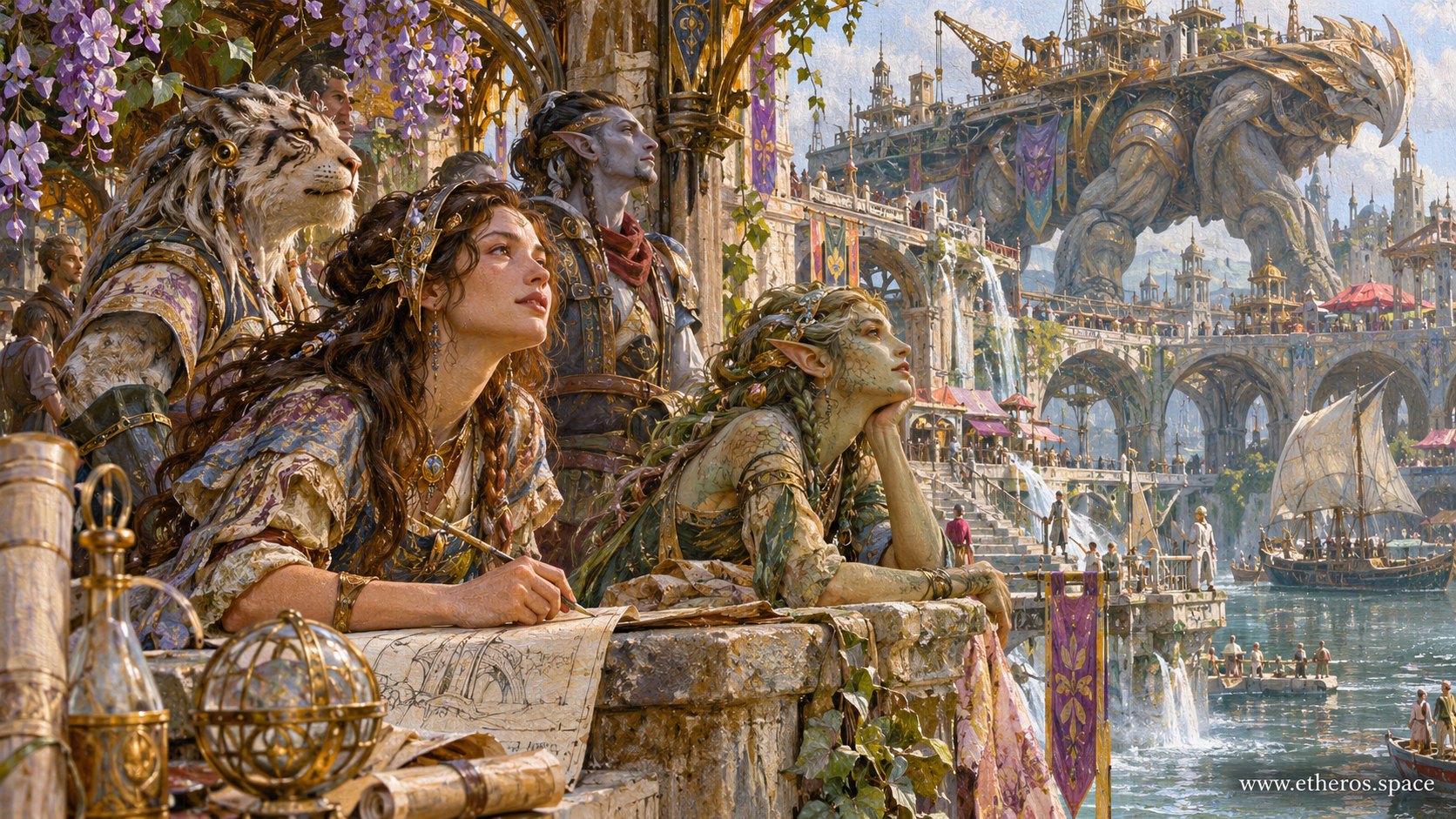
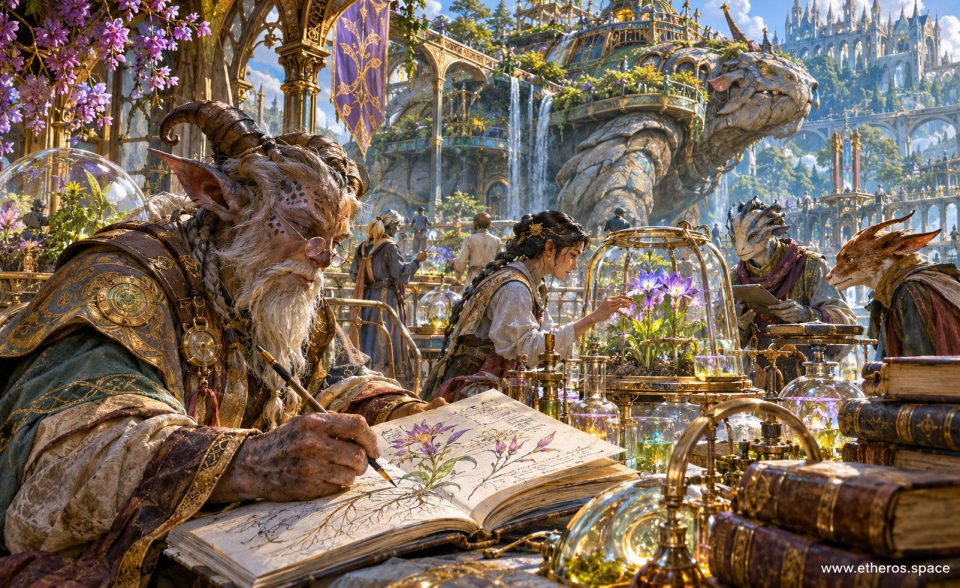
The High-Vault Station was built around a creature too large to pass through any of its doors. That was not an architectural mistake. The doors had been constructed afterward, when Irmav had lain down in the mountain's great empty arch and volunteered the slow turning of its body to the valley below.
On this afternoon, the upper halls rang with the smallest sounds: the tapping of measuring pins, a scaffold fastening against old brass, water ticking against the glazed floor. Beyond the immense windows, a river fell over the far city's terraces. Thousands of households drank from that river, and the river still ran because Irmav continued to work.
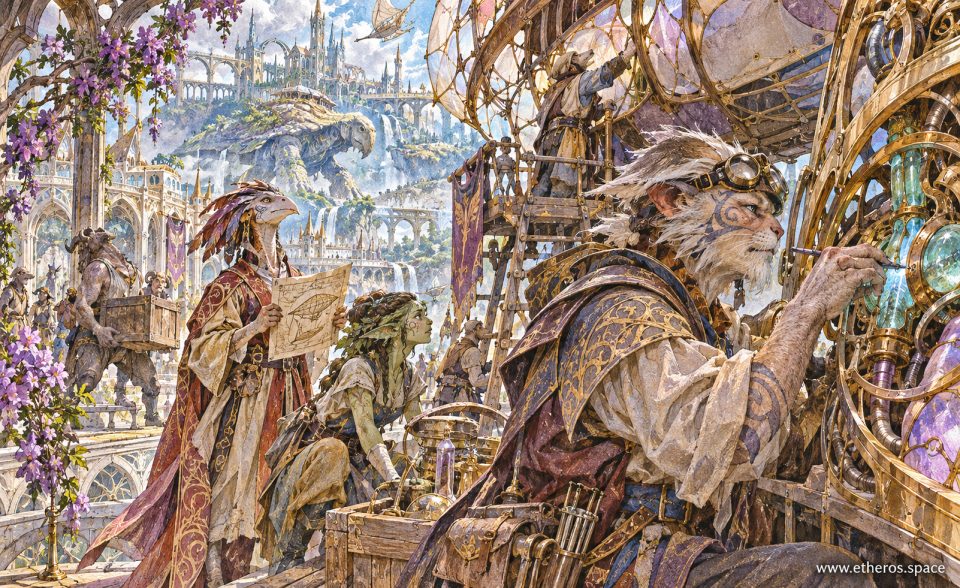
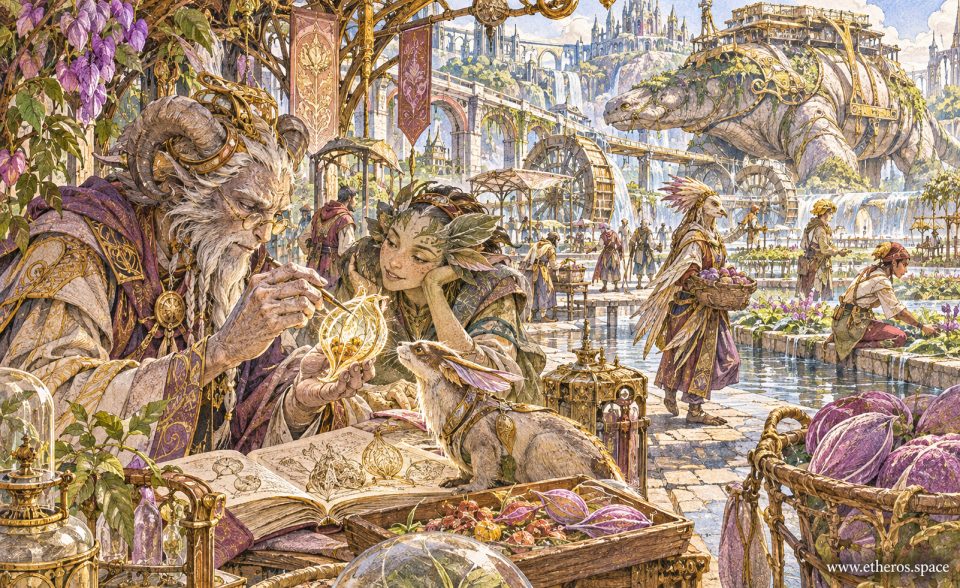
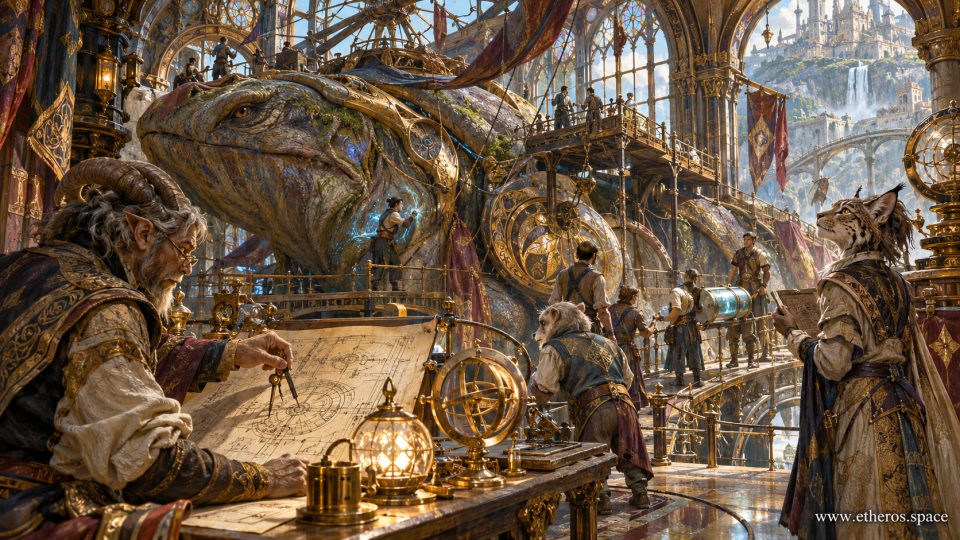
Its head rested under the western vault, wide as a small dwelling and patched with moss across the ridges of a mineralized hide. Blue living vessels glimmered beneath the surface. Over its shoulders the station's mechanics had set an elaborate golden harness, not to restrain the animal, but to distribute the weight of six filtration arches and support the access decks suspended above it. The rails followed the curves of the creature's growing back. Each year the scaffolds were adjusted, and each year the oldest bolts were brought down to be hammered into something useful.
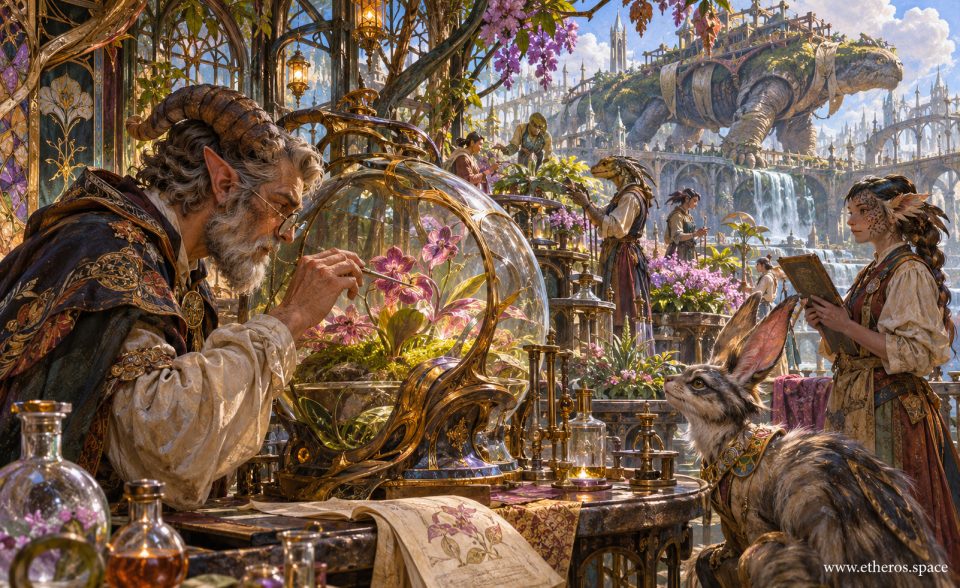
At the near drafting bench, Elder Hadrun Vell lowered his spectacles and moved a compass by the width of a grain. His curled horns were pale at the edges, his hands marked by decades of metal dust. The circular diagram spread across the page represented the pressure pathways through Irmav's shoulder chamber, but the diagram was also a kind of promise. Hadrun had drawn a safer way for water to continue circulating even while the central valve was repaired.
Beside the page burned a caged lantern. Its amber core illuminated a brass instrument with three nested circles, each responding to a different pulse in the creature's body. The outer ring had begun to tremble yesterday. This morning its needle drifted again, and the upper district's wells tasted faintly of stone.
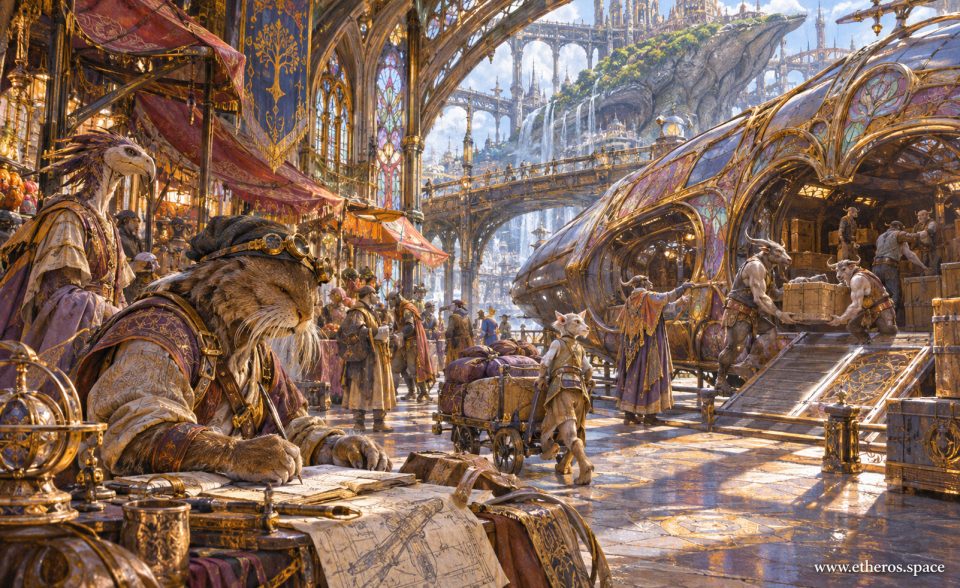
Across the station, workers climbed the gantries running along Irmav's flank. One mechanic stood close enough to touch a bright blue vein; another leaned over the upper railing to guide a cable. Nobody shouted. Irmav could hear vibration through the structure that held the decks, and a sudden stamp of boots would carry through the harness and into its living rib plates.
The hanging circular exchanger at the center of the hall had been opened for inspection. Its glass and bronze casing held the translucent membrane that separated mountain water from the creature's warm metabolic fluid. Below it, a small team rolled in a blue cylindrical canister: an auxiliary exchange chamber, grown in a nursery three valleys south. It would bear the burden of filtration while the old membrane was lifted away. No one spoke of replacing Irmav. It was older than the oldest household in the city and remembered its flood seasons in the scars of its skin.
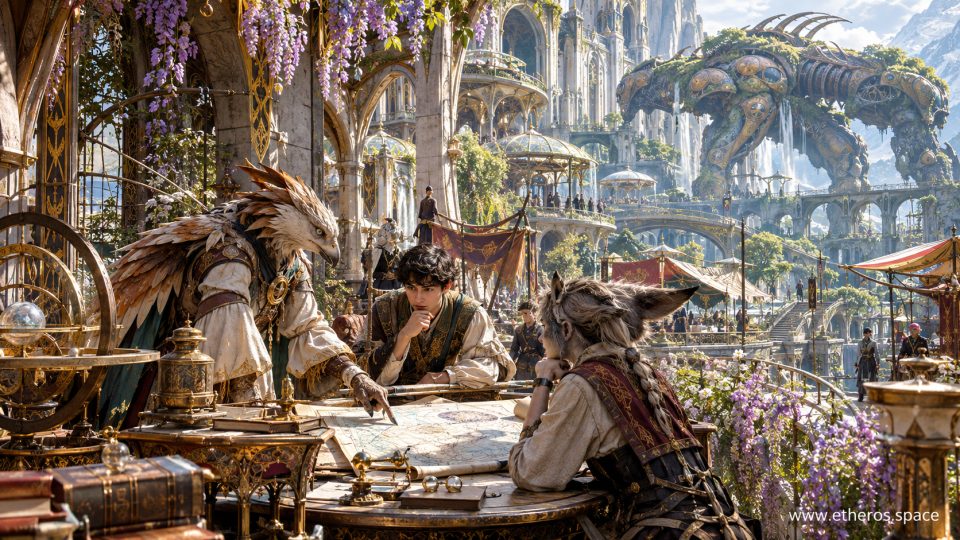
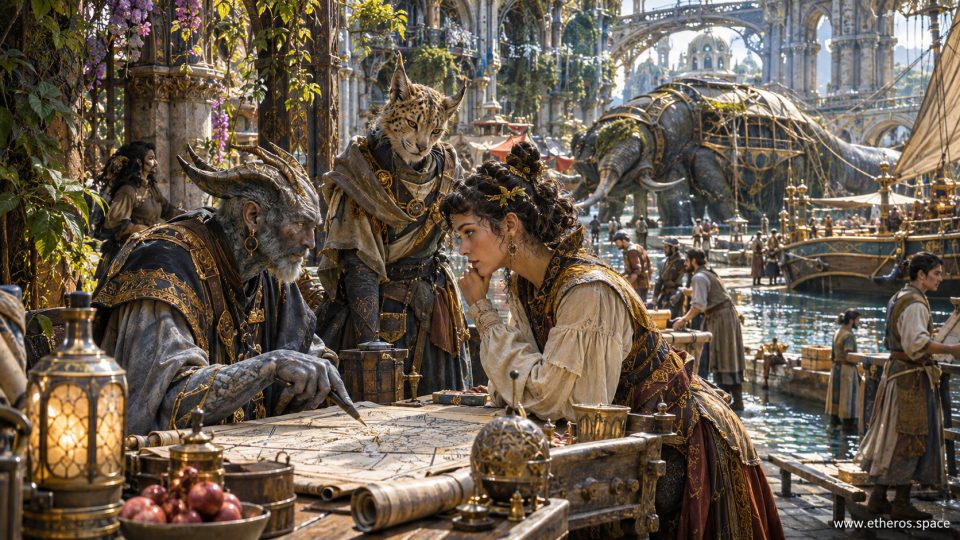
Near the railing stood Perra, a pale-furred technician with a narrow muzzle and work vest, her back half turned to the drafting bench. She carried an inspection slate and checked the angle of the incoming canister against the suspended piping. A mistake of a few degrees would twist the living coupling and cause it to reject the new chamber. Further right, Master Thesk, a tall spotted feline scholar in an embroidered working coat, consulted an old folio. Thesk had spent the early years of his apprenticeship listening to the little clicks of valves in the dark and could distinguish a thirsty membrane from a broken one before the instruments agreed.
The blue canister crossed the open bridge. Its handlers lowered their pace as the narrow platform vibrated beneath their feet. Hadrun adjusted a tiny arc on his drawing and raised two fingers. An assistant saw the signal and pulled a hand wheel below the exchanger. A valve opened, sending a harmless fraction of water through the bypass channel. The three circles in Hadrun's brass instrument swung, hesitated, and settled in a new alignment.
Far beneath the platform, Irmav opened one enormous eye.
Hadrun knew that gaze. It was not fear. It was the ancient creature noticing a difference in the river it had carried for generations. He stopped moving his compass and placed a palm on the worn tabletop, waiting through three slow pulses while every person in the hall listened in the language their species knew: by ear, by vibration, through skin, through the instruments of a craft shared between them.
The outer needle stopped trembling. Across the valley, the water continued its silver descent; in the old neighborhoods, kettles would fill and fountains would run with no knowledge that anything had nearly failed. Thesk shut the folio. Perra lowered her slate. The bridge crew moved forward another careful step.
The repair was not yet finished, and nobody declared victory. There remained a membrane to install, a living seam to settle, and an evening's labor before the new coupling would accept its full load. But Irmav kept breathing, the auxiliary circuit carried the water, and the valley did not have to notice the danger. For the station workers, this was what success usually looked like: an enormous effort made invisible to the people who relied on it. Hadrun sharpened his compass point and drew the next line.