The Hinge on the Unclaimed Door
20261104T173805959560Z_005percent.png
Story
THE HINGE ON THE UNCLAIMED DOOR
In the low country of Ulden Verge, where the stone gave way to long dry grass and the houses faced the wind with their narrowest walls, the first thing a traveler noticed was not a welcome sign. There were no welcome signs. There were doors, each fitted by a different generation of hands, and the marks of hinges repaired when the wind had nearly taken them.
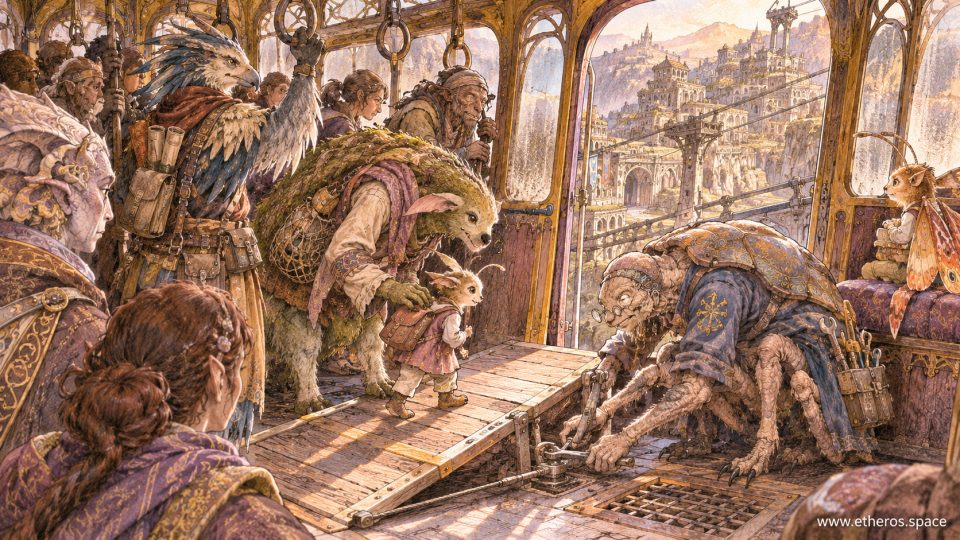
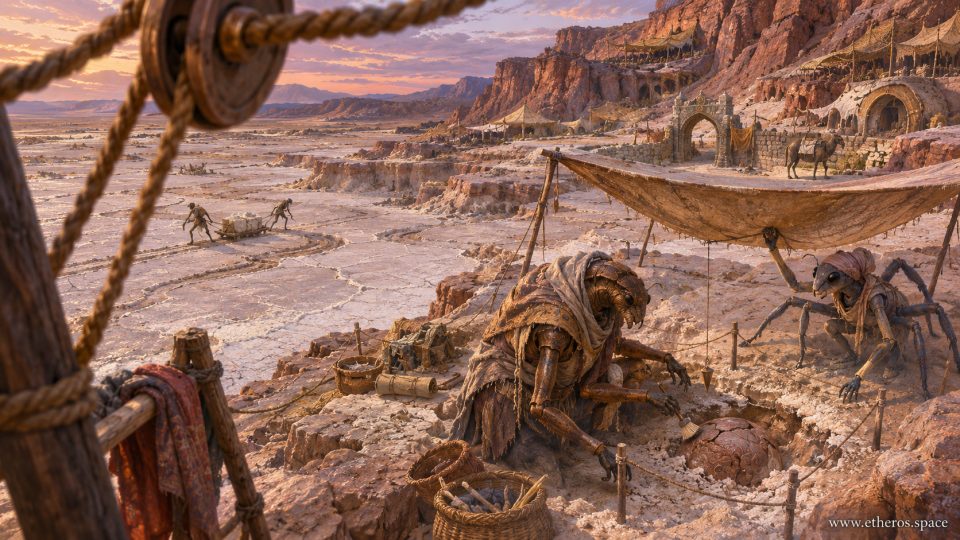
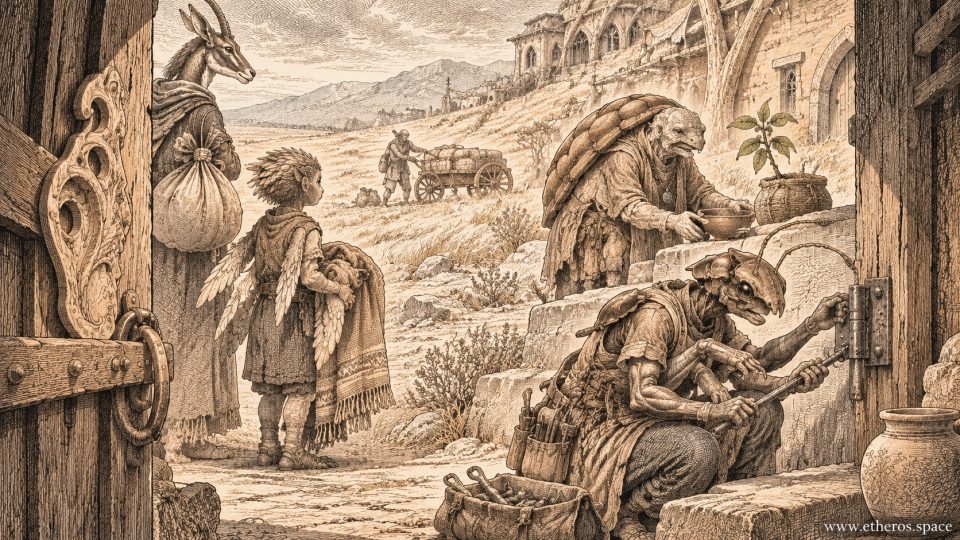
At the threshold of a vacant westward dwelling, a small beetle-kin named Rekk had taken the hinge apart for the third time. Six days earlier, the iron pin had held a door of cedar and bone. Now the door scraped the sill, its frame loosened by seasons of dust. Rekk set a wrench against the lower plate and pressed with two of his segmented forearms while the others steadied the wood. The brass was old, but its knot of living tendon still pulled evenly against the stone. The repair could be made without cutting the root that braced the wall.
The new arrivals stood to one side, not because they had been told to wait, but because Rekk's tools had claimed the only flat place. The taller traveler was Varo, a long-faced horned hillfarer who carried a sack knotted above his shoulder. Beside him stood Pera, his feather-backed child. Pera's hands held a folded blanket much too large for her shoulders, and a tiny pack hung between her wings. The child looked past the threshold to the dry slope, where another traveler was pushing a laden cart slowly across the path.
The dwelling's temporary custodian, Nollin, had brought a bowl and a pot with one tenacious green shoot. His shell was thick and scratched pale along the high edges. He put the bowl on the parapet and moved the young plant toward a notch of afternoon sun. Nobody mistook the plant for a promise that harvests would become easy. It was an ordinary living thing, and it would need tending tomorrow.
Varo had not asked to be given a house. He had asked whether a family might spend the cold nights behind its walls while the old west-road shelters were repaired. But in Ulden Verge the register of dwellings contained more names than the living could remember. A roof could belong to a person long absent, to a neighborhood that had paid for its stone, or to a service creature whose work had laid the foundation. The steward's ledger still listed this particular room under an owner who had never returned. Its lock was legal. Its hinges were failing. Neither fact made the decision simple.
Nollin said that several families had already offered to share bedding and a cooking space. Others feared that opening one vacant door would turn every unused room into a contested promise. One neighbor had contributed the replacement pin but did not want her own winter stores counted as public property. Another said the house ought to be occupied precisely because an empty room could not keep anyone warm. Both had reasons. Neither was cruel.
Rekk listened without looking up. Each turn of the wrench gave the conversation a small, metallic pause. He knew which owners had paid for the west wall. He also knew that the wall would fall if no one lived close enough to clear its root drains and watch the new cracks. An abandoned home did not remain unchanged merely because its name remained written down.
Pera asked why the door had to close before they could enter. Varo began to explain ownership, then stopped. Rekk lifted his head and answered the part of the question that a child could test: without the hinge set straight, a hard gust would push the slab against whoever slept beside it. A door was not protection just because it looked like one.
Nollin put the bowl within reach of the child and said there was time to eat before any promises were made. The arrival of a stranger had become, in less than an hour, a small meeting of materials: wood, brass, bread, the strength in tired arms, a plant borrowed from someone's window. No official declaration had made it so. These were simply the things that had to be moved for somebody to rest.
When the cart reached the bend, its driver asked whether the road was still open. Varo answered yes, although he did not yet know where he himself would sleep. The answer was true about the road. He would not make it false by pretending it also answered his future.
At last Rekk pulled the pin into line. He swung the door gently once, watched the living tension cord take the strain, and then closed it with a quiet wooden touch. He did not hand Varo a key. Nollin was the custodian, and the neighbors would gather by lamplight to decide how long a guest might stay, what care the home required, and who would bear its costs. Pera placed the blanket on the clean step rather than on the dust. That gesture did not settle the argument either, but it changed the room from something imagined into something waiting to be used.
Long after the work was finished, Nollin remembered that afternoon not as the day anyone won a dispute, but as the day the hinge stopped catching. It seemed too small a detail for the official record. Yet every argument about belonging, he thought, would have to answer the same plain question: when a person finally reaches a door, who makes certain it will open—and close safely behind them?