The Harness That Had to Wait
20261103T145504839357Z_100percent.png
Story
The Harness That Had to Wait
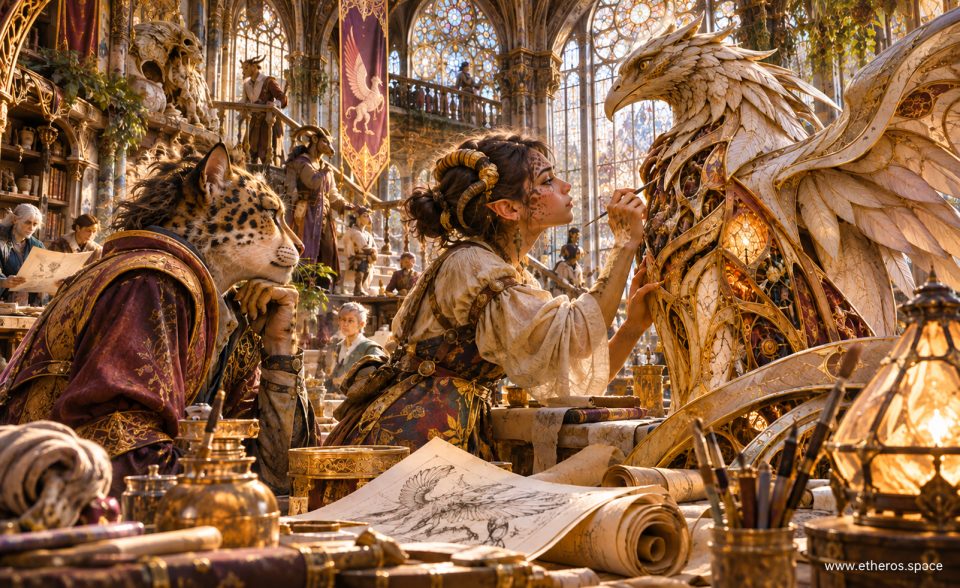
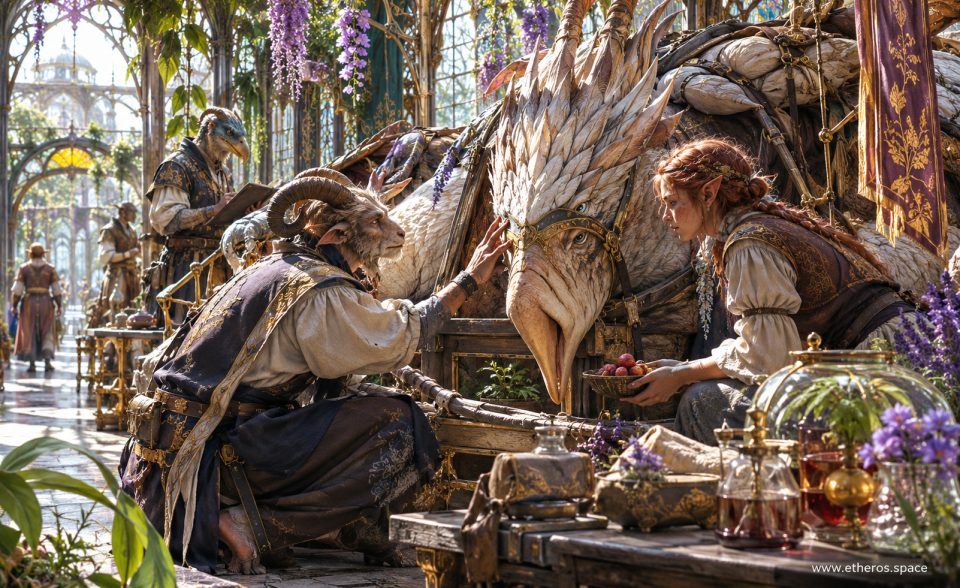
By the time the morning sun reached the upper panes of the Conservatory Exchange, Rhuven had refused three departures. The great ivory-feathered carrier stood beneath flowering vines with a full cargo harness upon his broad back, his golden eye tracking every movement of the people who came near. He had delivered medicinal cuttings, glass seedlings, and sacks of root meal between Etheros’s hill settlements for eleven seasons. This morning he would not take another step.
Some traders called it stubbornness. Vael, the gray-horned harness keeper, knew better than to give a creature a fault that properly belonged to its equipment. He lowered himself beside Rhuven’s face, bringing his weathered hand level with the feathered brow. Rhuven allowed the touch but held his beak close to the wooden rail. Across from them, Elira crouched with a shallow bowl of red conservatory berries. She did not push the fruit toward him. She held it where he could choose it.
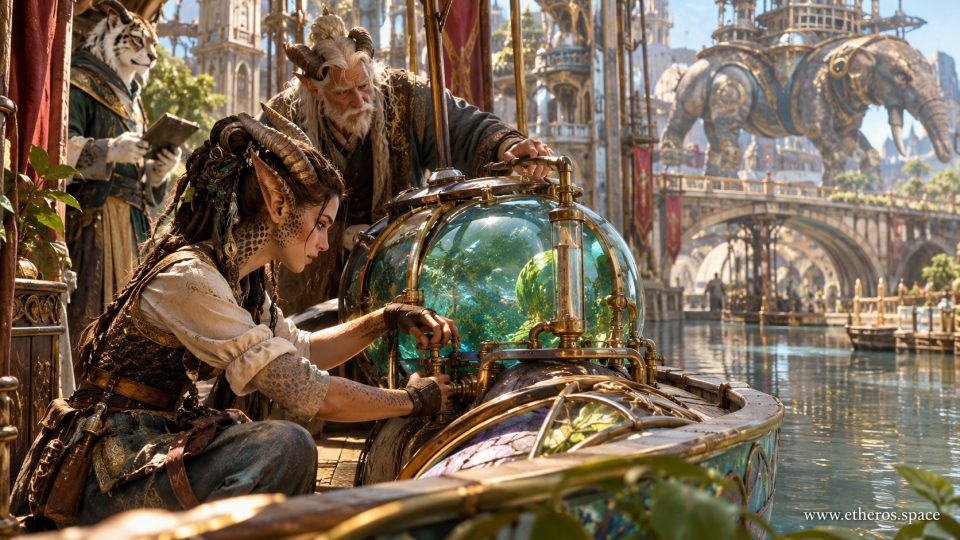
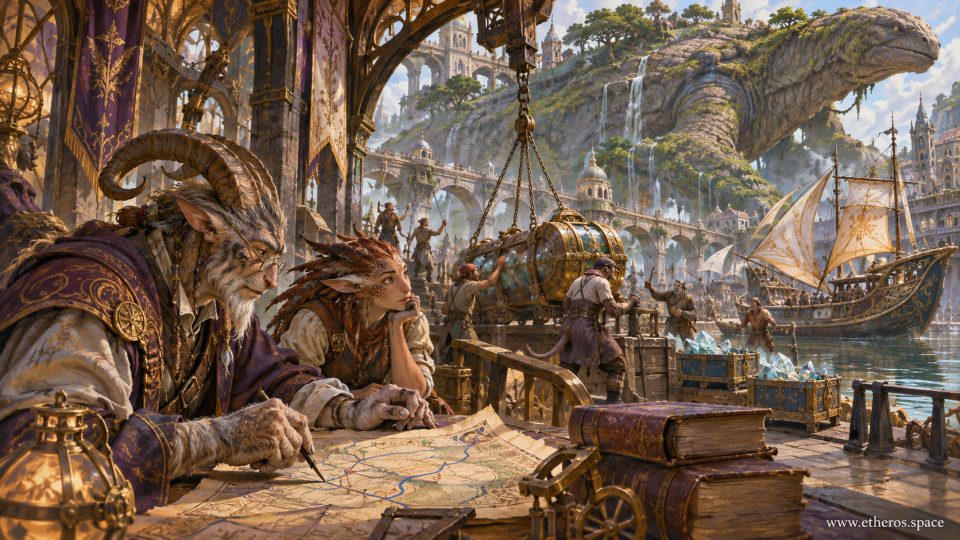
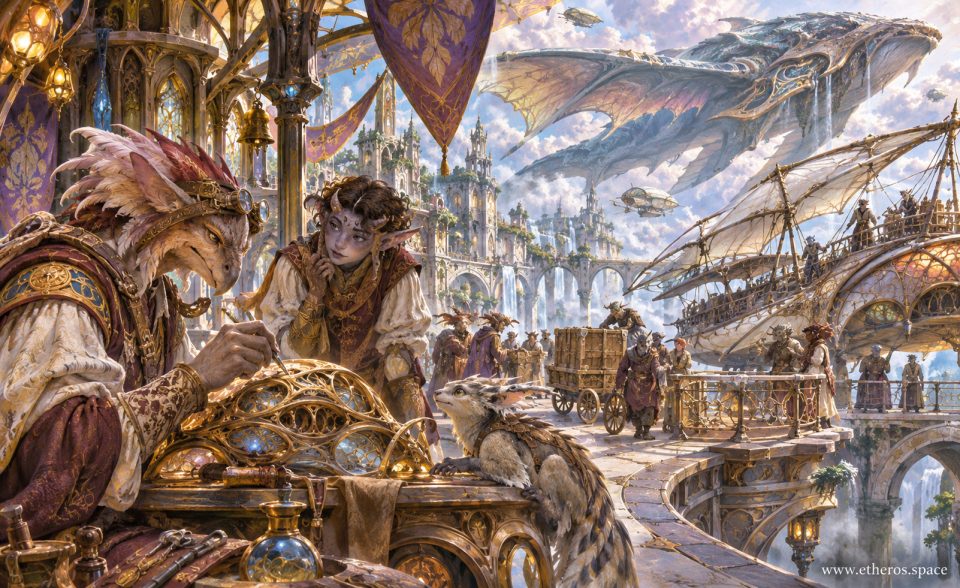
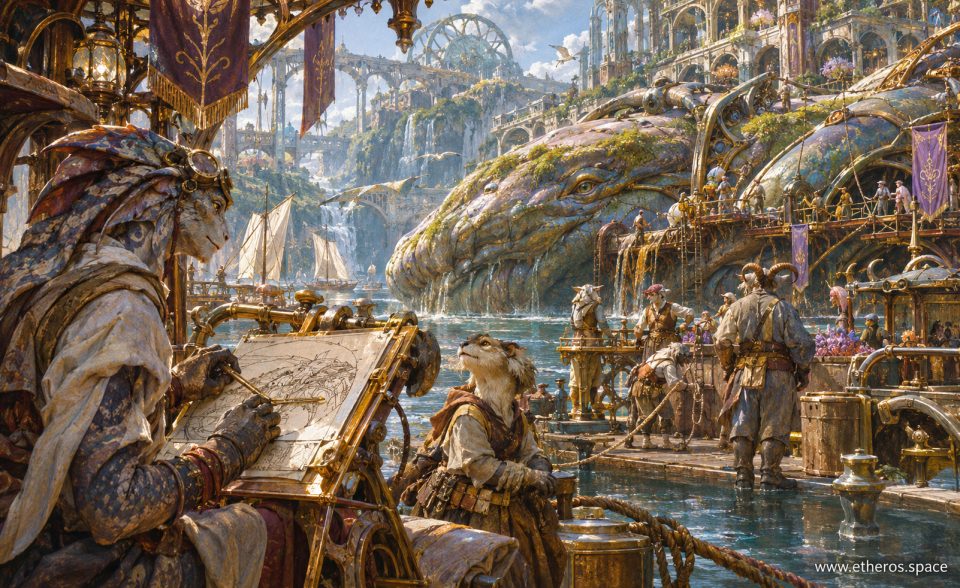
The greenhouse was busy with its own small occupations. An avian registrar named Cyr stood a little behind the keeper, pencil moving across a dark board. Other handlers and customers passed along the wet stone floor, their footsteps softened by hanging leaves. Bottles of tincture and stoppered seed cultures crowded a worktable in the foreground. Everywhere the building joined the organic and the made: slender iron ribs carried the glass, flowering stems threaded its gold braces, and pale light moved over engraved hinges and woven leather.
Vael had once built the very harness Rhuven wore. The layered packs above the animal’s shoulder carried medicine between settlements too high for carts, while broad straps divided their weight along the creature’s skeletal ridge. A line of supple bioceramic scales, hidden beneath the decorative leather, was supposed to let the wing roots expand without being pinched. But the latest cold season had shrunk one joint of the pack frame. Each time Rhuven lifted a wing, the frame drew a fraction tighter against his left side.
Nothing in the bright Exchange announced an emergency. No one shouted. No blood stained the plumage. That was the difficulty: a load could be harmful before its damage became visible. Vael could feel the irregular catch when he slid two fingers under the harness edge. Cyr marked his observation in the maintenance register, not as a complaint against Rhuven, but as a fault in a numbered load-bearing member. The registrar had been trained to distinguish what he saw from what he assumed; he wrote the pressure point down and left the diagnosis open until the strapping could be lifted.
Elira, who grew the ruby berries in the east house, had never traveled with a carrier. Her work was slower and less celebrated. She understood moisture, soil acidity, and the quiet changes by which a living thing announced discomfort. When Rhuven finally accepted one fruit, she noticed he leaned his head to the right rather than turning his neck freely. She told Vael, without claiming to know why.
The keeper watched that small movement and felt the sting of recognition. Years before, a younger Rhuven had carried Vael home after a collapse on the northern pass. Vael had spoken afterward of the animal’s strength, but never enough of his patience. He had thanked the crew and repaired the broken cart. He had not asked whether the harness should have been made lighter. Now there were three sealed cargo packs behind that powerful neck, each registered as essential by someone who would never have to feel its weight.
Vael loosened the forward buckle. The brass fittings clicked softly. He made the next adjustment only when Rhuven’s eye softened and the feathered head lowered a little. Cyr measured the newly freed gap and began a second line in the register. The answer would not be another notch in the same strap. They would move the upper packs into two smaller baskets, let the shoulder rest, and have the frame reshaped by the co-operative smiths before the next journey. The medicine could leave with a different team; the nursery cuttings would remain here under the glass until evening. No delivery deadline had authority over a living spine.
Outside the arches, a city’s ordinary exchanges went on: shoppers arriving, gardeners returning with damp trays, workers trading their wages for something warm to eat. Inside, Elira waited with the bowl while Rhuven chewed another berry. Vael rested his hand on the great creature’s brow. The cargo was still present, the mistake not yet wholly repaired. But the first part of the work had been done. For a little while the busiest room in the Exchange belonged to the one traveler who had said no.