The Valve That Kept the Canal Alive
Story
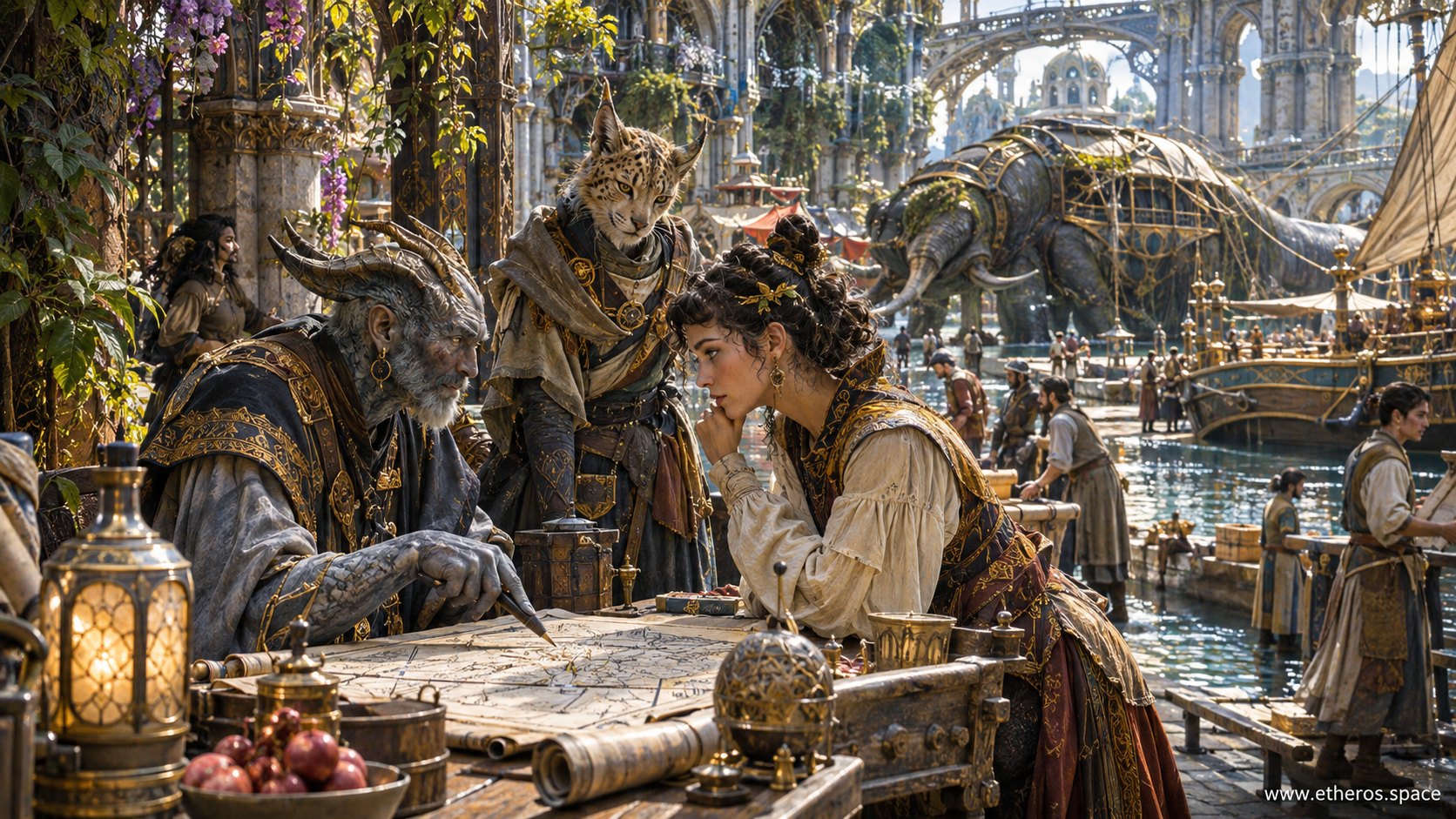
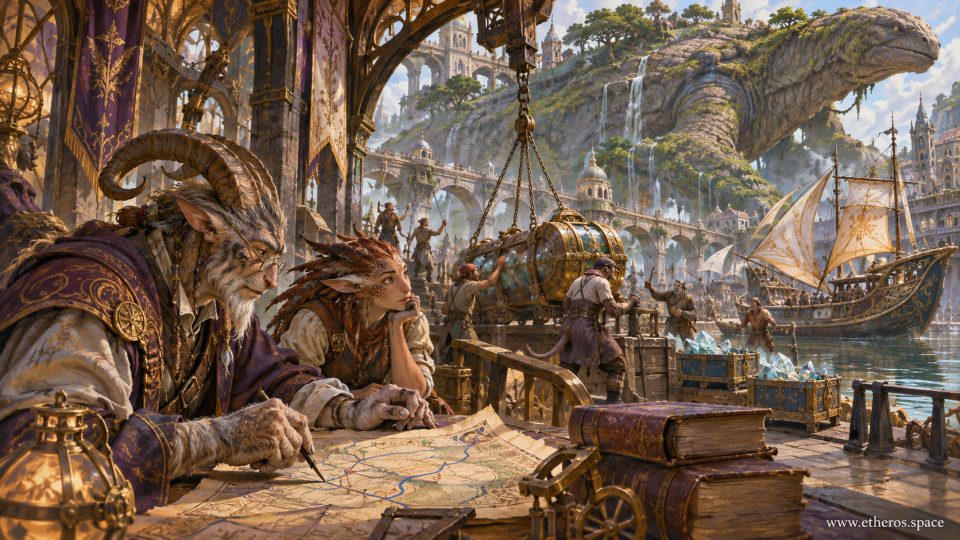
The water of Veyr's eastern canal was so clear that visiting merchants could count the gilded foundations beneath the surface. The cleanliness made the neighborhood proud. It also concealed a small cruelty: for eleven mornings the fish beneath those foundations had not spawned.
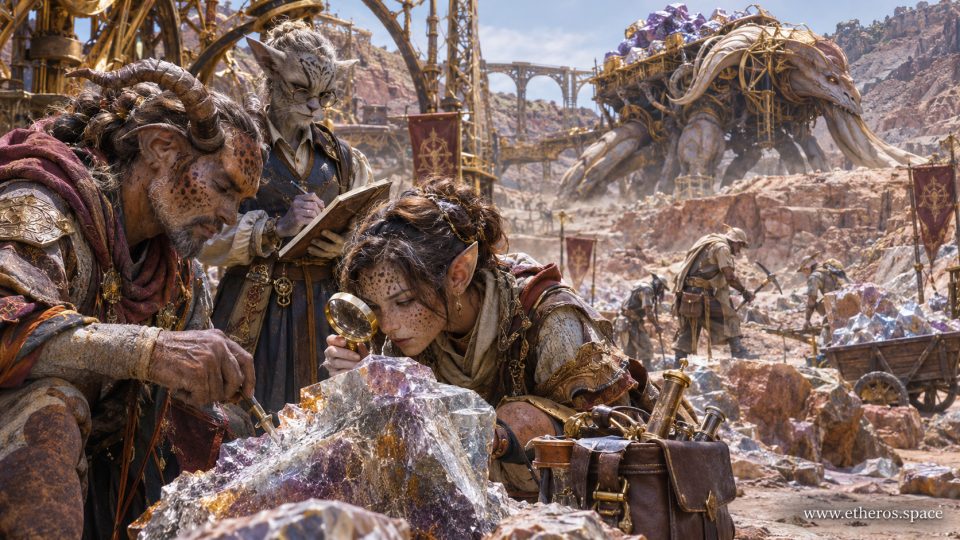
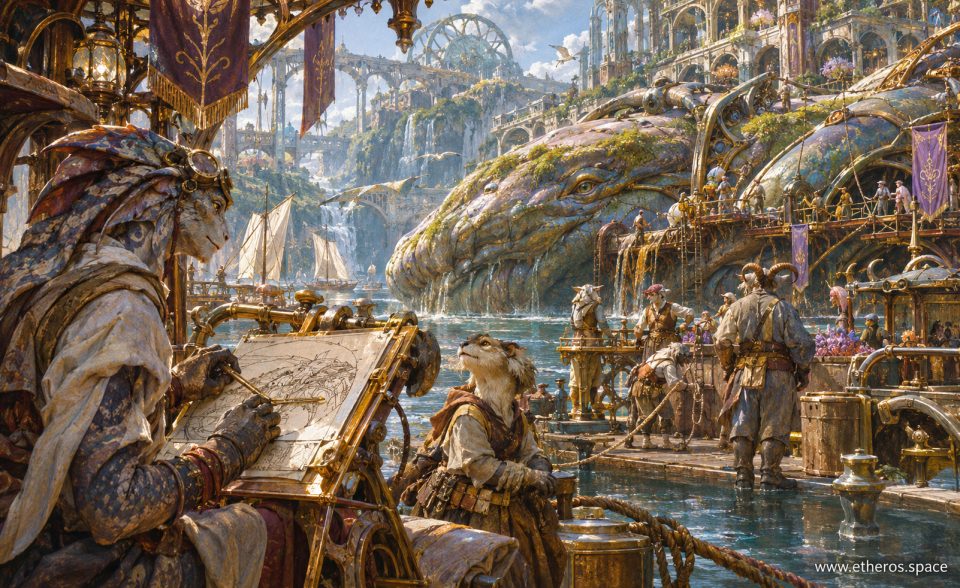
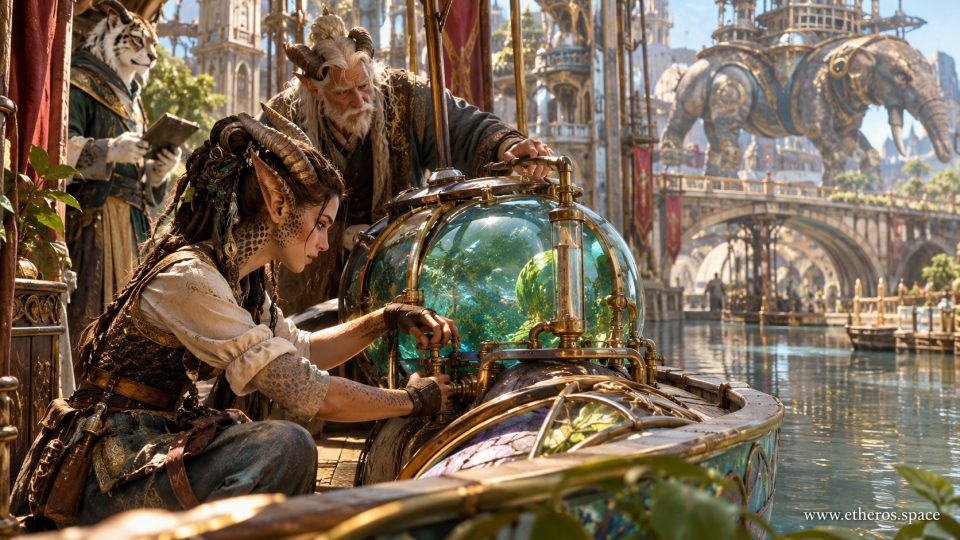
At the open-air testing berth, Ilyra crouched before a rounded glass cradle filled with turquoise water and a knot of green, rootlike tissue. Her pointed ears and spotted skin were common among the city's moss-bank people, whose grandparents had once lived beyond the aqueducts. Her hands, one bare and one guarded by a dark working glove, held the thumb-sized pressure valve at the front of the vessel. She did not look up at the arching bridges, the passengers crossing them, or the great elephant-shaped provider moving its enormous articulated legs between the towers. She was listening through the bronze beneath her fingers.
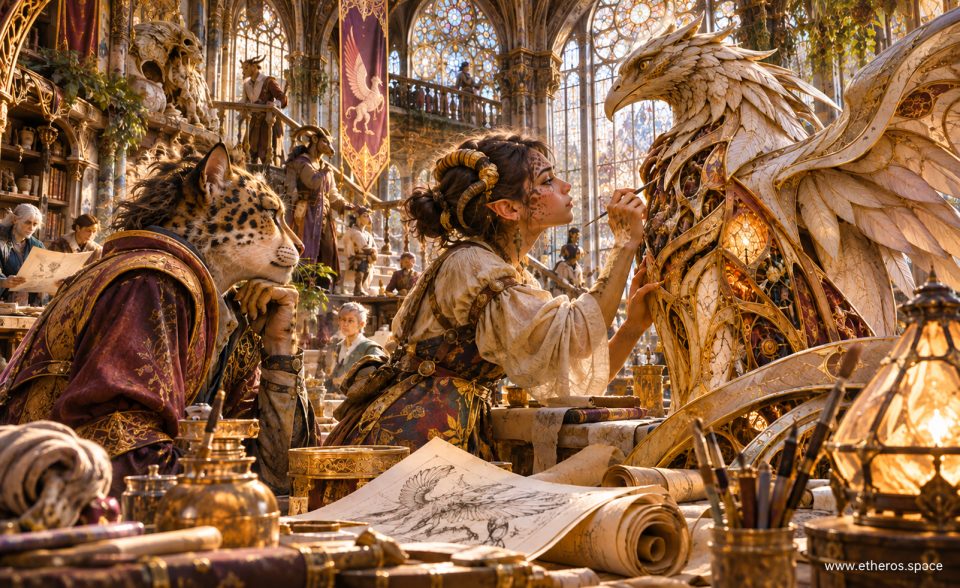
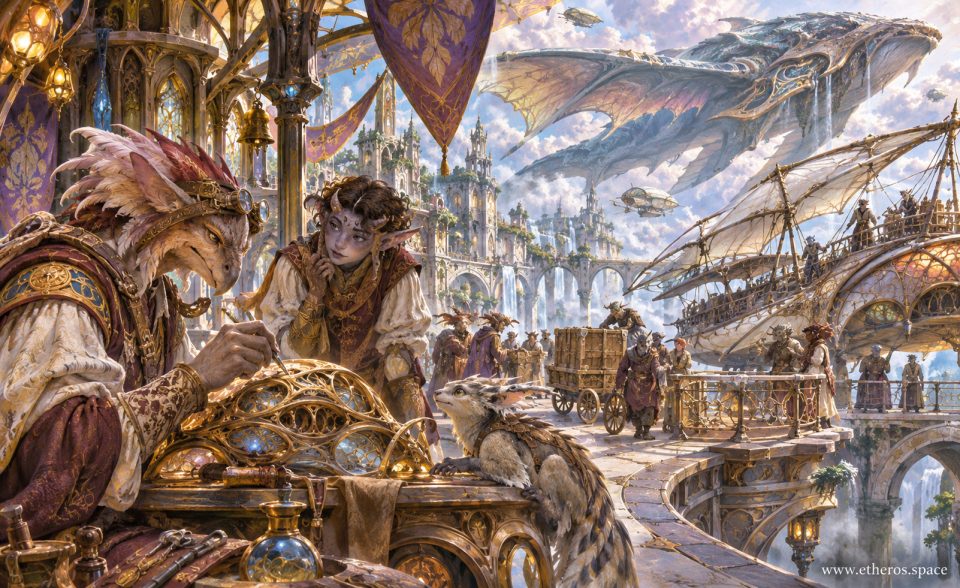
The old engineer behind her was Master Orren, a horned veteran whose white hair was tied back with a strip of faded sailcloth. He kept one hand on the upper retaining ring of the glass. The cradle was not merely an aquarium. It was a working scale-organ of the canal: glass lungs, a living filter colony, brass pressure veins, and a capsule of river moss descended from the original wetland. The city's providers used thousands of such organs to taste water before it reached the farms, kitchens, nurseries, and fish ladders.
To their left, a white-furred feline registrar named Keshen marked readings on a narrow slate. Keshen had come from the upstream quay with a list of numbers and a petition signed by the riverkeepers. He had expected an argument. Water purity was Veyr's oldest boast, and the guild council did not enjoy hearing that one of its proudest inventions might be doing harm.
Ilyra gave the brass wheel a fractional turn. The liquid inside the globe shifted from bright blue toward a softer green. Tiny filaments opened along the submerged leaf, catching the current like the fingers of a hand. Orren's grip tightened, but he did not stop her.
For years the civic pumps had been tuned to strip every trace of silt from the lower channels. They had succeeded too well. The water was clean enough for the tiled fountains, but the native spawn beds needed suspended mineral dust and a faint iron taste from the mountains. Without it, their eggs remained dormant. The riverkeepers had seen the first signs in the smallest things: empty reeds, silent pools, and older fish circling places where their young should have been.
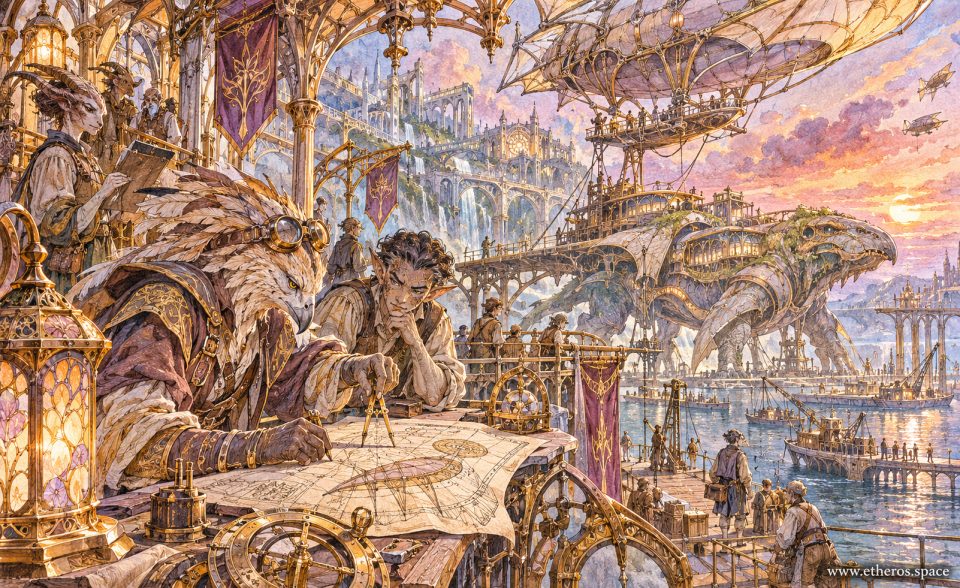
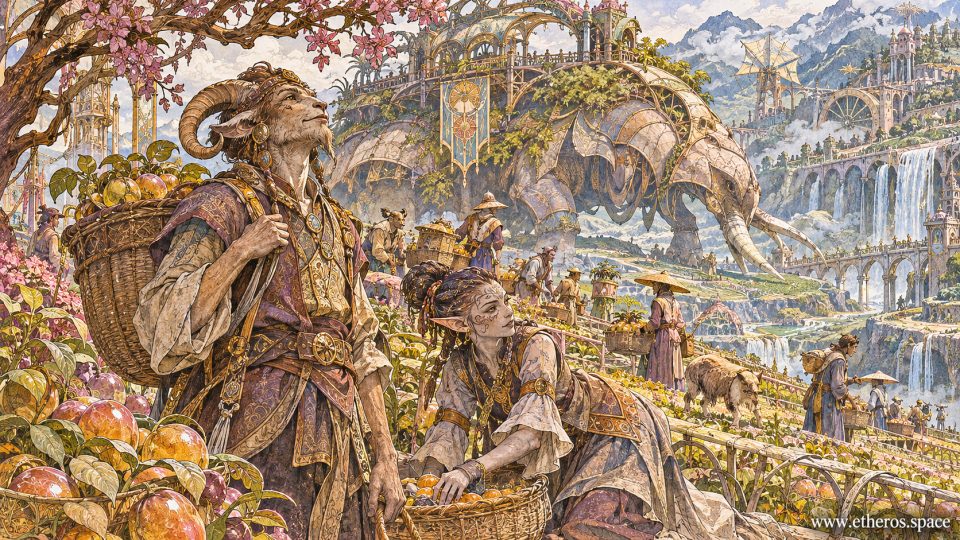
The enormous provider on the far side of the canal was called Harroth. Its living limbs bore the weight of suspended aqueducts and the tramways that ran over them. Within its plated body, broad pumping chambers lifted river water through the city. When its sensory tendrils felt a change in the test cradle, it would alter the pulse of the eastern filtration line. But a mistaken command could send too much sediment into the drinking cisterns. This was why Ilyra worked at a bench beside the water instead of at a comfortable desk in a tower.
Keshen read the falling pressure aloud. Orren watched the brass gauge and the trembling green tissue. For a moment its fine veins folded inward. Ilyra held her breath. Then she eased the wheel back by a hair's breadth. The tissue uncurled, the turquoise cleared, and a slender, milky thread of mountain silt drifted through the test chamber without choking the living filter.
"Not pure," Orren murmured. "Alive."
It was an old distinction, and one he had once failed to make. A generation earlier, he had helped design the first flawless filtration towers. His own daughter had spent her childhood fishing the muddy creeks that vanished when those towers came online. He had buried her years ago and kept the river's silence to himself ever since. He had never told Ilyra that the drawing she found in his workshop was his daughter's: a little fish surrounded by too many young to count.
On the bridge, a procession of baskets passed behind the banners. The water moved lazily under the sun. Keshen wrote down the new setting, including the old reading and the name of the young mechanic who had changed it. These details mattered. A public machine was a chain of obligations, and every adjustment needed a witness who could be questioned if it failed.
Far away, Harroth's great pumping chambers began to move with a slower rhythm. Nothing dramatic happened. No tower shook. No cheers rose from the crowded quay. A delivery boat eased beneath a bridge, and somewhere below it a little cloud of mineral silt entered the current, borne toward the reeds where the riverkeepers waited.
Ilyra rested her hand against the warm metal of the cradle. Its enclosed green tissue flickered gently, no longer struggling to remain perfectly clear. She imagined the first eggs waking in their beds downstream, though she could not yet know whether they would. That uncertainty was part of the work. She closed the tool case only after Keshen had completed the record and Orren had released the lid.
In Veyr, the greatest engines were built of stone, gold, tendon, and old promises. Yet on that ordinary morning, the future of a river depended on a valve being left just a little open.