A Measure for the Smallest Guest
20261106T025350211802Z_100percent.png
Story
A MEASURE FOR THE SMALLEST GUEST
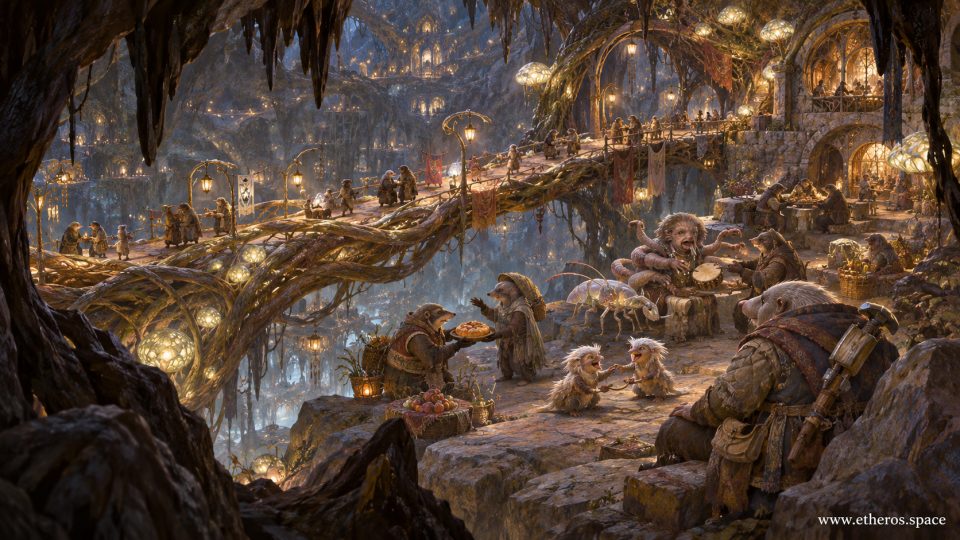
The wayhouse above the dry eastern road of Istren was fullest after the evening carts had ceased to arrive. There were always travelers who had counted wrongly: the length of an ascent, the interval between freight convoys, or how long a very small child could stay awake in a strange town. Outside, windows shone across the terraces in the cold blue dusk. Inside, the innkeeper had begun moving furniture.
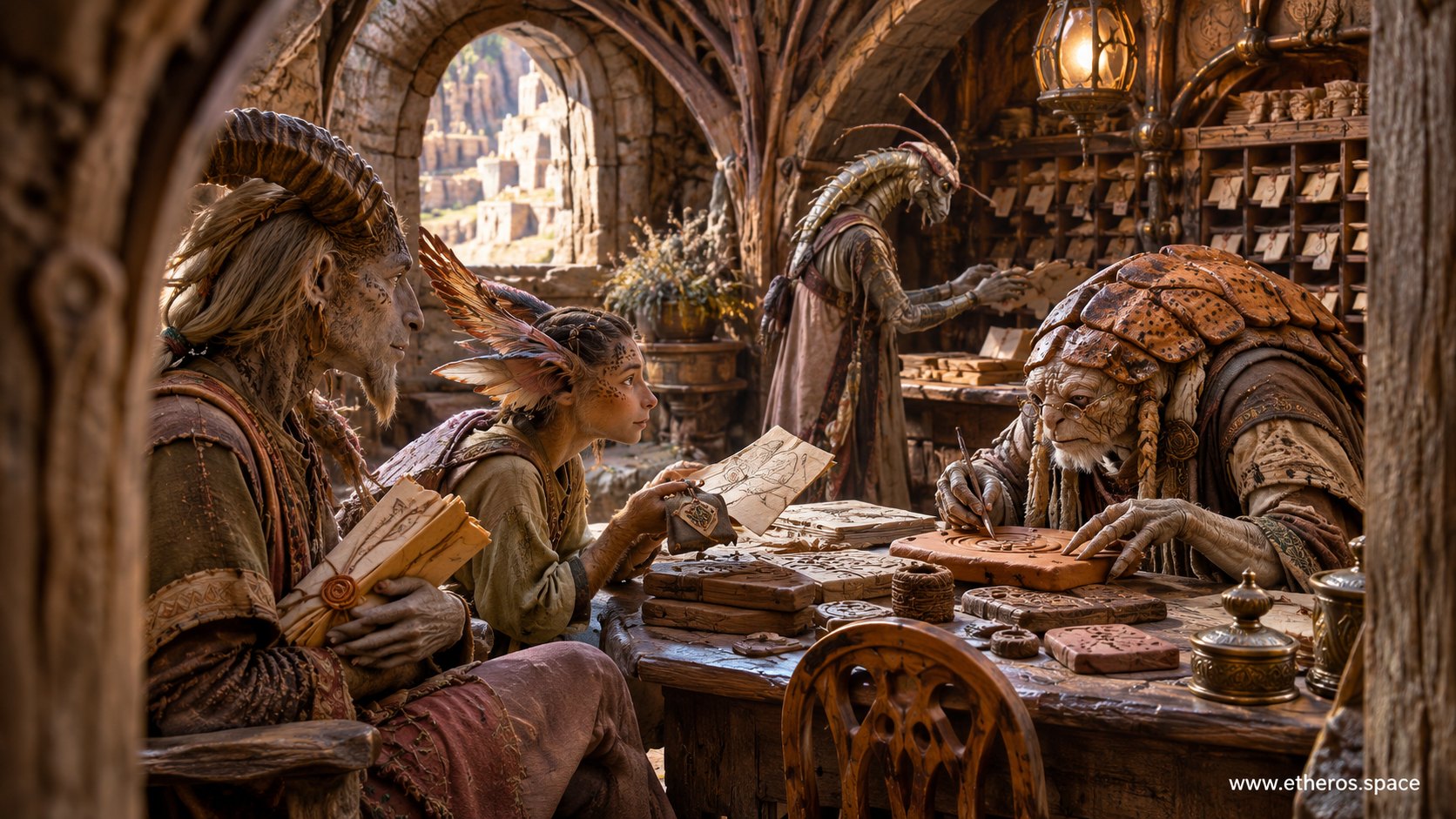
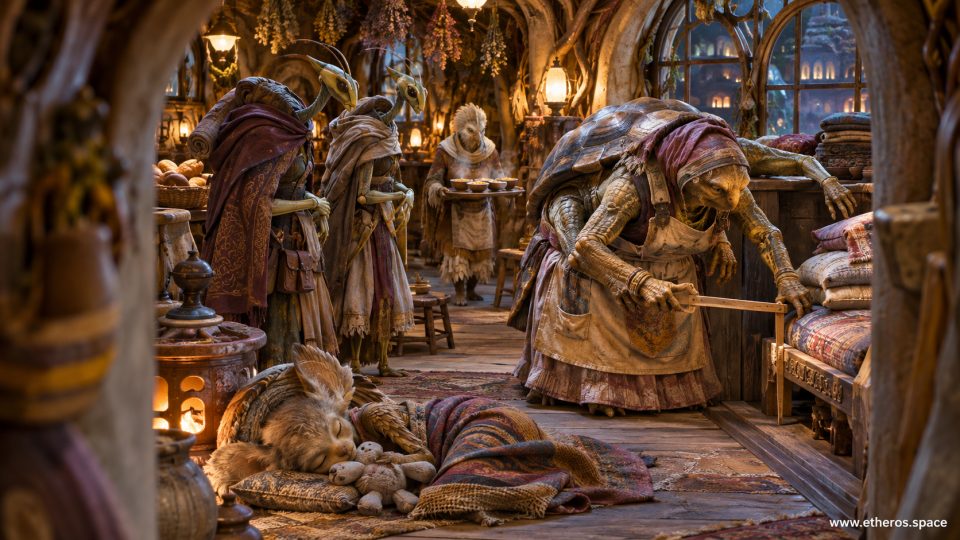
Dorra, a broad-shelled elder whose apron was patched over decades of service, bent over the narrow wooden bed beside the wall. Her carapace bore a dusty mauve cloth; the rest of her hands were occupied by a measuring strip held against the frame. She did not have to measure the bed. She had made it herself. What she needed to learn was whether another arrangement was possible without turning its feet into a stumbling hazard.
Two lanky travelers waited near the bread basket. Teren and Vask were siblings of the tall reed-mantids, creatures whose folded grasping arms were much longer than those of most wayhouse guests. Their coats had been cut with seams that opened around their shoulder joints, and tightly rolled bundles rose behind their narrow heads. They had come to Istren hoping to obtain work at the upper dry-slate kilns. The guild's lodging hall was full. What little they had earned carrying stone samples from the foothills would cover three nights here, perhaps four if they shared food.
A third traveler had arrived with them: Peli, a little frost-eared child of a different family, entrusted to the siblings for the last stretch of the road while her mother finished an urgent delivery. Exhaustion had settled the matter of where she would sleep. She lay on a rug near the brazier, a small soft toy held close to her mouth, breathing with the absolute concentration of children who have finally stopped trying to be brave. Neither the glow of the coals nor the talk around her could persuade her to wake.
At the center of the room, Sorei, the pale-feathered supper keeper, carried three bowls of warm root porridge on a wooden tray. He had been raised in a house where the serving tables stood high enough for his long legs, and he knew how often furniture decided who seemed welcome before anyone had spoken. He set one bowl within easy reach of the siblings and held the others until Dorra could move the cutting tools out of the way.
'If I lower the bed, I can make a wide step,' Dorra said. 'If I raise it, their legs will not drag against the rail. Which is it to be?'
Teren answered that the low step mattered more, since Peli was so small. Vask disagreed. He had slept badly on floors for a week, and a bed too short to fold into was no bed at all. Neither was wrong. The ordinary room had been designed for an ordinary body, and each guest had arrived with a perfectly reasonable exception to that rule.
Dorra considered her ledger. The council had recently assessed an additional lodging charge for every sleeping place beyond a house's registered capacity. The rule had an understandable purpose. Crowded rooms blocked passage and made the old heating shafts dangerous. Several neighbors who paid to maintain proper guest rooms resented the way cheaper establishments squeezed families into storerooms. But the new charge took no account of a traveler who needed extra floor space for limbs or a child too frightened to sleep alone. It measured sleeping places, not sleep.
'We will keep the aisle clear,' she said at last. 'And no one will be charged for the floor beside a bed.'
She moved the bed against the broad stone shelf, not close enough to trap warmth around the cushions. She fixed its outer leg into a braced wooden slot so the frame would not tip when a tall guest turned. The little rug stayed near the stove, beyond the ember guard. The mantids could rest with their upper limbs folded along the length of the mattress, and Peli could be lifted onto a pad beside the bed once her mother returned. The arrangement was imperfect. Everyone could see that. But at least nobody had to pretend that the same dimensions served them all.
Sorei went to fetch another cushion. Through the arched window he could see the lights of the council's upper hostel, where well-appointed rooms stood empty because no travelers had yet arrived bearing the proper guild tokens. He understood why tokens existed: they helped pay for repairs and made sure attendants knew whom to expect. He also understood that a threshold could be useful to those already inside and impassable to those still approaching it.
Later that night, when Dorra had finished her measurements, she left a space in the ledger for the difference between the bed that existed and the bed she wished she could build. Beside it she noted the names of the guests, not their shapes. Vask promised to make a stronger joint at the kiln workshop in exchange for part of the next night's lodging. Teren offered to help Sorei carry provisions up the stairs before dawn. No agreement about rent or guild membership had been settled, and none of them imagined kindness could substitute indefinitely for wages, safe buildings or fair rules.
Peli turned in her sleep, her little toy almost slipping from her paws. Dorra put it gently back beneath her chin. Around them, the ancient living buttresses of the house carried the weight of the upper rooms into the earth. The lamps swung hardly at all. At the last moment before closing the ledger, Dorra wrote a final instruction to herself: ask the council what it means to count a bed, if it cannot count the people who need one.
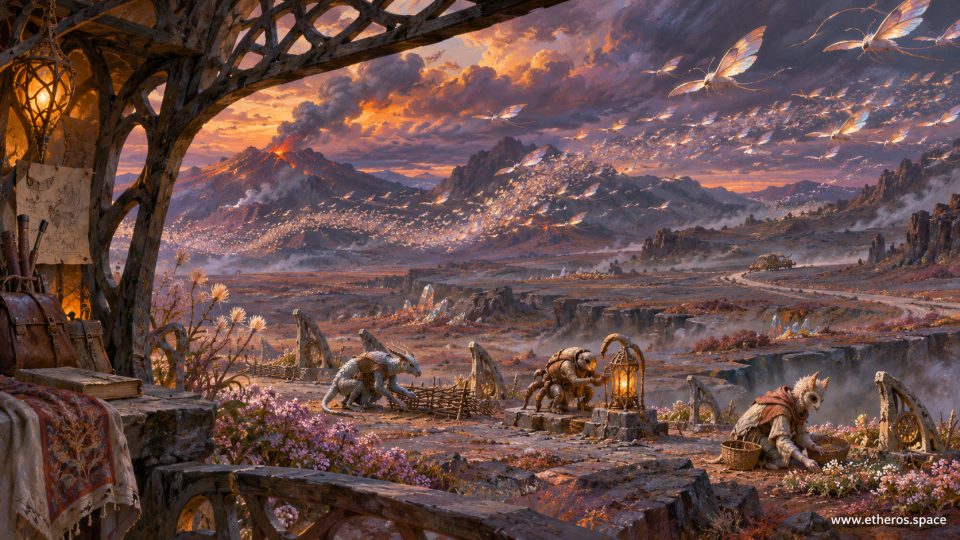
And outside, the steep road went dark, while the low window of the wayhouse remained bright enough for one more arrival.