The Names Left in the Light
Story
THE NAMES LEFT IN THE LIGHT
Kharan North Arcade, the long amber season of primordial Etheros
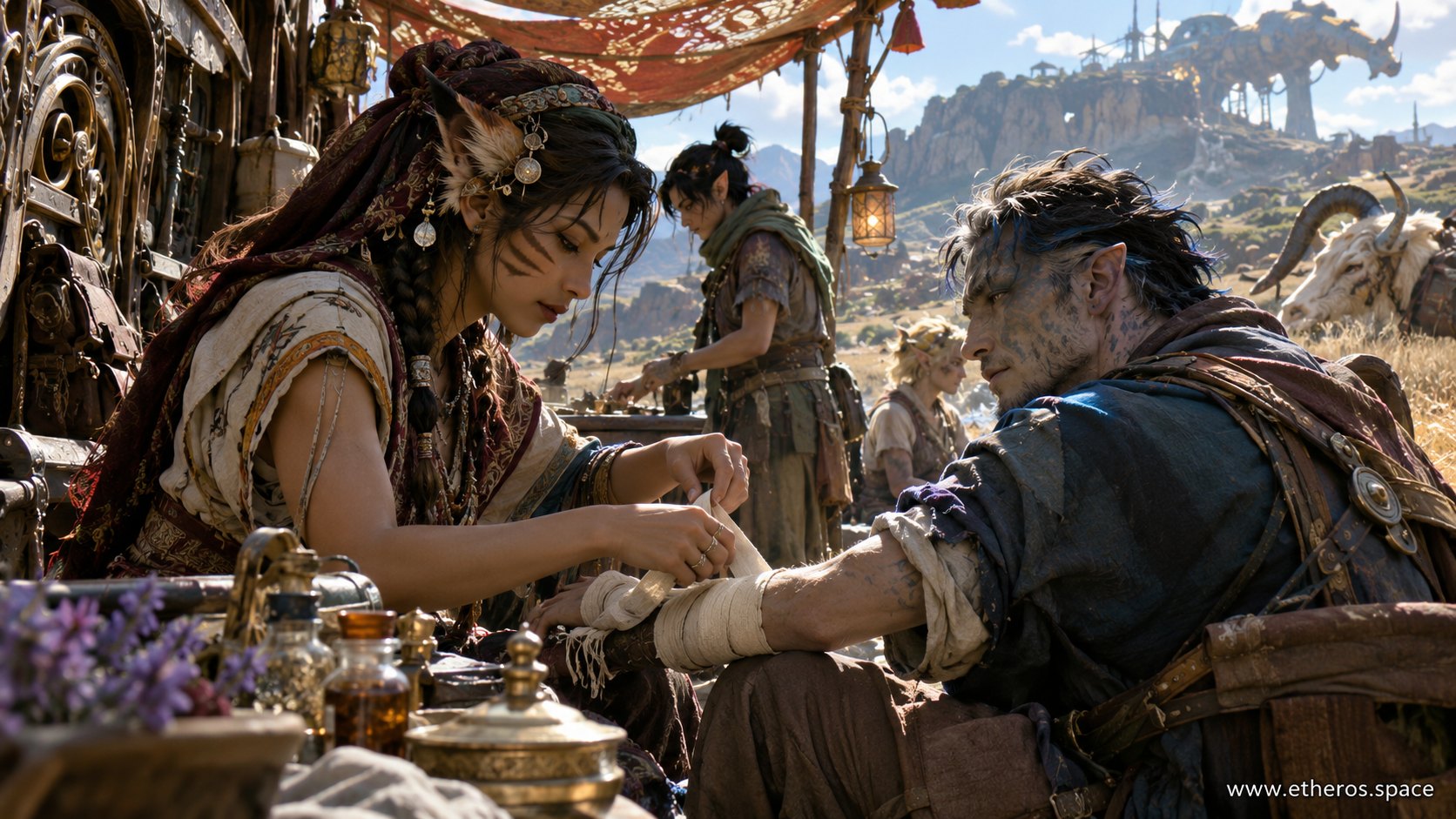
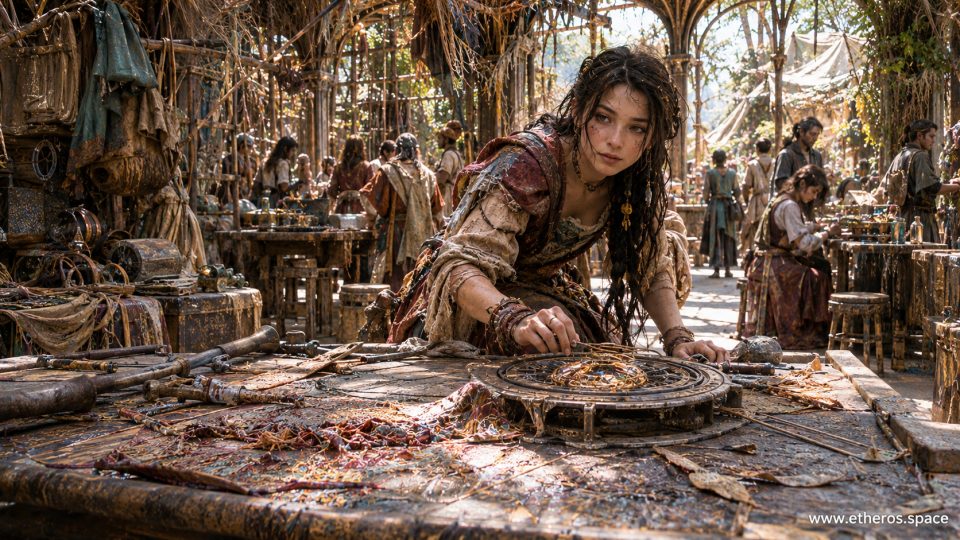
The repair had taken the better part of a morning, though the break itself was small. A brass seating pin had worn thin beneath the clear curved housing of the quarter's old light-vessel. Whenever the chamber warmed, the pin slipped against its retaining frame and sent a shiver through the narrow filaments. It had not yet failed outright. That was precisely why Laira wanted to finish before the afternoon crowd grew loud enough to make her hands hurry.
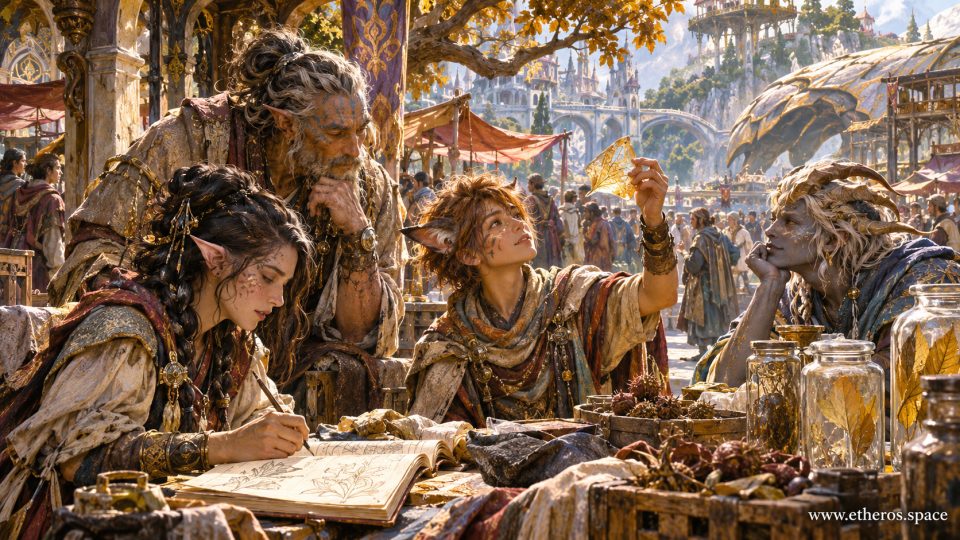
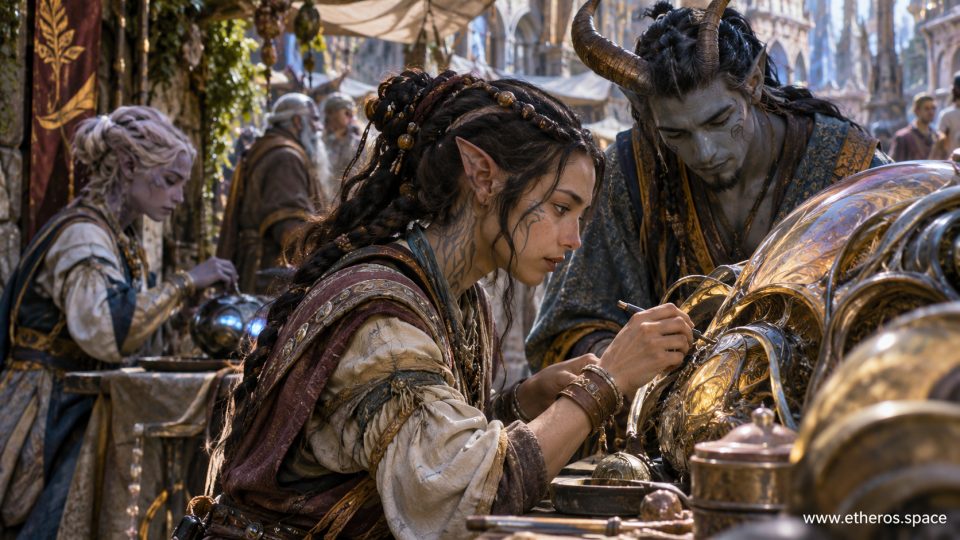
She bent over the crowded bench, dark braids falling against her shoulder and the delicate branchlike markings at her throat disappearing under a leather collar. A slender engraving tool rested between her fingers. Her other hand steadied the gilt frame. Behind her, Varek, whose blue-gray skin and sweeping horns made it difficult to lean under low awnings, watched the tool point rather than the vessel's beautiful glow.
'Again, a quarter turn,' he said.
Laira turned the pin, then stopped. Beneath the new brass was a row of older tool cuts, thin as scratches left by a nesting insect. They did not follow the geometric border. They lay across it, at different angles, made by different hands during repairs separated by years. The guild's commissioning tablet listed the vessel as the work of a single celebrated master whose descendants still collected a fee whenever its design was copied.
'Who made these?' Laira asked.
Varek lowered his head until the pale afternoon caught the edge of one horn. He knew the master had fashioned the outer shell. He had also known the three unnamed itinerant workers who had kept the inner lattice alive during the fire-season shortages. He remembered one of them by the way she hummed to gauge the pin's vibration, another by the flat stone she carried to sharpen tools. He no longer remembered whether the third had been an apprentice or the person who brought them all together.
'I remember their work,' he said. 'Not enough to sign their names.'
Across the narrow passage, Mera was polishing a smaller dark sphere under a cool blue inspection light. She had heard that sentence before. Her own family traveled between districts replacing parts in devices that local guilds displayed as inherited treasures. The visitors were paid for the repair and forgotten by the next festival. Yet she understood why the council feared altering the old inscriptions: families had guarded these objects through lean generations, and careless claims could erase genuine histories as easily as false ones.
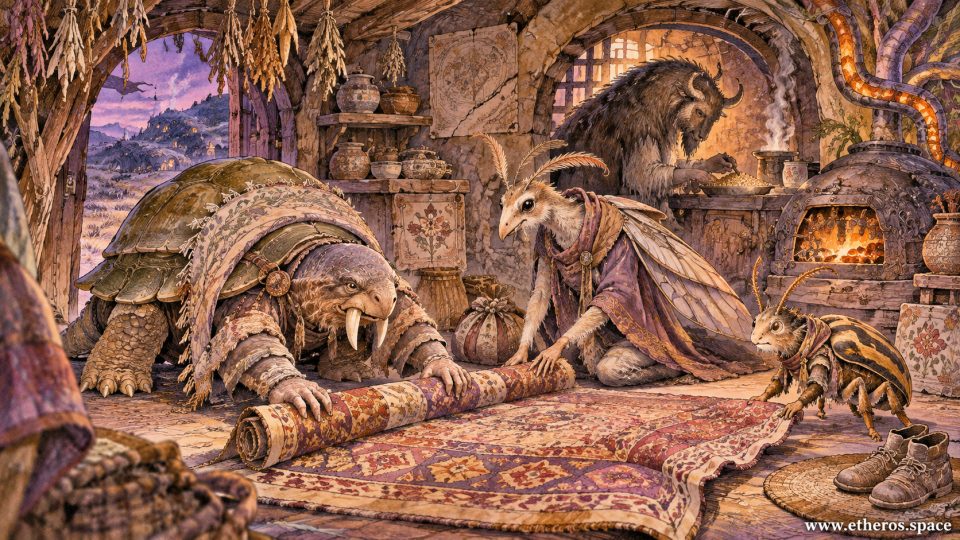
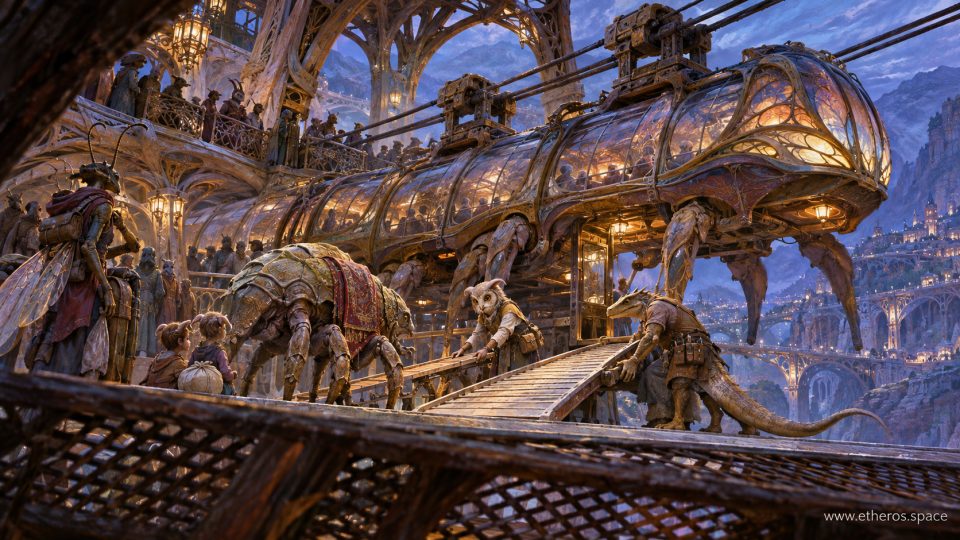
A buyer stepped into the light and asked when the vessel would be ready. The council wanted to carry it at dusk through the northward streets, where households of four different kinds opened their windows for the first lantern procession of the season. There were children who followed the route by the brightness of the hanging signs; others followed by the rhythm of footfalls against the paving. The vessel was beautiful but not indispensable. Nobody would starve if it remained on the bench. Still, postponing the procession would mean a lost evening of trade for the bakers and the small performers who had already prepared.
Varek proposed replacing the pin, polishing the shell and leaving the authorship question for a council hearing. 'The mechanism will be safe,' he argued. 'Our record will only be incomplete.'
'It already is incomplete,' Laira answered. 'That is why the single name looks so certain.'
They argued quietly, with the seriousness reserved for things both sides cared about. The public might distrust an object whose maker was uncertain. The descendants might accuse the guild of theft. But if the itinerant craftspeople remained invisible, every future apprentice would learn the wrong lesson about how a city survived its own inventions.
At last Mera crossed over with a scrap of soft metal used for trial engravings. Laira cut three shallow marks across it at different angles: not signatures, not invented identities, simply the measured forms of the old repairs. Beneath them she worked a narrow recessed channel that could hold a removable record sleeve. The sleeve could state what was confirmed, what was remembered by witnesses and what remained unknown. No old inscription would be destroyed. New evidence could replace a mistaken statement without destroying the vessel again.
Varek considered the added work. The outer shell would still carry its documented maker. The inner repairs would no longer be disguised as original metal. The council would have to decide whether future fees should be shared among guild repair funds, itinerant workers and the families who had maintained the district's lamps. That question could not be solved at a bench, and neither could the absent third person's name.
Laira tightened the final fastening and watched the amber line settle behind the glass. The light remained steady. She placed the engraving tool down beside the small unfinished sleeve, too careful to call it a victory. Beyond the table, strangers crossed beneath the arches without knowing that anything at all had changed.
At dusk the vessel would travel through Kharan. Its glow would look exactly as it had the year before. Under the gold, however, there would be room for more than one hand, and also room to admit that a hand had not yet been found.