The Atlas of One Unflown Mile — Morning at Loomgate Aerie
20261103T010852576385-0800_033percent.png
Story
The Atlas of One Unflown Mile — Morning at Loomgate Aerie
There were mornings when Loomgate Aerie seemed to be holding its breath. Every blue banner hung ready, every gold-braced landing rail hummed with the weight of departing cargo, and the suspended vessels drifted beyond the galleries like patient, half-asleep seeds. Below them, waterfalls traced the terraces of Etheros in white lines, feeding stone arches, root gardens, and all the small industries that preferred to forget how much water a city needed to remain a city.
This morning, the delay belonged to Aruun.
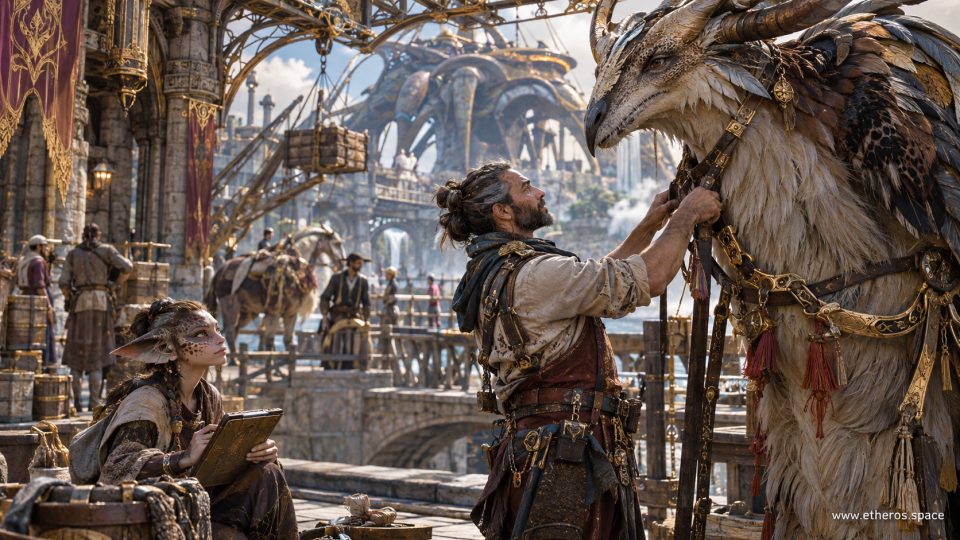
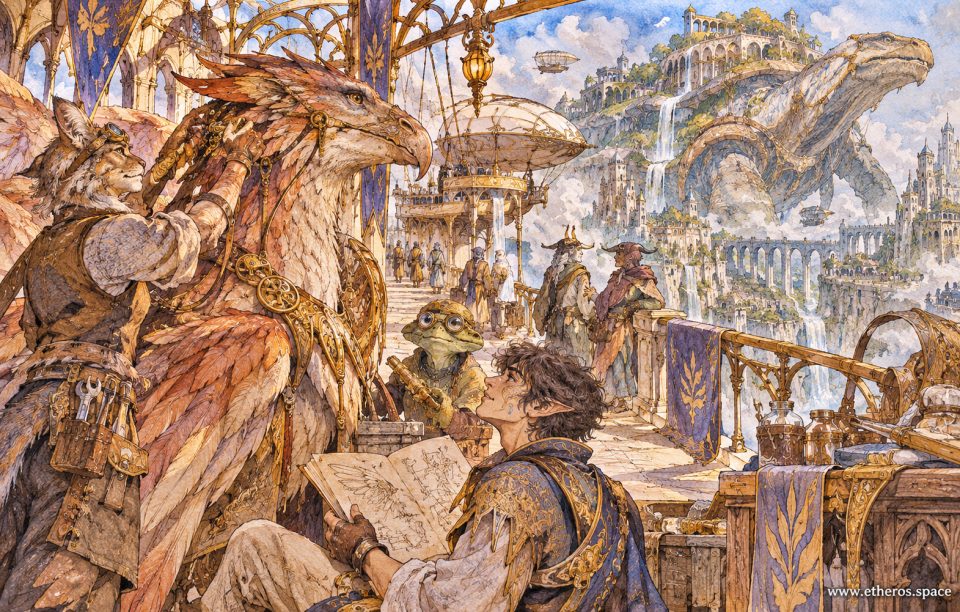
The great rust-feathered carrier stood beside the loading balcony with its head held high and its enormous wings tucked close. Its working harness ran from a padded shoulder yoke through engraved bronze rings and a web of carefully measured straps. The bird could have pulled free if it had chosen. That was the part the new dockhands never understood: the metal did not compel Aruun to carry anything. It translated a willing body into a safe lifting force, protecting living tendons from the sudden loads of the upper winds.
Tovar, a fox-faced harnesswright with a belt full of old tools, knew the warning signs. A wing that should have settled quietly was holding half an inch too high. The feather joints had not been injured; the fourth counterweight ring had begun to bind after yesterday's rain. If they sent Aruun aloft without correcting it, the carrier would spend the flight compensating for a flaw that belonged entirely to its caretakers.
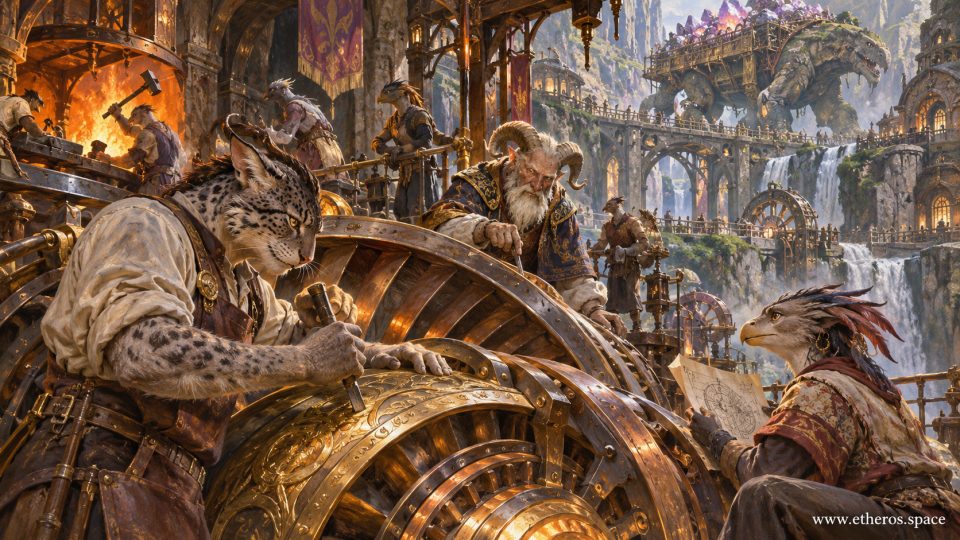
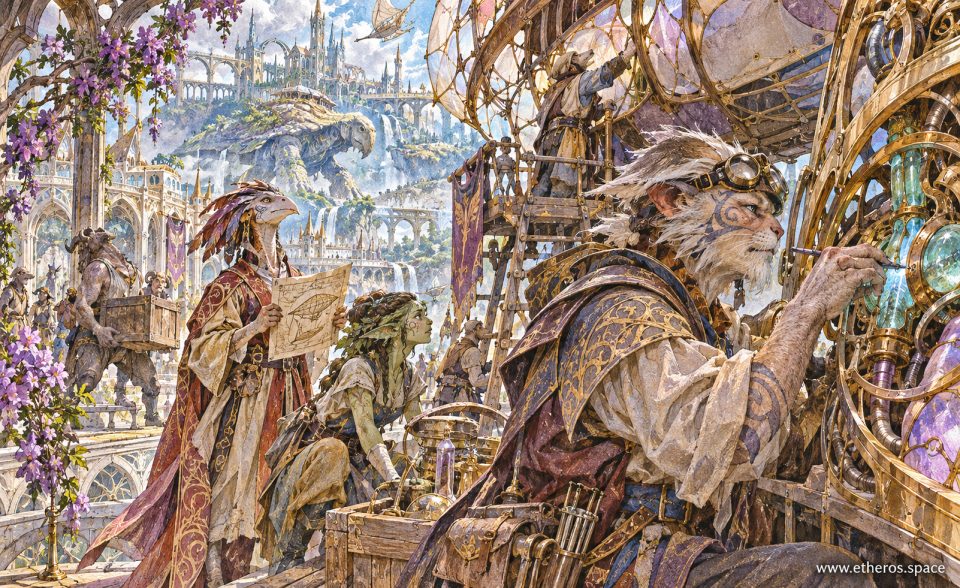
Across the worktable, Ivo held open an atlas so crowded with crossed-out routes and wing diagrams that the original pages had become difficult to see. Ivo was not the senior mechanic and did not pretend otherwise. Their task was to draw exactly what Tovar found, including the mistakes the old manuals had taught everyone to overlook. The ink sketch beneath their hand showed a load path from the bird's chest brace to the paired tendon rails; a single dark mark indicated where friction had been mistaken for strength.
Pell, the small green-skinned instrument tender, sat nearer the center of the balcony with a brass gauge resting against their chest. Once, before becoming a skyport worker, Pell had calibrated pump valves for the quiet civic gardens far below. They had learned that an engine could be perfectly balanced on paper and still be wrong for the particular creature living inside it. With Aruun they did not watch the numbers alone. They watched the bird's eyes, the set of its shoulders, and the way it softened its grip on the stone when Tovar lifted the stiffened strap.
The three did not speak for a while. Bronze clicked. A leather pad yielded. Aruun exhaled into the mountain air. Then Pell's gauge returned to its gentle resting line, and the great carrier lowered its wing until the feathers lay in their accustomed order.
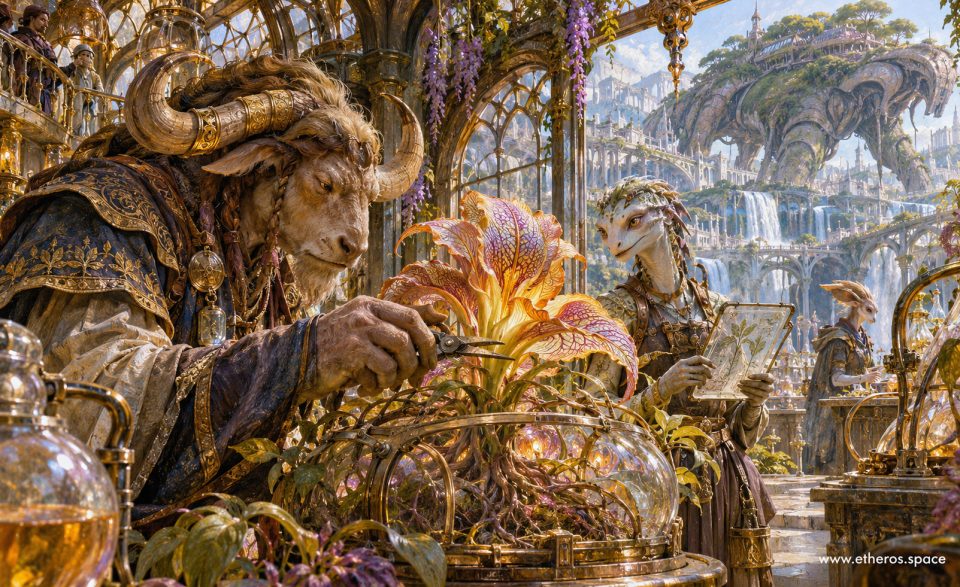
From the open terrace beyond, two horned travelers stood at the balustrade comparing destinations. Other passengers crossed the galleries toward a waiting sky-vessel, past carved columns, purple hangings, and parcels that had been tied, weighed, and stamped by a dozen different hands. Nobody out there knew that their morning depended on this tiny adjustment. Most of the planet's safety was made of repairs nobody saw.
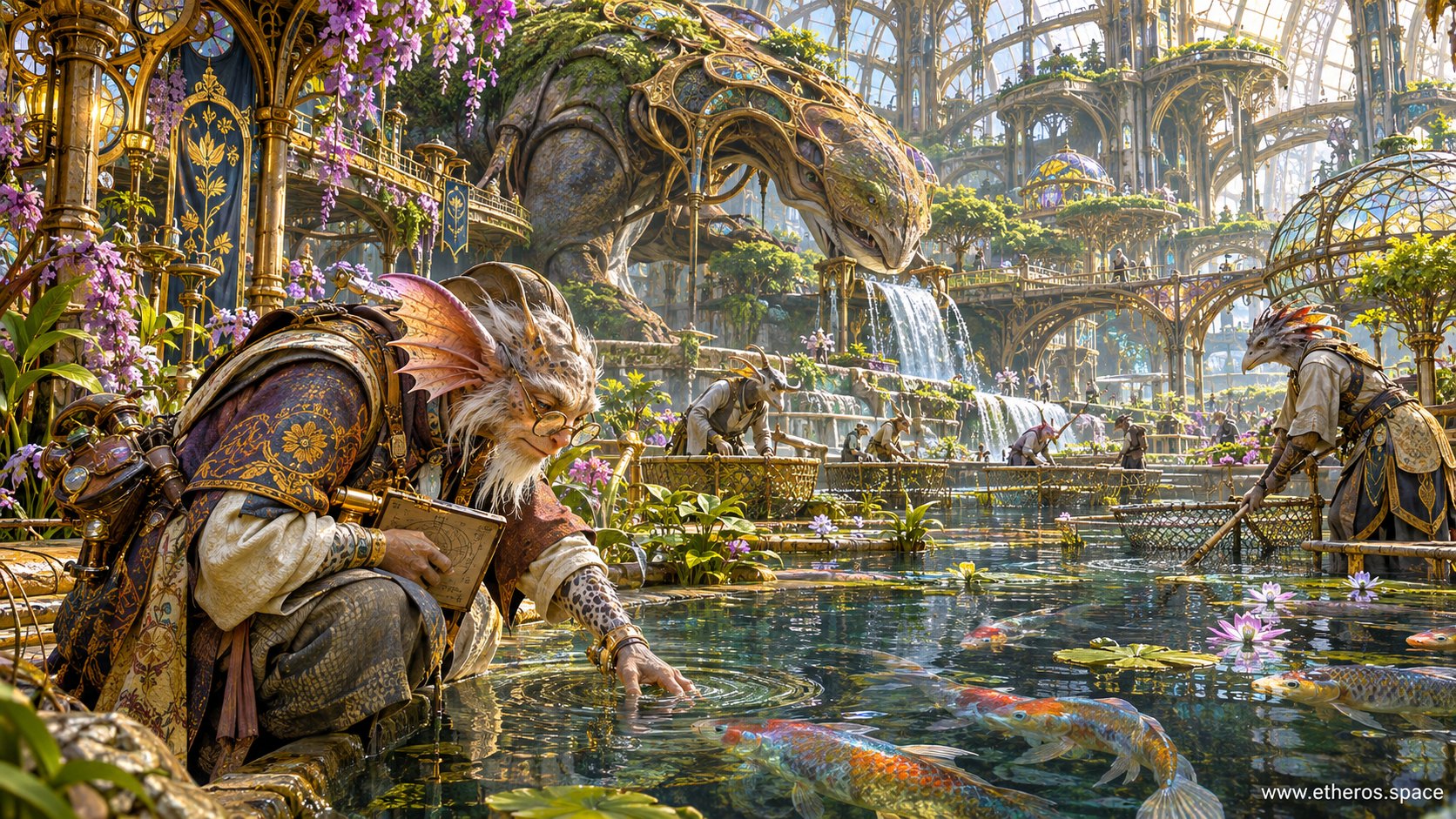
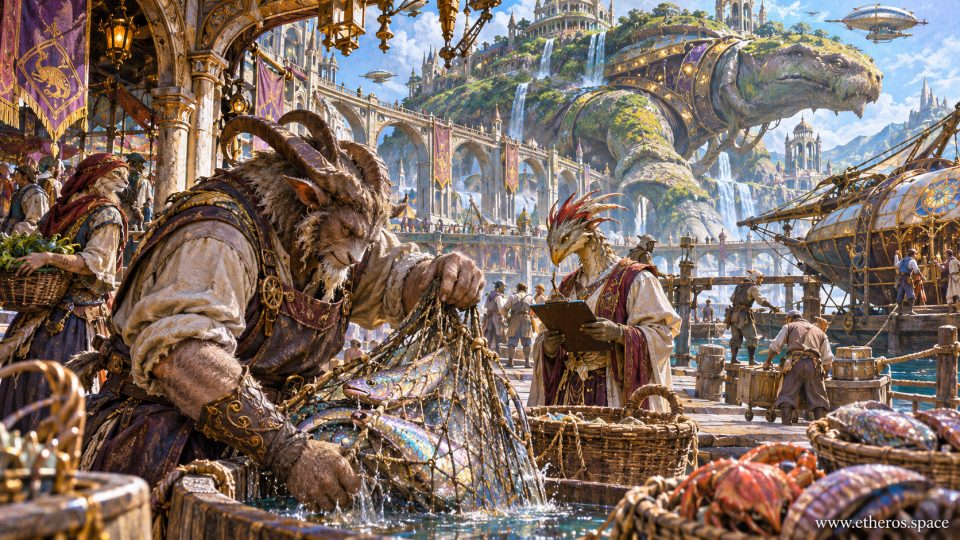
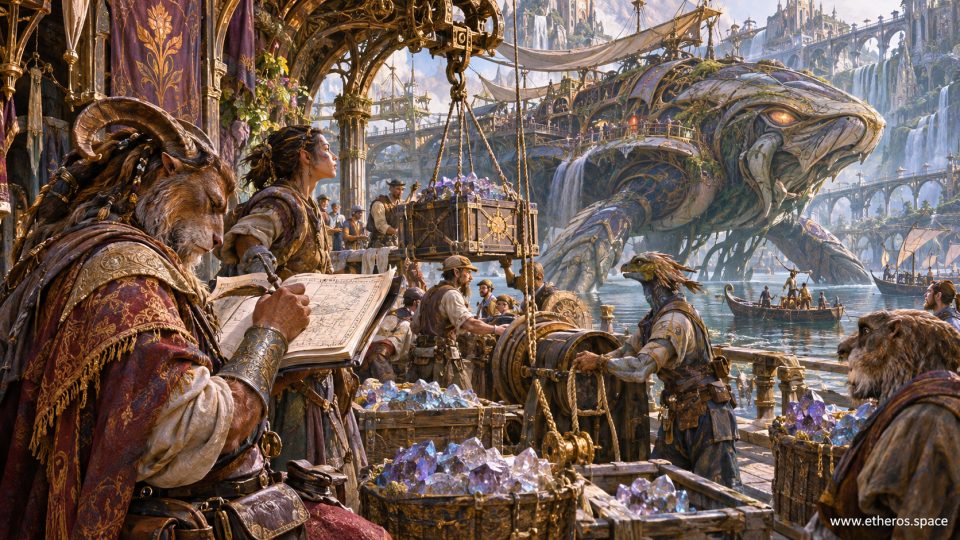
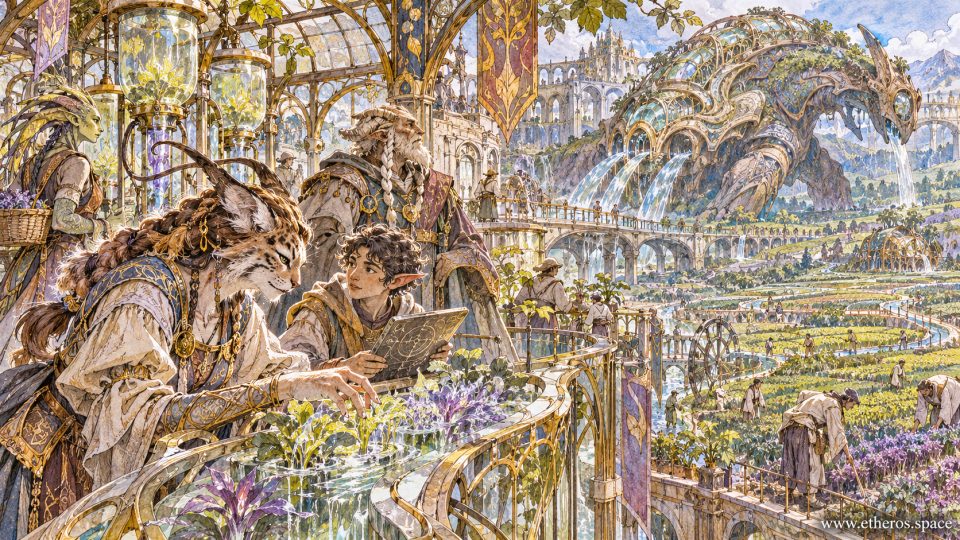
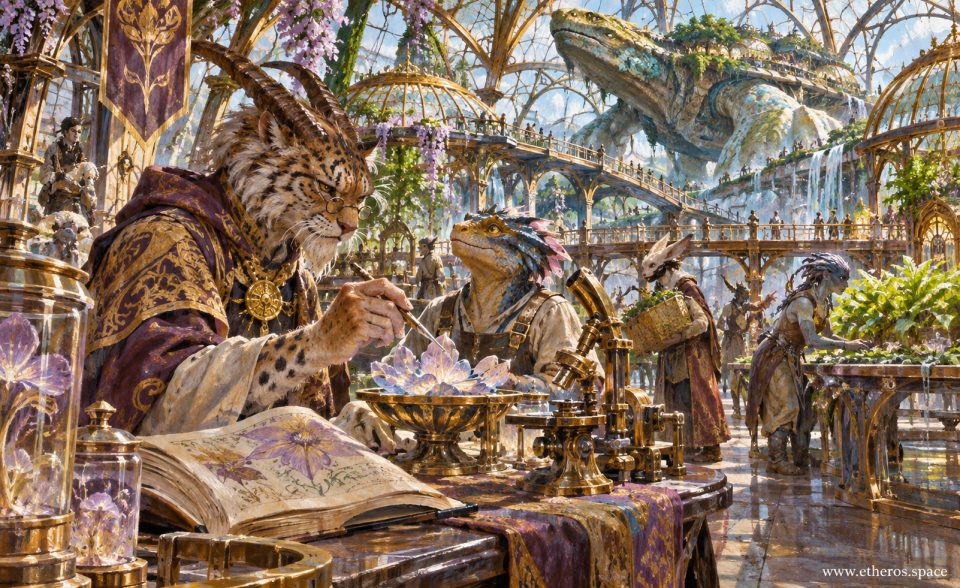
Far to the right of the span, the shellback of Orinth moved through its patient cycle. The enormous living body carried inhabited terraces on its armor, watered them through hanging channels, and supported a succession of bridges and walkways near the falls. Its movement was so slow that newcomers mistook the organism for a hill. The inhabitants knew better. Water, sediment, seed stock, and structural weight were redistributed through its living shell; the gardens above it prospered because thousands of ordinary tasks continued underneath.
Ivo looked from the newly loosened bridle to Orinth in the distance and drew a second line in the atlas. It did not represent a road. It was the relationship between a creature carrying a few crates and another carrying a neighborhood. Neither one was a mere vehicle. Both were working neighbors whose labor depended on trust, observation, and sensible limits.
"You can leave that correction in," Tovar said, seeing the new mark.
"It isn't in the route," Ivo answered.
"It is now."
They were meant to depart with the first bright interval after the clouds broke. That interval had already passed. The waiting passengers would complain; a merchant would write a letter about punctuality, and someone would surely invent an absurd rumor concerning a mechanical fault in the skyport. The three workers accepted all of it. A minute lost beside a living wing was lighter than a lifetime of regret.
At last Aruun brushed its beak against the repaired harness, not as a promise but as an examination. Pell closed the gauge. Tovar returned the tools to their loops. Ivo shut the atlas, leaving the ink to dry beneath the cover, and marked the departure as one mile shorter than planned. They would stop at the next safe landing and inspect the adjustment once more.
The airship beyond the gallery turned slowly in the sun, and the bronze rails gleamed. The work had been ordinary, precise, and sufficient. On Etheros, that was how a sky remained open.