The Ledger Beneath the Tidemother
20261103T083331823948Z_025percent.png
Story
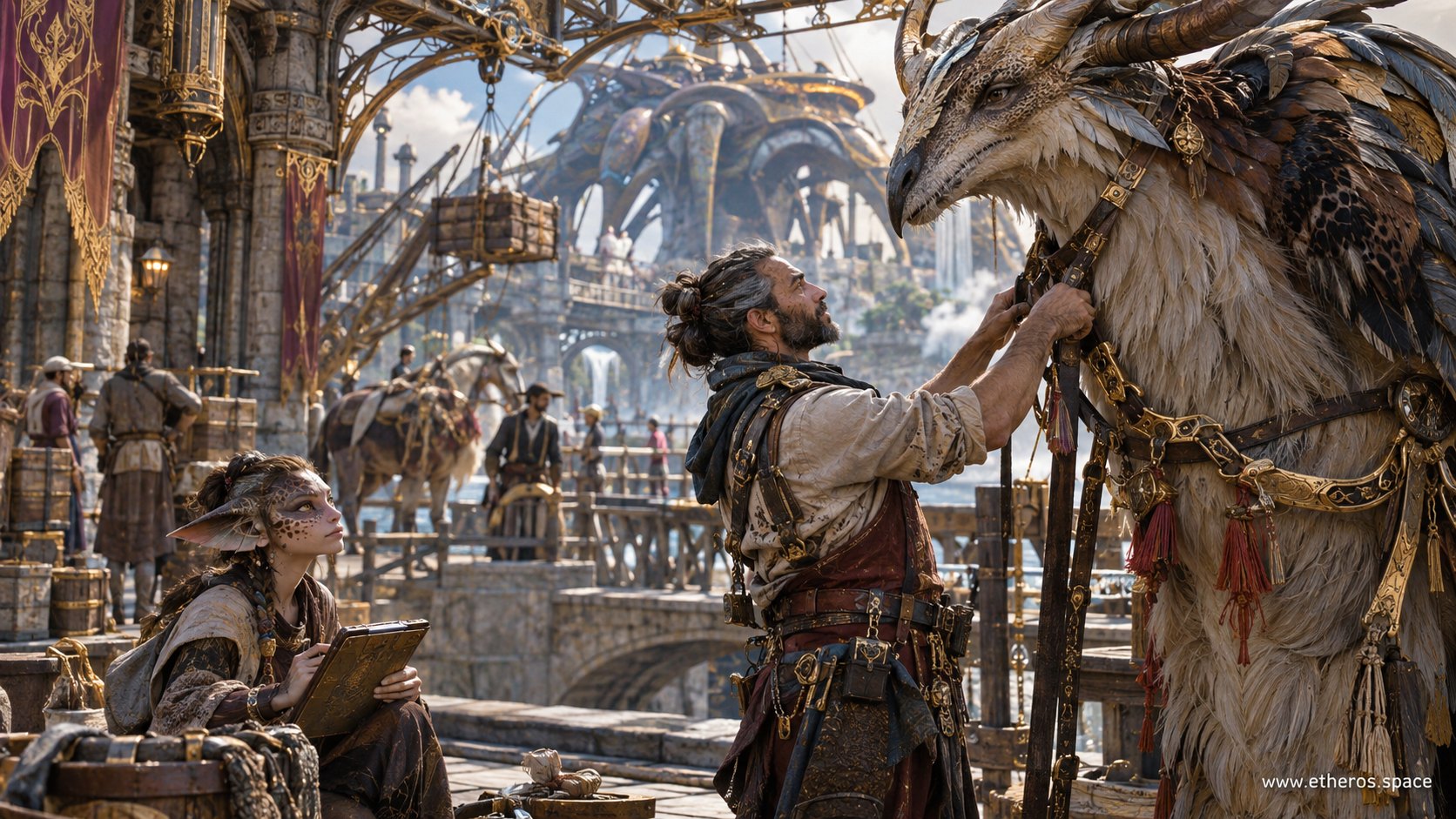
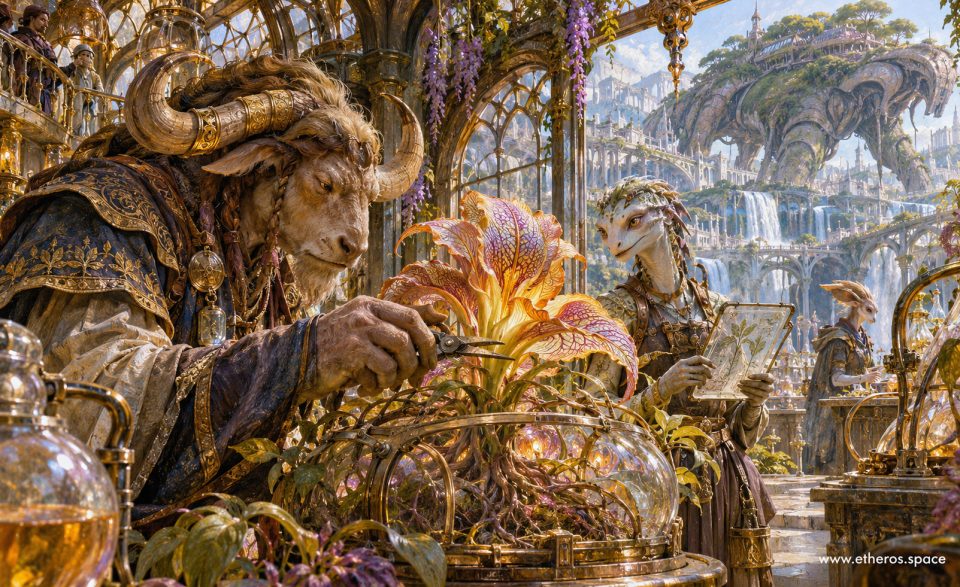
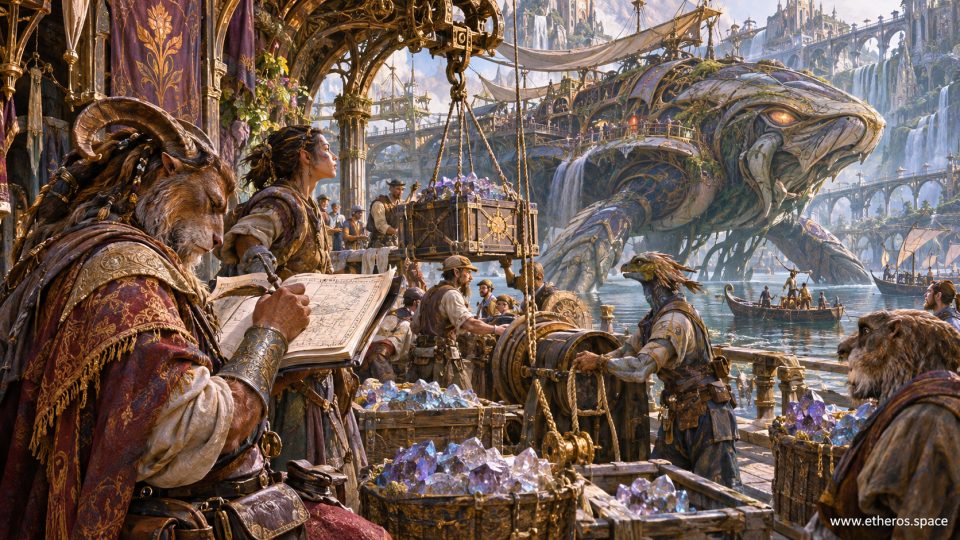
The bells of Cael Vey had not yet marked the second tide when Tavar Isk lowered his horned head over the shipping ledger. Under the freight arcade, golden tracery took the load of seven vaulted floors; beyond the railings the harbor shone beneath a pale sky, all canals, distant waterfalls, and bridges crowded with citizens on their way to work. Tavar was old enough to remember when the upper galleries were bare stone. Their new gardens, banners, and broad passenger walks were fed by what passed through this quay. He did not resent the weight of that knowledge. He resented, at times, the way ink made it look so light.
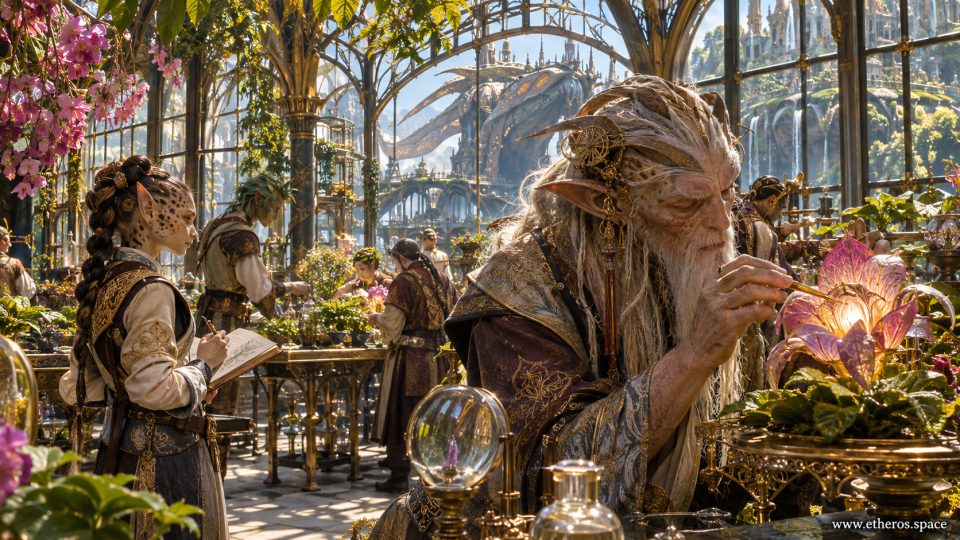
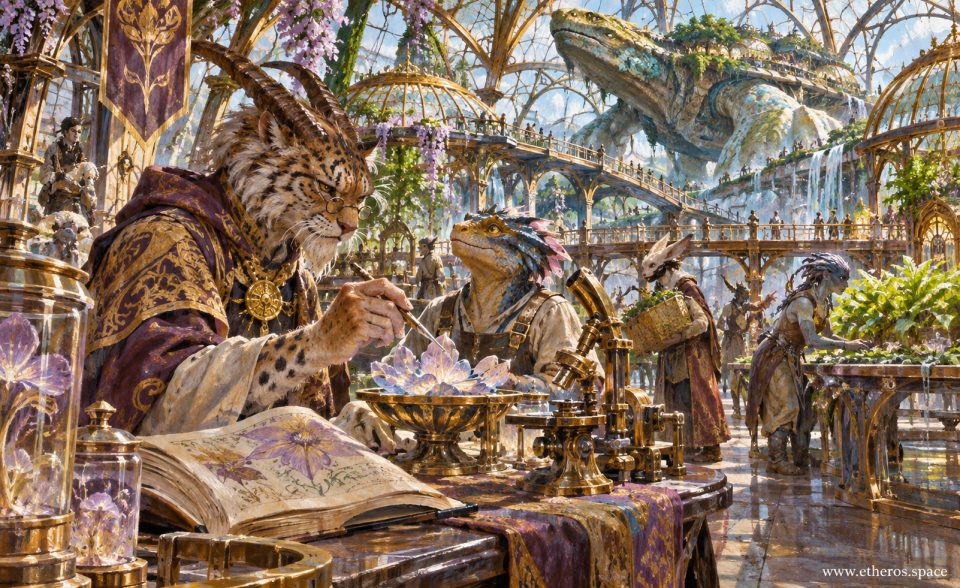
He set his pen to an open diagram beside the hoist. The marks were not merely a tally of blue and violet thermal glass. A cargo auditor in his district had to follow the glass from its deep-water recovery cradle through each sling, chain, pulley, harbor boat, and receiving vault. A cracked crystal might appear valuable enough to hide among sound pieces, yet leak its stored warmth during the long ascent to a neighborhood infirmary. The loss would not be visible until someone opened a nursery heater in the middle of a cold night. Tavar had once attended such an opening. He had never again signed a crate he had not seen moving.
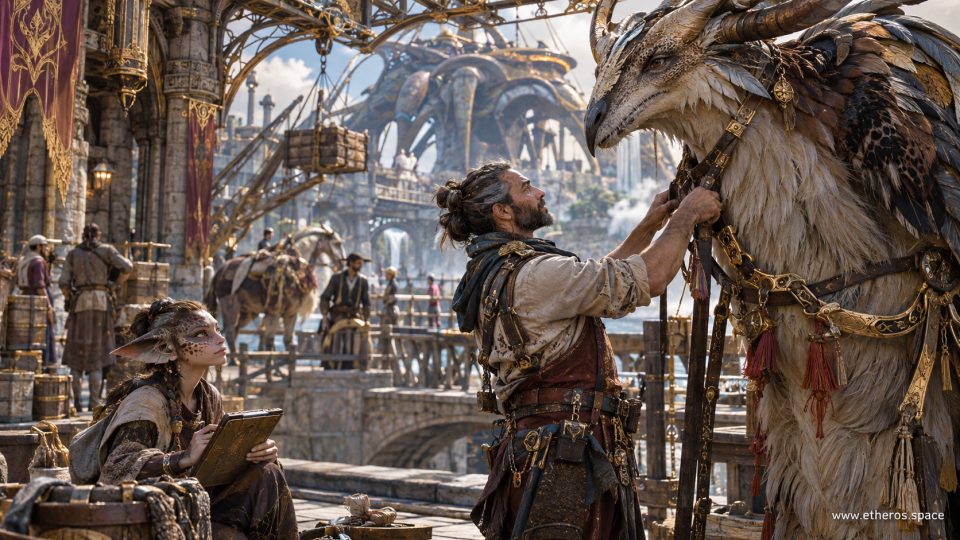
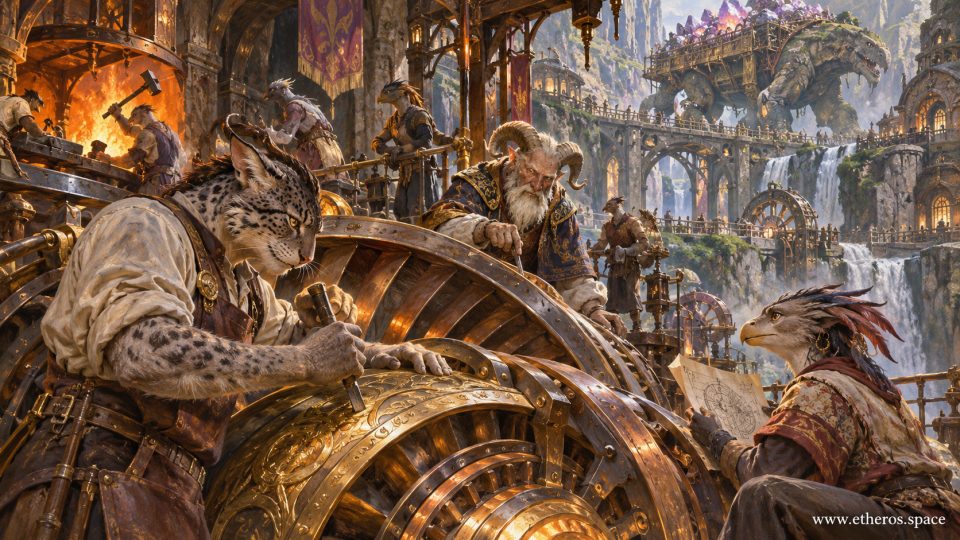
Mira, the younger quay dispatcher beside him, stood straight beneath the copper ornament. Her scarf stirred in the river breeze. She was watching the suspended box of crystals at the center of the work floor, not the old man's book. The box swayed once on its rope bridle; two dockhands held their stations while a third called for a slower turn of the drum. Heavy rigging disappeared into the carved vault above them. Its anchors were bedded behind the columns in black load stone; the polished metal sleeves were beautiful only because the older, ugly weight-bearing ribs were sound. Mira waited until the crate ceased to twist before she let herself breathe.
Across the same platform, Rhel of the narrow-beaked Aversian clans braced both hands at the winch. His featherlike head plates angled toward the sling, following each tiny correction in its swing. The drum's mechanical advantage let the smaller crew move a mass that no collection of shoulders could lift safely. Rhel kept a palm on the brake lever: a lift could be slow and still be dangerous. Behind him, skiffs ferried passengers beneath the arches, their oars making narrow dark commas on the water. Near the rail, an older river-kin porter guarded a second crystal basket and watched for a clear passage.
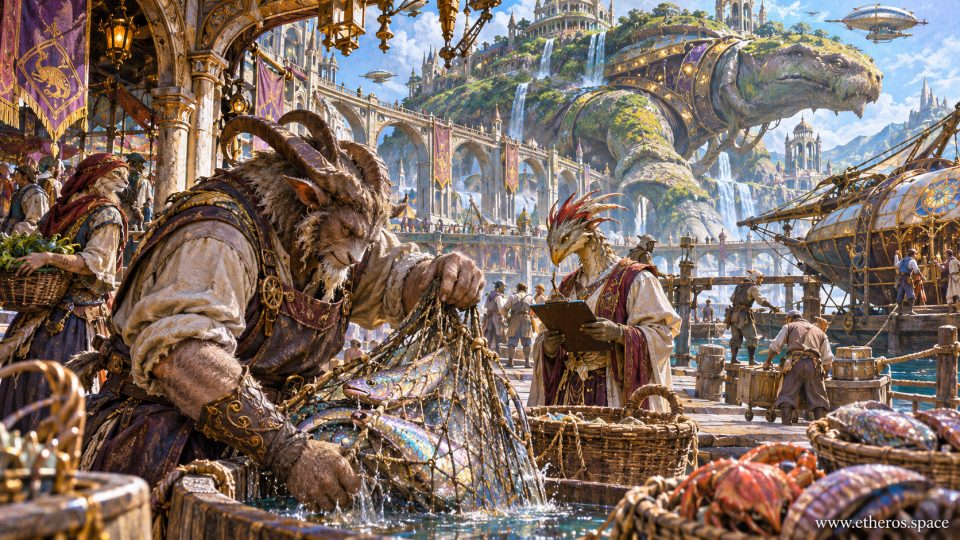
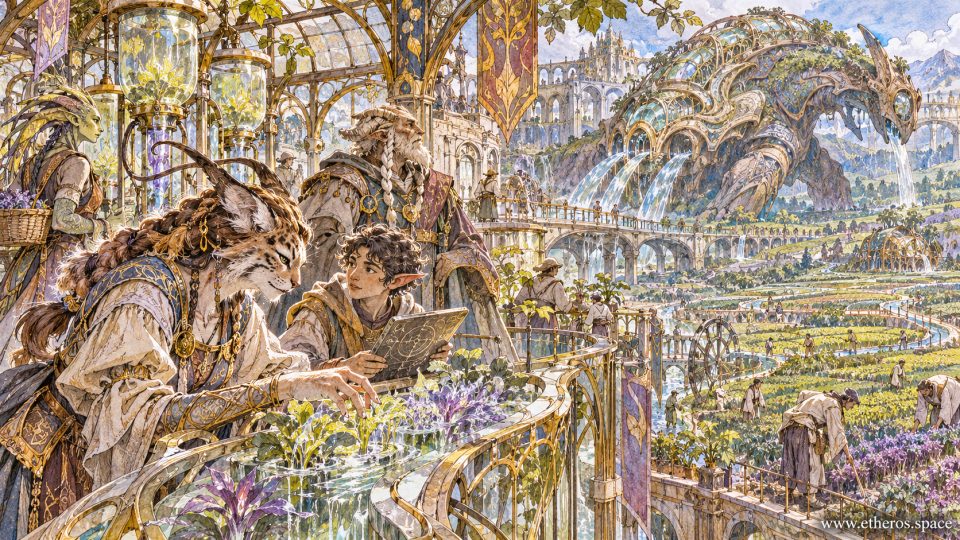
But it was Ishaur, farther out in the harbor, who made Cael Vey possible. The creature's broad plated head rose beyond the quay like the bow of an ancient vessel. Gardens and working platforms clothed the great shell. Water fell from cultivated terraces into the tidal channel, carrying spent irrigation flow through reed filters and back toward the lower estuary. Beneath the surface, Ishaur's enormous fins and anchored feeding limbs distributed load through submerged stone beds. Pilgrims often called the behemoth a miracle. The people who scrubbed its intake grilles knew it as a neighbor with requirements: water, salts, food, quiet resting hours, and space for its joints to move.
Ishaur's left-side collection gallery had suffered a fracture the previous evening. No one on the quay could see it from here, but the delay it caused traveled through every workshop. The thermal glass in Tavar's book was meant for the elevated ward where children slept beside older patients, and for the ferry depots that would heat the night boats. Some of the crystals held the day's surplus warmth, banked from spring-fed exchangers, not conjured from nothing. Others would carry their cold capacity to preservation rooms. Their color alone could not tell an auditor which duty each crate was built to perform.
That morning's first box came away from the landing platform without a sound. Tavar made a small mark next to the diagram. Mira raised two fingers to Rhel, signaling that the receiving trolley was clear; the suspended load began to travel inward. Its motion was scarcely more than a breath. The river-kin porter stepped aside and steadied a basket with one blunt hand. For an instant the work of so many species resembled one nervous system: eyes informing hands, hands guiding rope, steel carrying tension, stone bearing compression, water receiving what the gardens returned.
Mira had slept only an hour. Her sister's child was in the upper ward, and the crates were not an abstraction to her. Yet she had said nothing of it to the crew, because a frightened order given loudly could move a load less safely than a measured one spoken softly. Tavar noticed the whiteness around her knuckles. He had once mistaken composure for indifference; age had taught him that quiet labor could be an expression of love. He shifted his ledger so she could see the completed inspection mark, then touched the dry corner of the page where the ward's delivery route was drawn.
Ishaur turned its great illuminated eye toward the canal. The behemoth did not answer human questions, but the water continued descending from its gardens in long silver veils. Boats moved. The hoist carried its box across the quay. Somewhere above the bridges, patients were waking in rooms whose warmth had not yet failed. Tavar entered the final receiving note only after the crate had settled on its trolley, its weight safely returned to wheels and floor. There was no triumph in the gesture, only the modest relief of an ordinary task completed correctly—and, for Cael Vey, another morning made possible.