The Portion That Found Its Way Back
20261106T175624474267Z_100percent.png
Story
THE PORTION THAT FOUND ITS WAY BACK
Tern's Second Table, late light in the dry northern quarters of primordial Etheros
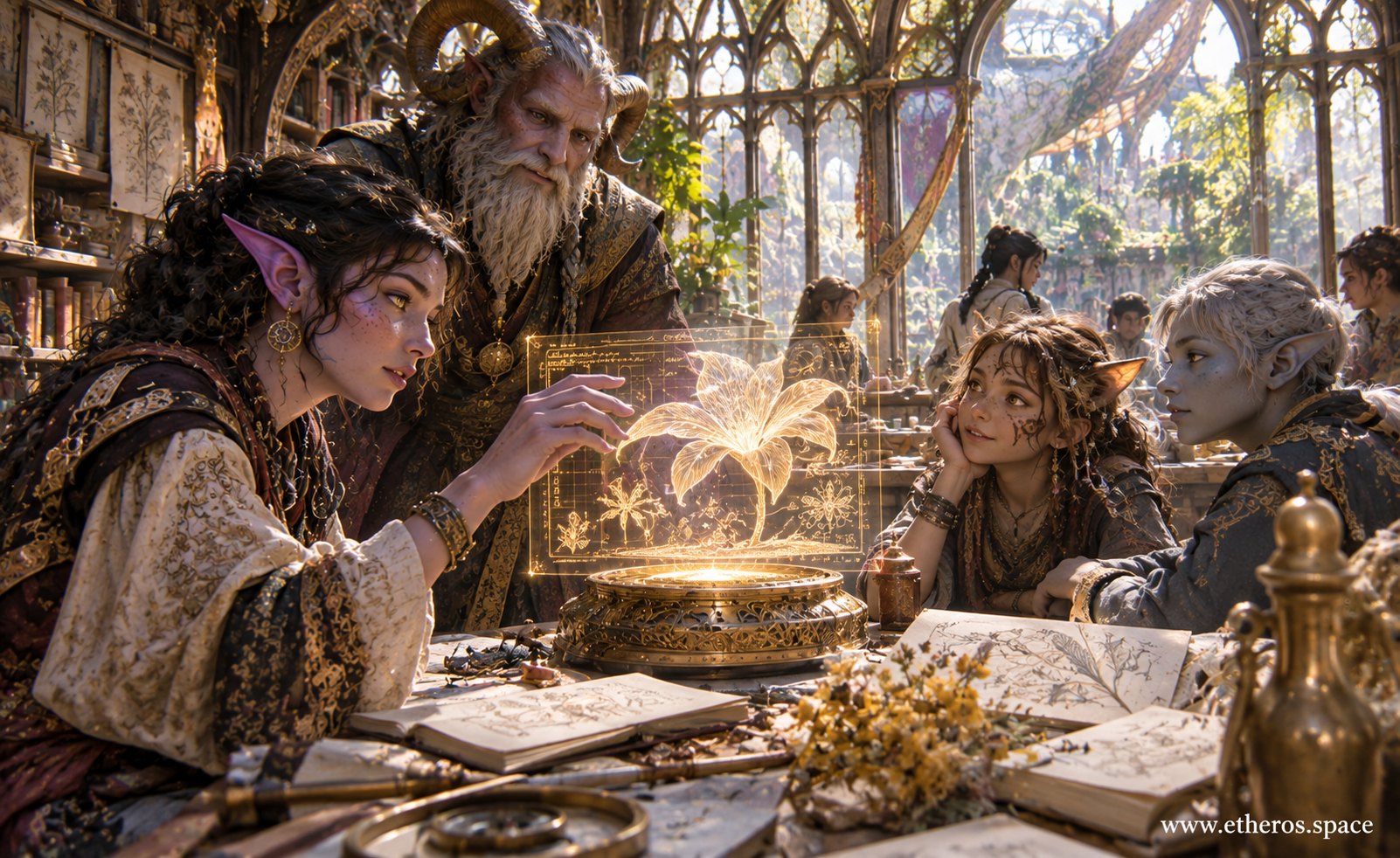
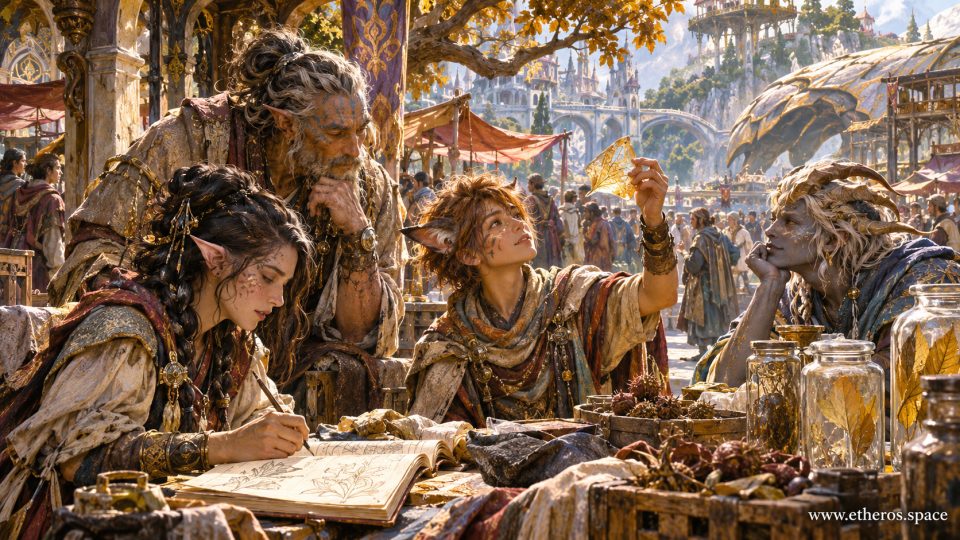
At the end of the meal, the smallest members of the Second Table always found the hardest work waiting for them. None of it was unpleasant in itself. There were seedcakes to lift into shallow trays, bread to put back on the shelf before it hardened, and the unsightly heap of vegetable ends that must be taken to the press. The difficulty was that all three tasks looked alike to somebody still learning what a good meal cost.
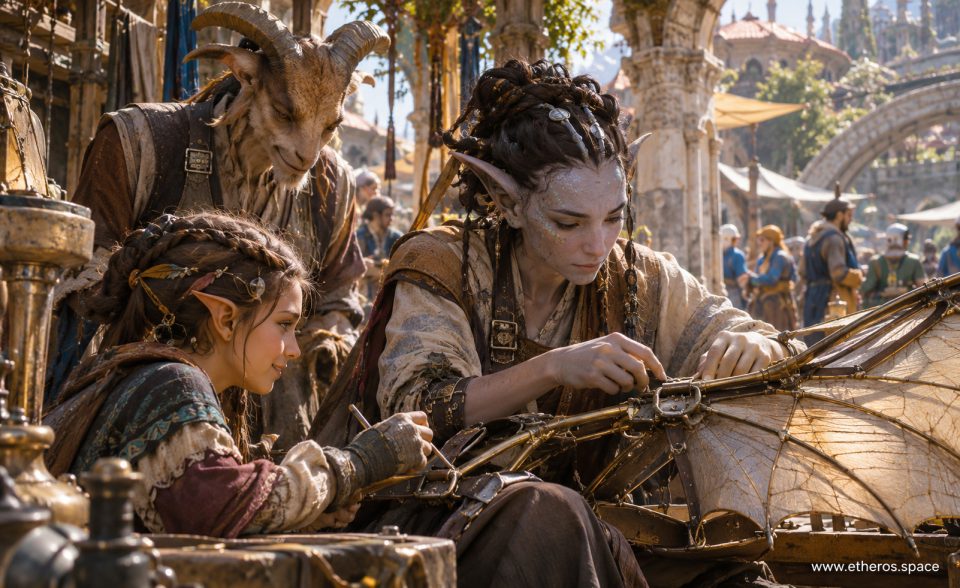
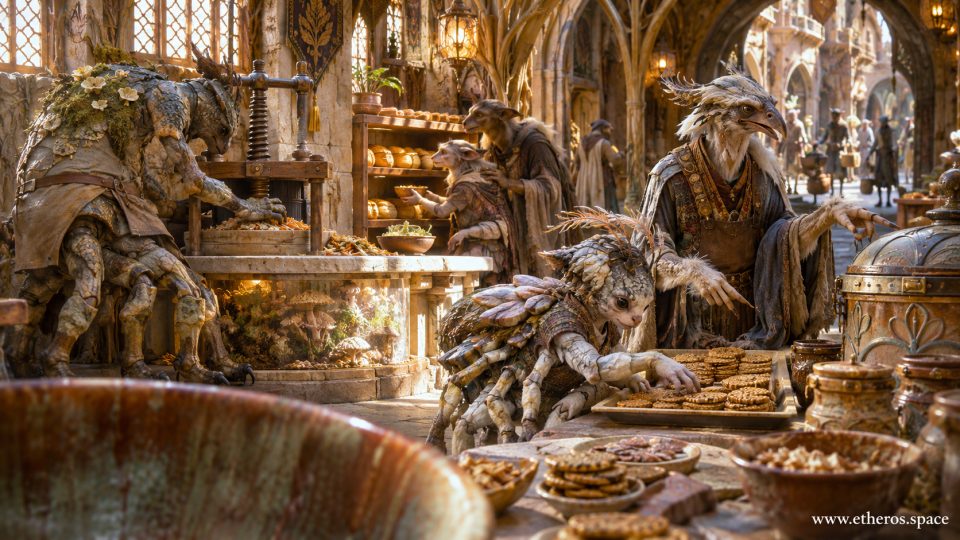
Pill was moving cakes one by one with the nimble forward hands beneath a crown of pale bristles. Each was scored by a different cook, and several had broken at the edge. Pill thought the cracked ones ought to be eaten first. Veyru, the white-feathered steward at the great copper vessel, thought a broken edge was not the same thing as spoiled food, but a warm afternoon was not kind to careless storage. Between them lay a board full of food that was either supper for somebody or soil for next season. A mistake in either direction would matter.
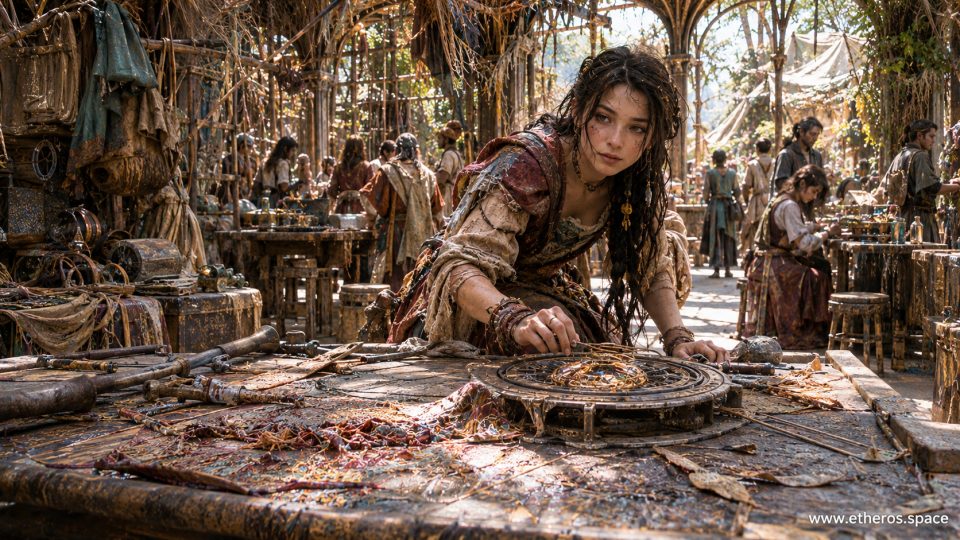
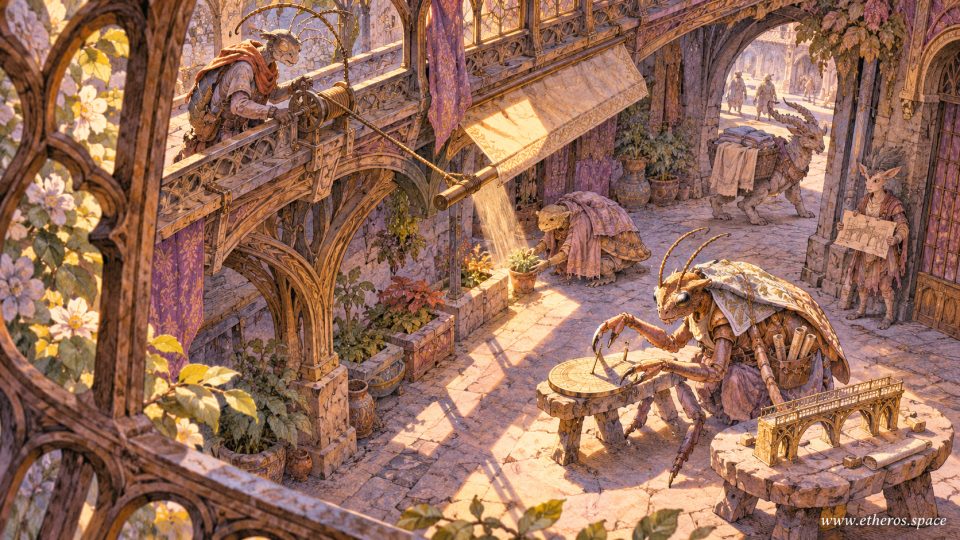
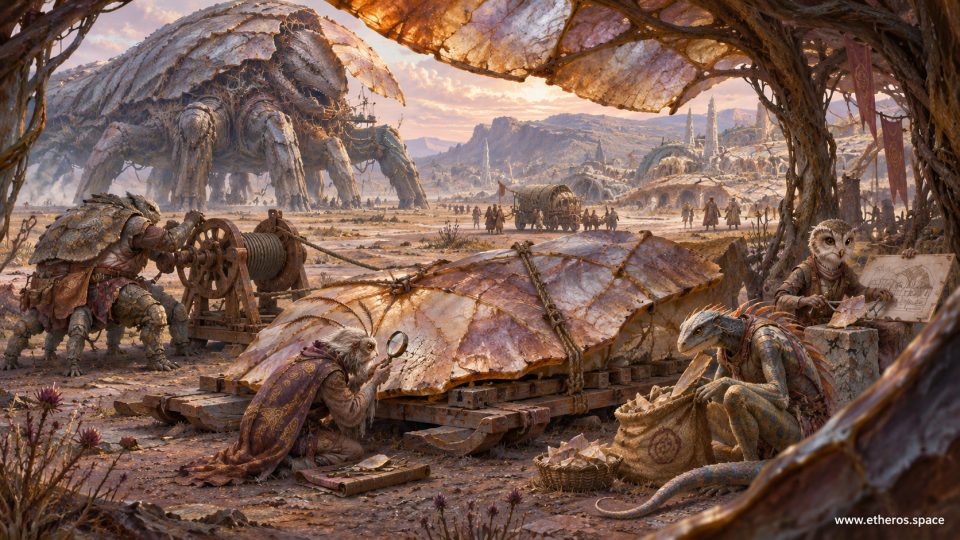
Beside the open window, Orcha worked the long wooden screw press. Their thick, bark-grey plated shoulders bore small flowers and living moss; the elder's several legs braced against the floor while a forelimb spread chopped stems across the stone bed. This was the dry room's oldest machine. Each turn squeezed the material into dense cakes that could rest under a shelf of pale fungi, where slow digesters would begin converting it into usable growing substrate. Whatever heat the press released escaped through an arched vent. The process was not miraculous. Too much wet matter soured the bed; too little dry fiber starved it. Orcha had lost enough harvests to know the difference by smell.
They had also learned that people disliked being told their leftovers were part of someone else's livelihood.
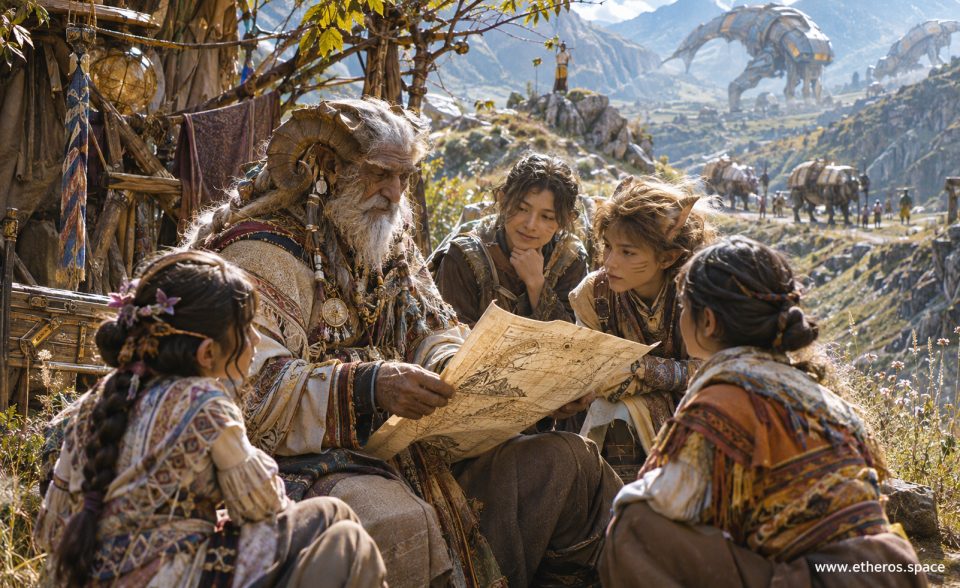
At the rear bread shelves, young Nemm stood with an empty bowl while an older relative, Silren, steadied them with one paw. They had come for the share portion: edible bread and untouched cakes returned from the public kitchens before closing, set aside for households whose trading day had brought home too little. Nemm held the bowl very still. Silren did not look at the others, because the household had once supplied flour here and had not yet grown comfortable receiving it.
Pill noticed that Nemm's bowl was nearly bare. They took the nearest cracked cake and held it out. Veyru gently intercepted the tray.
'Not that stack,' the steward said. 'Those sat too near the warm vessel. We have to check them first.'
It was a disappointing answer, because it sounded like the kind of rule adults invented to delay kindness. But Veyru did not return the tray to a locked cupboard. They lifted its lid, examined each cake in turn, and separated the ones still sound. They placed one in Nemm's bowl, then asked Pill to finish counting the rest. It took longer than handing over everything. It was also a promise that could be trusted.
Orcha kept the press moving while the discussion passed behind them. The old worker remembered a time before the Second Table, when unclaimed bread was thrown into the furnace and half the valley's poorer households pretended not to be hungry. That waste made a kind of sense to people who believed an unsold loaf could embarrass its maker. It never made sense to the planet that had grown the grain, the hauling creatures who carried it, or the growers who would need fertile soil again.
The change began with a child who had once brought a warm crust home to a sick grandparent. From there it became a custom, then a duty shared reluctantly among guilds that disagreed about nearly everything else. Merchants feared that free portions would undercut sales. Cooks feared unsafe food. Growers worried that too much returned food would leave the digesting beds without material. Families worried that a kindness requiring public proof of poverty was a cruelty wearing clean clothes.
Today they did not resolve any of those arguments. The broad stone workroom stayed full of small acts: Orcha folding fibers beneath the press, Veyru checking the copper vessel's heat, Nemm accepting bread without being asked to explain a difficult week, Silren thanking nobody more than was necessary. Through the far arch, the evening traffic continued past pale facades and shaded stalls. The city was far too large to be fed by one room.
Then Pill found the remaining tray of misshapen seedcakes. There were only five, but all were fresh. They looked toward the soil bed and then to Nemm's bowl. Even the moss on Orcha's shoulders seemed to listen.
'How many do we owe the earth?' Pill asked.
Orcha stopped turning the screw long enough to consider the question. 'We owe it the things it can use,' they answered. 'And we owe the living the things they can still eat. Never confuse which is which merely because the counting is easier.'
They set two marked baskets beside the press, one for sound food and one for spent scraps. Pill carried the fresh cakes to the share shelf. The remainder, peelings and stale crumbs, went to Orcha. It was no revolution, just a better division of an ordinary evening.
By sunset the room smelled of baked grain, damp mineral and the warm earth under the old stone press. Outside, another neighborhood would close its kitchen without a second table. Veyru wrote down the number of households that had come, not their names, and asked Pill to help take the figures to tomorrow's council. Nemm's family departed beneath the arcade with supper enough for the night. Whether the guilds would fund another room remained uncertain. For now, the little one had learned that what was left over was not necessarily what was unwanted.